
JA's P-HJT Modules Successfully Reach Orbit
Source: PR Newswire
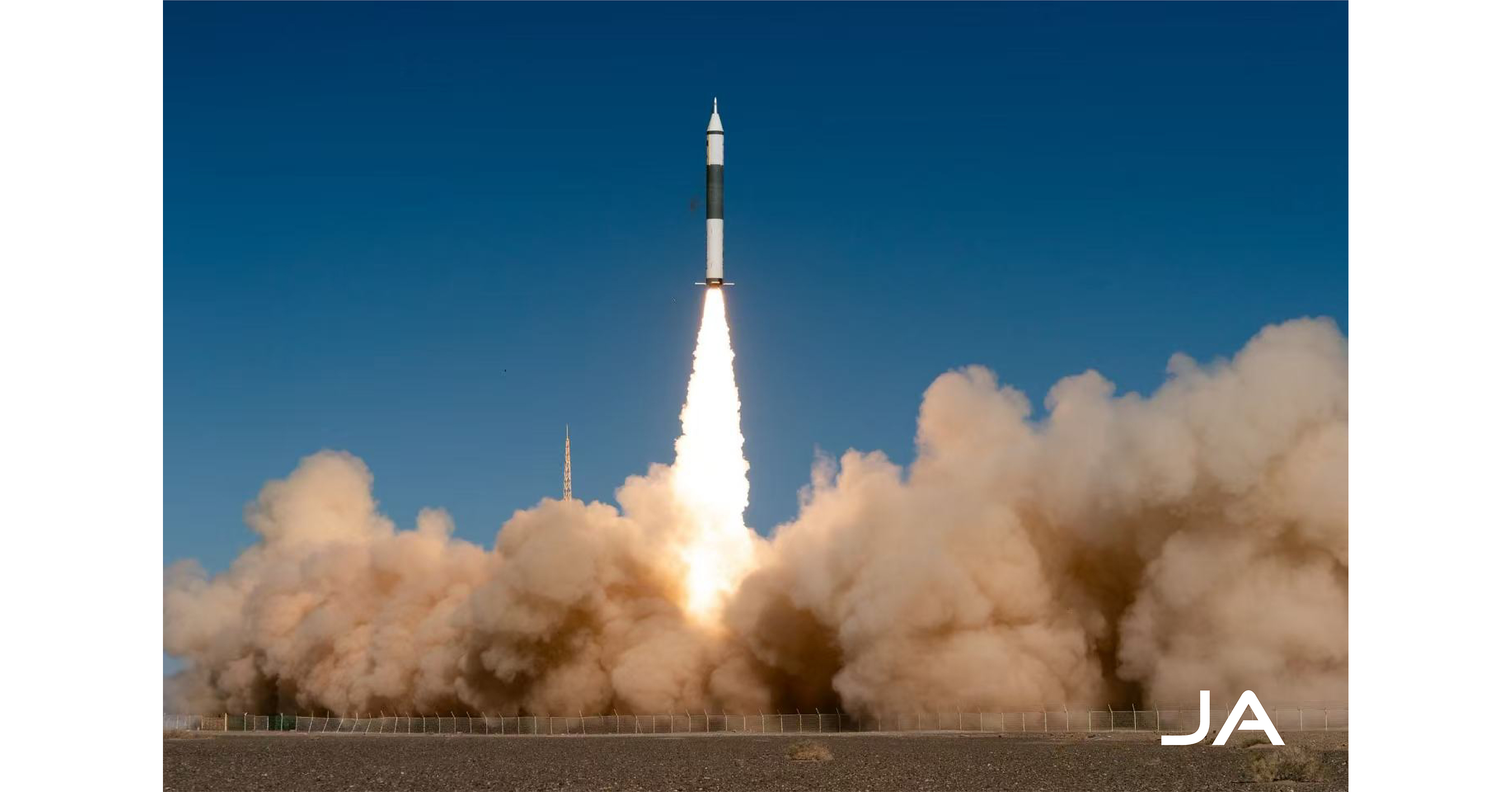
JA successfully launched its first P-type heterojunction (P-HJT) solar modules into low-Earth orbit aboard a Kuaizhou-11 rocket on September 17, initiating an in-orbit reliability and degradation test. If validation targets are met, crystalline-silicon modules could become a lower-cost alternative to gallium arsenide for satellite power systems. However, space photovoltaics remain at an early validation stage, JA has no related orders, and management said the program has no material effect on current operating performance.
Analysis
This is strategically relevant but financially immaterial: the addressable space-power opportunity is unlikely to influence JA Solar's (unlisted) earnings or terrestrial module pricing over the next 12-24 months. The investable implication is instead a potential long-duration technology-option value for crystalline-silicon supply chains if in-orbit degradation proves acceptable versus gallium-arsenide systems. A successful substitution would favor scaled silicon-cell and module manufacturing over incumbent III-V semiconductor specialists, but qualification cycles in aerospace are measured in years and require independent radiation, thermal-cycling, and power-density data.
The nearer-term second-order effect is competitive signaling among Chinese PV manufacturers. LONGi Green Energy (601012 CH), JinkoSolar (JKS), and Canadian Solar (CSIQ) may face pressure to fund adjacent-market R&D despite no visible revenue pool, worsening capital discipline in an already oversupplied module market. Conversely, US-listed space operators and satellite manufacturers should not be rerated on this development: power-system mass, reliability guarantees, and launch qualification—not terrestrial module cost alone—remain the binding constraints.
Consensus should treat the announcement as an R&D milestone rather than evidence of commercial readiness. The key 6-18 month catalyst is disclosure of independently measured degradation, watts-per-kilogram, radiation tolerance, and qualification progress; absent those metrics, there is no basis for assigning a revenue multiple. The thesis is falsified positively only by customer-backed qualification or funded flight contracts, and negatively by degradation that eliminates the upfront cost advantage after required redundancy and shielding.
AllMind Terminal
AI-powered research, real-time alerts, and portfolio analytics for institutional investors.
Request TrialMarket Sentiment
Overall Sentiment
mildly positive
Sentiment Score
0.18
Key Decisions for Investors
- No directional trade in response to this release; avoid using it as a catalyst for JKS, CSIQ, or satellite-exposure proxies over the next 1-3 months because no order book, qualification milestone, or earnings sensitivity is disclosed.
- Maintain a 6-18 month research watch on JKS, CSIQ, LONGi (601012 CH), and Trina Solar (688599 CH): investigate whether any can publish independently validated low-Earth-orbit performance or secure a named aerospace qualification. Upgrade only after contract value, production economics, and warranty liability are measurable.
- For portfolios seeking the thematic exposure, prefer a small watchlist rather than a position in aerospace power incumbents; a credible silicon substitution would be a long-term relative headwind to gallium-arsenide solar-cell suppliers, but the missing data on efficiency, mass, and radiation degradation precludes a tradable pair today.
- Monitor Chinese PV capex and gross-margin guidance during the next two earnings cycles. If space-adjacent R&D is accompanied by incremental capacity spending rather than disciplined pilot investment, it strengthens the bearish case for commodity module margins and supports underweighting the broad Chinese solar complex.
More News
- Here are the 3 big things we're watching in the stock market this week
- Tech leads shares higher in Asia, oil eases
- China slows humanoid robot IPO rush as hype outruns reality
- U.S. urges Americans to reconsider Middle East travel as Iran tensions rise
- Porsche could face another 4,000 job cuts, Handelsblatt reports
- Why is Telix Pharmaceuticals stock sliding today?