
Think of Nvidia’s $13 billion deal for Hugging Face as a form of ‘health insurance’
Source: MarketWatch
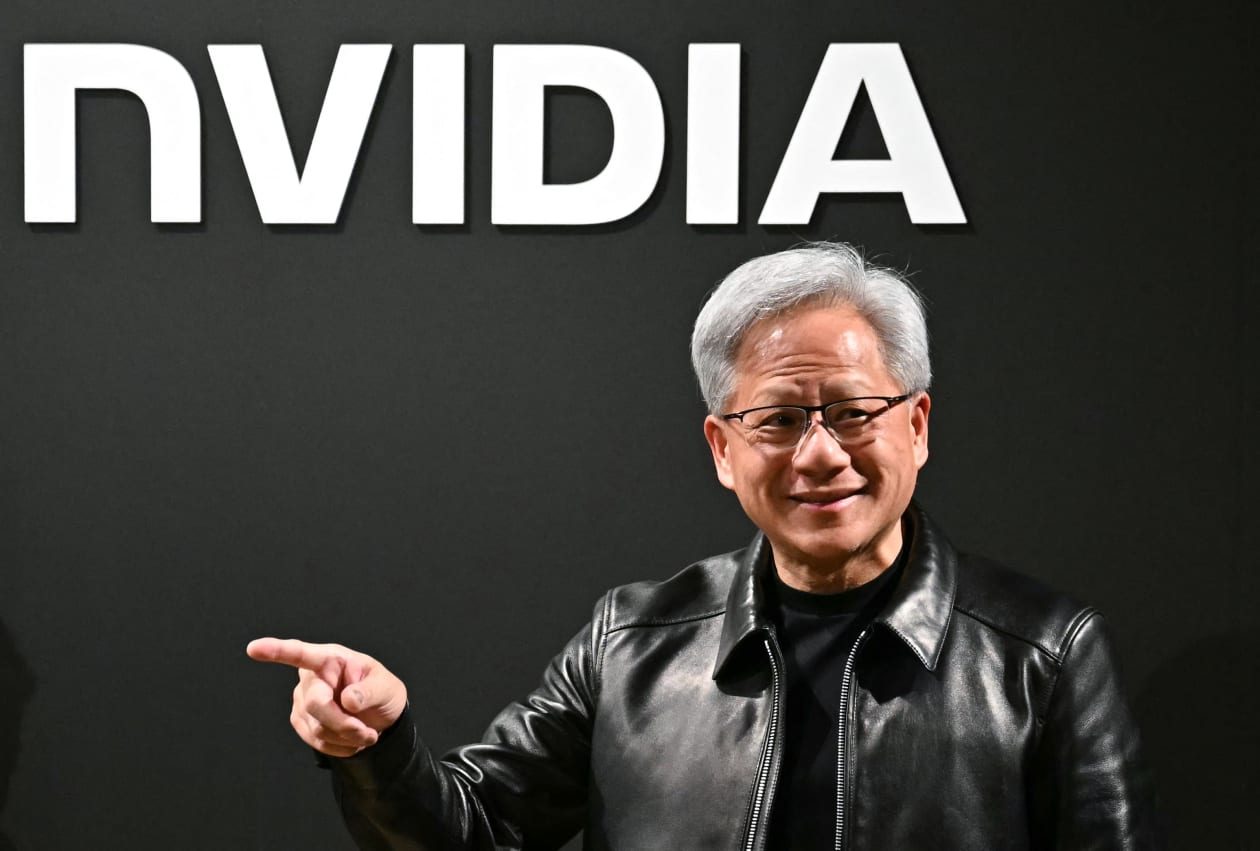
Nvidia’s $13 billion acquisition of Hugging Face is framed by analyst Richard Windsor as “health insurance” to defend its chip dominance amid intensifying competition from custom AI chips. The thesis is that as open-source AI models remain dominant, Nvidia’s custom silicon positioning will be harder for rivals to erode. Overall, the deal is viewed as a strategic move to sustain market share rather than a near-term setback.
Analysis
This is less about near-term revenue and more about preserving the tollbooth. If Nvidia can anchor the distribution and tooling layer around the most widely used open-source model ecosystem, it makes switching away from CUDA, Nvidia networking, and Nvidia-optimized inference stacks materially harder for enterprises that value speed-to-deploy over pure chip economics. That matters most over 6-18 months: once procurement and developer workflows are standardized, custom silicon has to win on both cost and usability, not just price per token.
The immediate winners are NVDA’s gross margin and ecosystem leverage; the losers are custom accelerator programs at hyperscalers and third-party ASIC vendors that depend on software abstraction to gain share. Second-order, this is negative for any “good enough” inference chip thesis: if open-source adoption keeps model variety high, the fragmentation itself favors the incumbent with the broadest software compatibility. It also pressures AMD and other alternative GPU suppliers, because their best path is often share-taking on value, but a more entrenched developer moat reduces that opening.
The key risk is that the market may be overpricing strategic optionality that does not translate into incremental EPS. If the deal is symbolic or integration proves awkward, the stock reaction can fade quickly after the first headline cycle. Over 1-3 months, watch whether enterprise commentary shifts toward Nvidia-native stacks in model deployment; over 6-18 months, the falsifier is a visible slowdown in Nvidia’s data-center share or a step-up in hyperscaler custom-chip volumes.
Contrarian read: open source can also compress software moats. If models become interchangeable, buyers may focus more on cost and power efficiency, which is exactly where custom silicon and merchant ASICs can eventually bite. So the trade is not to chase the headline blindly; it is to own Nvidia only if the market starts treating open-source AI as a platform-expansion story rather than a commoditization story.
AllMind Terminal
AI-powered research, real-time alerts, and portfolio analytics for institutional investors.
Request TrialMarket Sentiment
Overall Sentiment
mildly positive
Sentiment Score
0.25
Ticker Sentiment
Key Decisions for Investors
- Maintain a tactical long NVDA position into any post-headline pullback; use the first 1-3% intraday dip as entry only if there is no sign of deal breakdown. Risk/reward is attractive because the market is likely underestimating software-distribution lock-in vs the small near-term EPS impact.
- Pair trade: long NVDA / short AMD for 1-3 months. Thesis is relative moat expansion, not absolute AI demand. Falsify if AMD guides to sustained hyperscaler share gains or if NVDA data-center growth decelerates meaningfully next quarter.
- If the acquisition is confirmed, consider a small long NVDA vs short SMH basket trade for 3-6 months, focused on Nvidia outperformance from ecosystem control. Cover if broader AI capex weakens or if the market begins to reward low-cost inference alternatives.
- Watch hyperscaler custom-chip indicators as an alert item: GOOGL, AMZN, and MSFT capex commentary over the next two earnings cycles. If any of them accelerate internal silicon deployment while lowering external GPU orders, the Nvidia moat thesis needs to be re-rated.
- Do not force an options trade unless implied volatility is still subdued after the first headline wave; if it is, a modest NVDA call spread into the next earnings window offers cleaner upside than outright stock, with the thesis hinging on management commentary about ecosystem stickiness.
More News
- The next AI race will be won at the credit desk
- Tech Bytes: Microsoft pulls out of Aussie-founded Nscale data centre deal as power shortages hit AI boom
- Jim Cramer: Why I am taking the other side of the trade that crushed the market Friday
- TechCrunch Mobility: Rivian’s next act
- The Bond Market Is Sending a Warning to Nvidia Shareholders
- Taiwan Semiconductor Just Proved Why It's a Top AI Investment
From AllMind Research
- Anthropic IPO Preview: Valuation, Timing, and What to Watch
- Shein After the IPO: Venue, Valuation, and What Must Be Proved
- What AI Research Tools Should a Small Hedge Fund Buy First?
- Best AI Stock Research Tools for Professional Investors
- Weekly Update: Adding Live MBO Level 3 Data - Liquidity Heatmap, OFI Charts, and More