
Latest Oil Market News and Analysis for Sept. 22
Source: Bloomberg
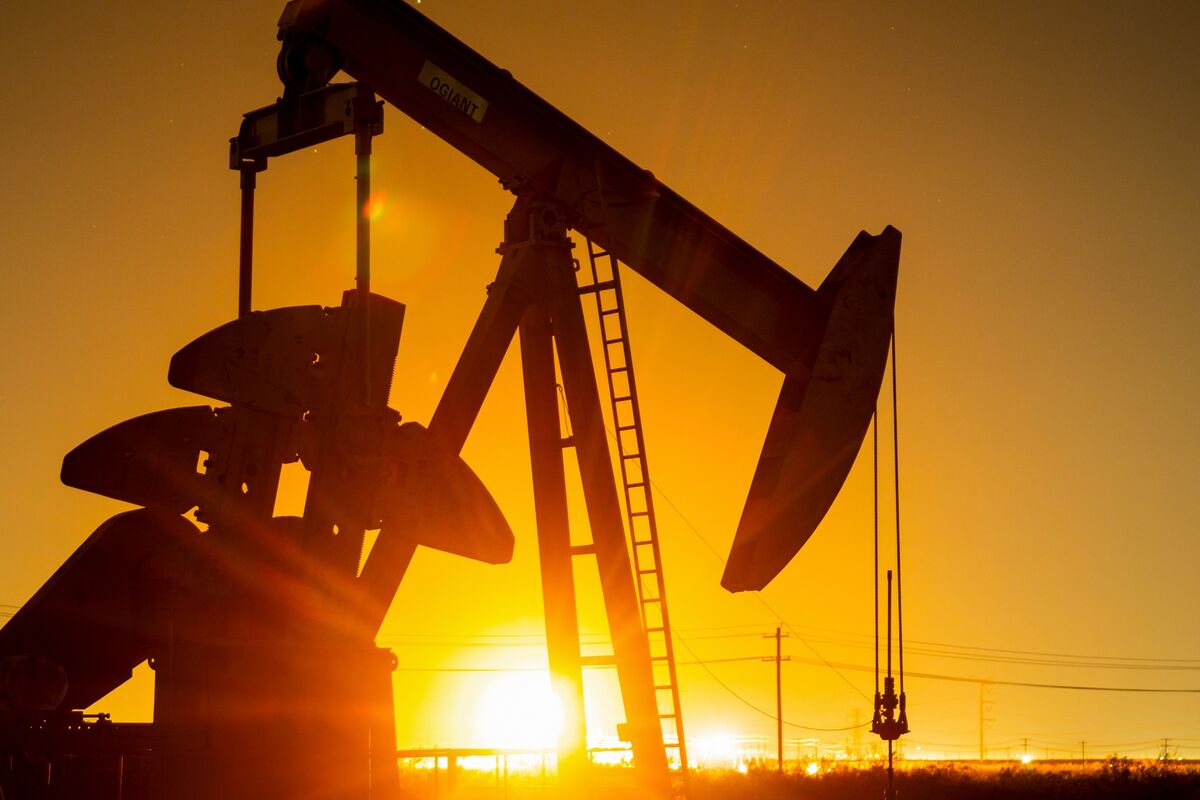
WTI held above $95 per barrel and Brent settled near $100 after crude lost more than 9% over the previous four sessions. Easing Middle East supply concerns and Saudi Arabia's resumed Gulf loadings toward the Strait of Hormuz—following the shutdown of a key cross-country pipeline—are stabilizing prices as traders monitor diplomatic efforts to end the US-Iran war.
Analysis
The key market signal is not the nominal crude price but the reopening of physical export optionality: restored Gulf loadings reduce the scarcity premium embedded in prompt barrels and should compress Brent time spreads before outright prices fully normalize. That is bearish for high-beta upstream equities and US oil-levered ETFs over the next 1-3 months, but supportive for refiners whose input-cost risk had risen faster than product demand. The more durable equity beneficiary is likely US refining capacity (VLO, MPC, PSX), provided gasoline and distillate cracks hold as crude declines.
Tanker economics remain the important second-order risk. Even if volumes transit normally, war-risk insurance, rerouting behavior, and vessel availability can keep freight rates elevated; this favors product tanker operators (STNG, INSW) over crude tanker exposure if refined-product dislocations persist. Conversely, a normalization in Hormuz traffic could sharply unwind the geopolitical premium in tanker spot rates, making this a tactical rather than structural long.
Consensus may be too focused on a binary ceasefire outcome. Saudi export flexibility is finite: a renewed disruption to the cross-country pipeline, insurance restrictions, or a credible threat to shipping could rapidly restore a $10-20/bbl risk premium, particularly in Brent prompt spreads. The bearish crude thesis is falsified if Brent holds above $105 for five trading days while front-month/third-month backwardation widens, indicating physical tightness rather than speculative positioning.
For 6-18 months, sustained $90+ WTI would improve US E&P cash generation, but the current volatility argues against chasing producers before management teams demonstrate that higher realized prices translate into increased buybacks rather than inflationary capex. The cleaner medium-term expression is to own low-cost, shareholder-return-oriented E&Ps such as FANG and EOG only after the physical-risk premium has demonstrably compressed.
AllMind Terminal
AI-powered research, real-time alerts, and portfolio analytics for institutional investors.
Request TrialMarket Sentiment
Overall Sentiment
neutral
Sentiment Score
-0.05
Key Decisions for Investors
- Initiate a 1-3 month pair trade: long VLO and MPC / short XOP, sized market-neutral. Refiners should benefit if crude retreats while product pricing remains sticky; target 8-12% relative outperformance. Exit if WTI closes above $105 or US gasoline cracks fall below $12/bbl.
- Buy Brent or WTI downside through 2-3 month put spreads rather than outright shorts: for example, USO puts with a 10-15% downside strike spread. This captures risk-premium compression while limiting loss if shipping disruption re-escalates; seek at least 2:1 payoff to premium.
- Maintain STNG and INSW only as tactical freight hedges, with a 2-6 week review cadence. Take profits if tanker-rate indices retreat materially or satellite-confirmed loadings and transit volumes normalize for two consecutive weeks; the trade is vulnerable to a rapid insurance-premium reset.
- Set an alert to add FANG or EOG on a WTI pullback toward $85-90 combined with unchanged shareholder-return guidance. This offers better entry into the 6-18 month oil cash-flow thesis than buying geopolitical beta above $95; invalidate if management raises capex faster than operating cash flow.
More News
- World Leaders Converge on United Nations General Assembly
- Oil Settles Near $100 as Hormuz Flows Stunt Rally
- Intel surges 12% as CPU stocks rally. Here's what's driving the move
- Fed’s Musalem says more rate hikes likely needed to curb inflation
- US Diesel Tops Record as Global Crunch Feeds Inflation
- UNGA Convenes While Questions Remain on Iran, Russia
From AllMind Research
- Anthropic IPO Preview: Valuation, Timing, and What to Watch
- Shein After the IPO: Venue, Valuation, and What Must Be Proved
- What AI Research Tools Should a Small Hedge Fund Buy First?
- Weekly Update: Adding Live MBO Level 3 Data - Liquidity Heatmap, OFI Charts, and More
- Alternative Data Due Diligence for Institutional Investors