
UNH Exits Select Medicare Advantage Plans for 2027 Amid Cost Pressure
Source: zacks.com
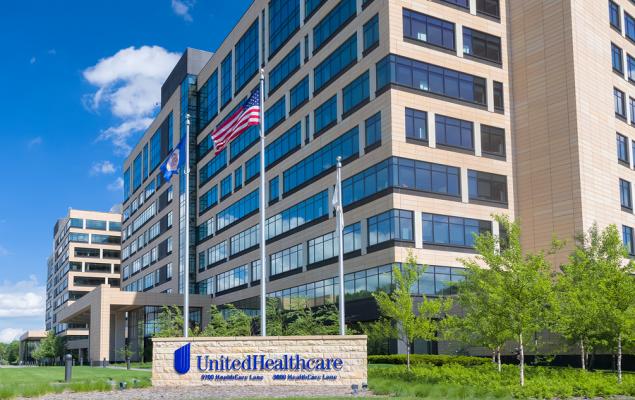
UnitedHealthcare will discontinue Medicare Advantage plans covering about 390,000 members in 2027, exiting locations with more PPO plans as elevated medical costs pressure profitability; members with access to both HMO and PPO options will fall to 66% from 70% in 2026. The company plans nearly $1.5 billion in AI initiatives in 2026 to improve productivity and reduce administrative burden. The portfolio retrenchment may support margins but risks losing displaced members; Humana also expects 2027 plan exits affecting roughly 600,000 members.
Analysis
The key signal is not enrollment reduction itself but whether insurers can remove high-cost exposure without losing profitable members or weakening scale. Because UNH, HUM and CNC are all pruning, displaced members are not automatically available for peers to capture; narrower networks may instead redirect demand toward regional plans, provider-sponsored options or Original Medicare. That makes local network breadth and plan-level claims experience more important than headline membership counts.
For UNH, the margin benefit is conditional: utilization and medical-cost trends must moderate enough for the remaining mix to earn better returns. If costs remain elevated, benefit redesign and exits may protect margins but also reduce scale and make fixed administrative costs harder to absorb. The AI program is a potential multi-year offset, not a near-term earnings hedge; verify realized administrative expense reduction and implementation costs before assigning value.
Near term, the sector-wide nature of the reset limits differentiation, while UNH’s six-month performance roughly matching its industry and its stated valuation premium leave less room for a simple announcement-driven rerating. Over 1–3 months, watch 2027 bids, benefit/network changes, enrollment retention and medical-cost commentary. Over 6–18 months, the thesis depends on sustainable MA margins and measurable productivity gains. A reversal would be continued adverse utilization, weaker retention among profitable members, or access/regulatory constraints on narrower networks.
AllMind Terminal
AI-powered research, real-time alerts, and portfolio analytics for institutional investors.
Request TrialMarket Sentiment
Overall Sentiment
mixed
Sentiment Score
0.05
Ticker Sentiment
Key Decisions for Investors
- No standalone directional trade on this announcement. Treat it as an execution test, not proof of an earnings recovery; avoid extrapolating plan exits into margin improvement.
- Watch UNH against HUM on relative MA margin and retention evidence, not raw member-exit counts. A relative UNH long / HUM short is only a conditional setup if UNH demonstrates better cost trend and retention; unwind the thesis if HUM reports superior MA margin stabilization.
- Before crediting the AI investment, track administrative expense per member and realized savings versus implementation spend. If savings are not visible in subsequent reporting, remove the productivity premium from the thesis.
- Falsifiers: continued deterioration in MA medical-cost trends, weaker-than-expected retention of profitable members, or regulatory limits on network narrowing. Reassess after 2027 plan details and enrollment outcomes become observable.
More News
- Oscar Health Trading at a Premium: Why Should You Still Buy It?
- World Bank warns of AI concentration risks as it lifts East Asia and Pacific growth outlook to 4.5%
- Samsung, SK Hynix shares drop as Q3 earnings loom
- DeepSeek set to raise at least $12 bln in Tencent, CATL-led round- Bloomberg
- CH Robinson to Buy RXO for $5.8B in Bet on AI Model
- BPCE acquires 7% stake in Spain’s Banco Sabadell
From AllMind Research
- Anthropic IPO Preview: Valuation, Timing, and What to Watch
- Shein After the IPO: Venue, Valuation, and What Must Be Proved
- What AI Research Tools Should a Small Hedge Fund Buy First?
- Document Search Enhancements, AI Enhancements, AI Actions, & Chat Export
- AI Vendor Landscape for Institutional Investment Teams