
IRG Acquires 422,727-Square Foot Distribution Facility in St. Paul
Source: PR Newswire
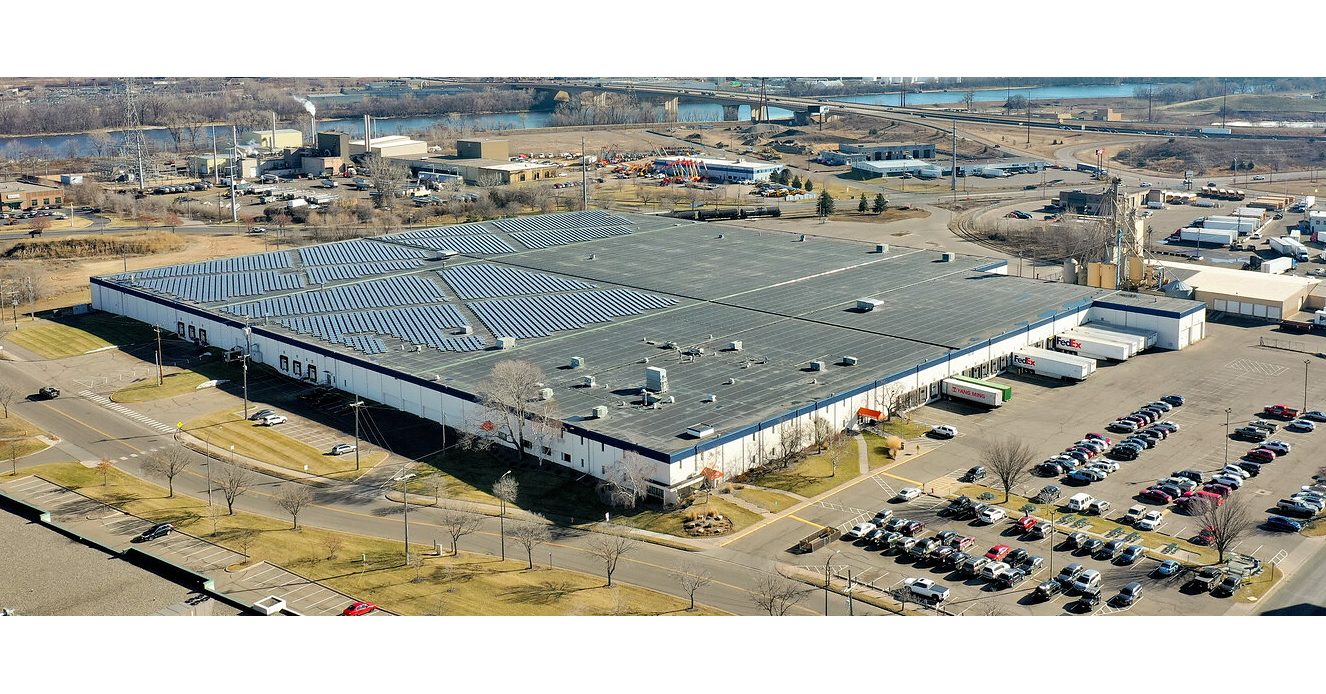
Industrial Realty Group (IRG) acquired a 422,727-square-foot rail-served cross-dock distribution facility at 411 Farwell Avenue in South St. Paul, MN, including 392,727 sq ft of warehouse and 30,000 sq ft of office space. The 19-acre asset is fully available for occupancy and features 36 dock-high doors, a 110-foot truck court, 22-foot clear height, and an existing Union Pacific rail spur (rail service requires activation). IRG plans to reposition and lease the property for single large users or multiple tenants, supporting incremental expansion of its industrial portfolio in the Twin Cities.
Analysis
This is more of a recycling-of-capital signal than a demand catalyst: assets with good location but dated spec are still getting bid because tenants will pay for interstate adjacency and cross-dock functionality before they pay for brand-new box quality. The real underwriting question is lease-up economics, not acquisition price. At 22-foot clear height, this building sits below the modern bulk-distribution standard, so any repositioning likely requires either a value-oriented tenant or meaningful capex; that means the IRR will be driven by execution, not scarcity alone.
Second-order, the rail spur is optionality, not earnings. Until service is actually activated, UNP gets little more than a theoretical lane-add; if it is activated, the incremental freight probably comes from truck/drayage share, not from broad market-share gains. That makes UNP a longer-dated monitor rather than an immediate trade. For nearby industrial landlords, the release of a fully available, flexible cross-dock asset could modestly tighten the market for lower-quality secondary space, but it also highlights bifurcation: modern 36-40 foot product should continue to command premium rents while older functional boxes trade on location and conversion costs.
Contrarian view: the market often overestimates how quickly "good enough" industrial can be absorbed. Vacancy in these assets can persist longer than headline industrial vacancy suggests, especially if a single-tenant user requires subdivision, new dock sequencing, or rail activation. If lease-up drags, the burden falls on capital-intensive owners; that favors balance-sheet strength and cheap financing over narrative-driven industrial exposure.
AllMind Terminal
AI-powered research, real-time alerts, and portfolio analytics for institutional investors.
Request TrialMarket Sentiment
Overall Sentiment
mildly positive
Sentiment Score
0.18
Ticker Sentiment
Key Decisions for Investors
- No trade in SPWH on this event; the transaction does not change operating demand, consumer traffic, or balance-sheet risk. Reassess only on earnings or store-level data.
- Add UNP to a 3-6 month watchlist, not an immediate long: only take exposure if rail activation is paired with a signed tenant commitment. Without that, the spur is dormant optionality with no P&L impact.
- Use this as a constructive datapoint for industrial REITs with in-fill, multi-tenant cross-dock portfolios (e.g., PLD, STAG) on pullbacks; the risk/reward is better than for owners of highly specialized assets that need capex to stay competitive.
- If you want a cleaner expression, prefer long industrial logistics over broader real estate exposure for the next 1-3 months; the thesis falsifier is rising industrial vacancy or a slowdown in same-store leasing spreads.
- Do not chase the private-asset headline into UNP; wait for evidence of actual rail activation or volume data, otherwise the expected upside is too small versus the timing risk.
More News
- ‘If nothing is done, it’s almost inevitable’: Ukraine’s Yuriy Ryzhenkov on why steelmaking is on the brink of collapse as Russian bombing intensifies
- Why is LG Innotek stock plunging today?
- TotalEnergies, KKR expand U.S. solar venture with 700 MW addition
- IIF CEO on Rising Global Debt
- Vår Energi cuts 2026 output forecast; Q3 production at 369,000 boepd
- The hawk Fed Chair who broke the bond market?
From AllMind Research
- Anthropic IPO Preview: Valuation, Timing, and What to Watch
- Shein After the IPO: Venue, Valuation, and What Must Be Proved
- What AI Research Tools Should a Small Hedge Fund Buy First?
- Eli Lilly Q4 2025 Earnings: Revenue Surges 43% as Mounjaro and Zepbound Dominate the GLP-1 Market
- Investment Research Software Costs: A 2026 Budget Framework