
Precoro Launches Virtual Cards to Expand Spend Control Beyond Standard Procurement Flow
Source: PR Newswire
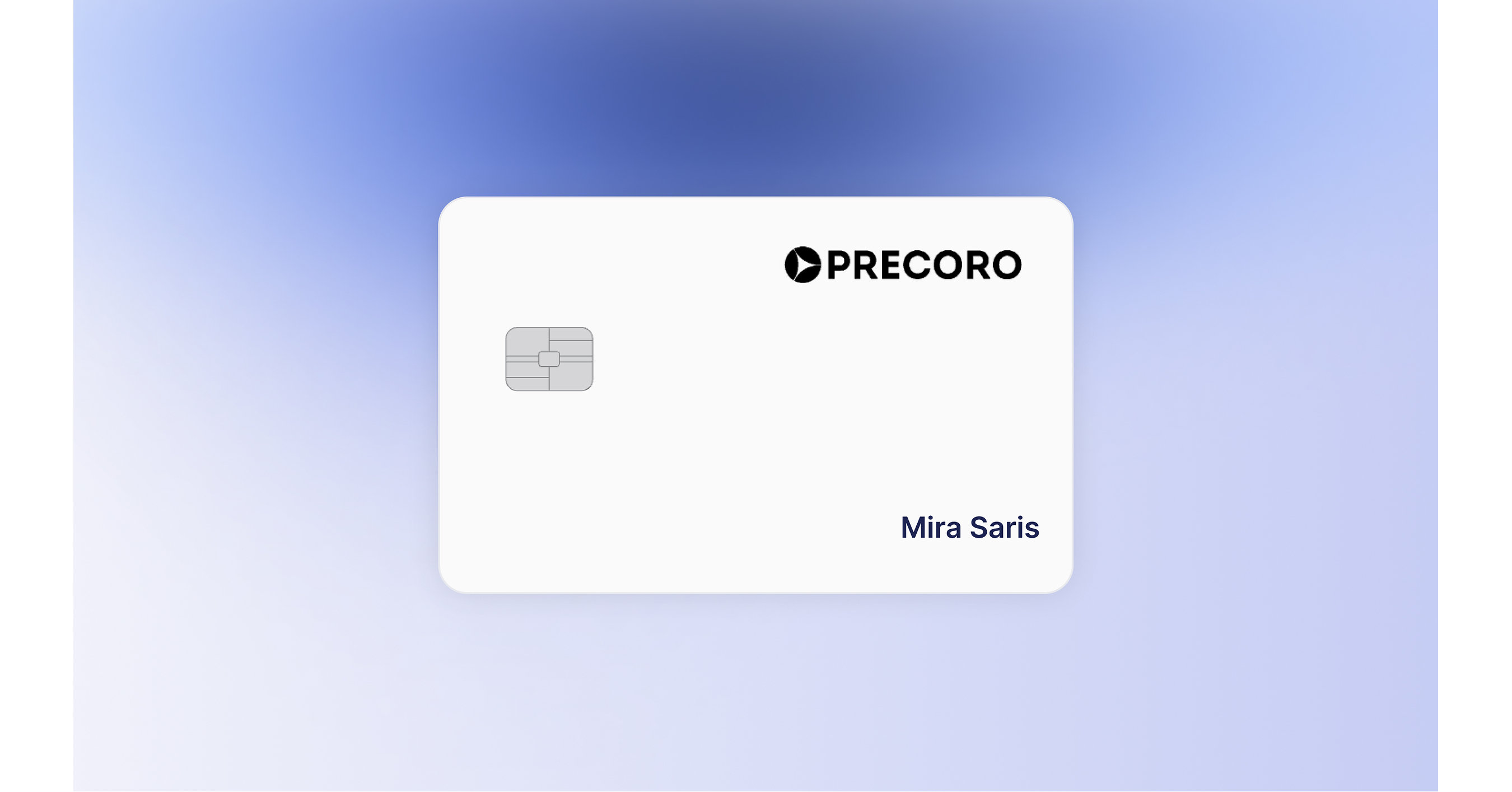
Precoro launched fee-free prepaid virtual spending cards for U.S.-registered businesses, extending its procurement and accounts-payable platform beyond invoice payments. The cards draw on funds in the Precoro Financial Account, enable transaction and time-based spending limits, and provide centralized controls across subsidiaries. The product adds Apple Pay and Google Pay support while reducing reliance on separate corporate-card and expense-management workflows.
Analysis
This is strategically more relevant to Stripe than to the named public tickers: embedding controlled card issuance into an AP/procurement workflow shifts payment volume from post-spend reconciliation toward prefunded, software-directed transactions. If adoption is meaningful, it modestly reinforces the value of Stripe's embedded-finance distribution and raises competitive pressure on standalone expense platforms such as Brex, Ramp and Expensify (EXFY), whose products depend on being the system of record for employee spend. The immediate public-market read-through to AAPL and GOOG is negligible; wallet compatibility is table stakes rather than a material payments-revenue catalyst.
The key economic question is whether the product generates durable payment monetization or merely improves Precoro's software retention. Prepaid funding constrains credit losses but also removes interchange-funded working-capital economics that support many corporate-card competitors; that may make the offer attractive for cost control but less disruptive to credit-led issuers. Over the next 6-18 months, the more important second-order effect is tighter transaction-level data capture, which can improve procurement automation and switching costs if card spend is successfully linked to purchase orders, invoices and entity-level budgets.
Contrarian view: the addressable spend may be smaller than promotional language implies. Larger mid-market customers typically retain incumbent card programs because rebates, travel-and-expense integrations and credit terms matter more than workflow consolidation. A credible disruption signal would be disclosed card-payment volume, net revenue retention uplift, or evidence that customers are consolidating external card vendors—not customer-count claims or wallet availability.
AllMind Terminal
AI-powered research, real-time alerts, and portfolio analytics for institutional investors.
Request TrialMarket Sentiment
Overall Sentiment
mildly positive
Sentiment Score
0.30
Ticker Sentiment
Key Decisions for Investors
- No directional position in AAPL or GOOG: this feature does not alter either company's near-term revenue or margin trajectory; reassess only if broader enterprise wallet-payment volumes emerge as a reported growth driver.
- Place EXFY on a 1-3 quarter competitive watchlist rather than shorting on this announcement. A short thesis requires evidence of worsening paid-user growth, declining interchange/transaction revenue, or elevated churn attributable to integrated procurement suites; absent that, the signal is too weak.
- Monitor private-market proxies Ramp and Brex through enterprise-software channel checks: increasing demand for prefunded, controlled cards over credit/rebate programs would pressure their unit economics and could foreshadow pricing competition across spend-management software.
- For payments exposure, maintain preference for diversified processors over narrow expense-management models: embedded workflow distribution is structurally valuable, but verify volume economics before assigning incremental value to any platform launch.
More News
- Broadcom to lend Anthropic up to $42 billion to lease its chips, filing says
- AI’s biggest players promise to police themselves at the White House
- Google unveils latest AI model, but Wall Street wants a breakout personal agent
- You think Nvidia's $235 billion buyback is big. Just wait and see what Micron might do
- Exclusive-Broadcom to lend Anthropic up to $42 billion to lease its chips, filing says
- World’s first enhanced geothermal power plant completed in just 23 months
From AllMind Research
- Anthropic IPO Preview: Valuation, Timing, and What to Watch
- Shein After the IPO: Venue, Valuation, and What Must Be Proved
- What AI Research Tools Should a Small Hedge Fund Buy First?
- How the 2026 Milan-Cortina Winter Olympics Will Reshape Company Revenues and Stock Performance
- Can Hedge Funds Use ChatGPT? A Control Framework