
Fed rate hikes won’t bring down gas prices. Why the bond market is pushing for them anyway.
Source: MarketWatch
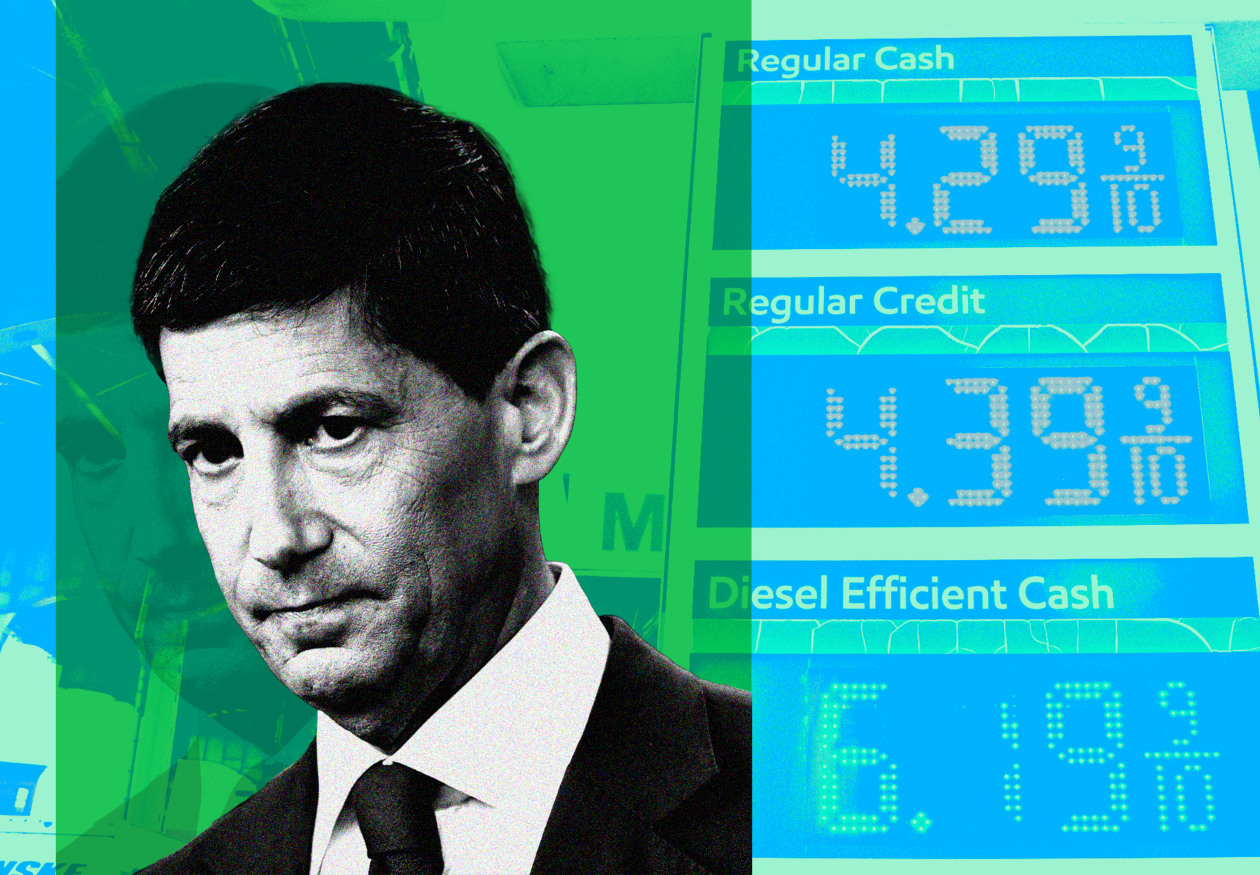
The 10-year Treasury yield is nearing 5% after rising about 50 basis points since late June, while the 30-year yield has climbed roughly 45bps. Inflation concerns have driven long-dated Treasury yields toward their highest levels since 2007, increasing borrowing costs for households, companies and the U.S. government. The move is a warning sign for equities and reflects bond-market pressure for tighter monetary policy despite rate hikes having limited direct impact on gasoline prices.
Analysis
The relevant transmission channel is not gasoline demand but term premium: persistent inflation uncertainty forces investors to demand compensation for holding long-duration nominal assets, independently of the expected policy-rate path. That distinction is bearish for long-duration equities (XLK, XLU, XLRE) and levered real-estate or private-credit vehicles because their valuation compression can continue even if the Fed ultimately pauses. The more acute 1-3 month risk is a reflexive tightening in financial conditions through mortgages, investment-grade issuance and refinancing, with small-cap and regional-bank balance sheets more exposed than mega-cap cash generators.
Consensus may be too focused on whether the next policy move is a hike rather than whether the long end can stabilize without evidence of disinflation in services, wages, or fiscal financing pressure. A sustained move above 5% in the 10-year would likely trigger equity multiple compression before it produces a meaningful near-term demand response; this favors quality balance sheets over broad beta. Conversely, a benign inflation print or well-received Treasury refundings could unwind the term-premium shock quickly, making outright duration shorts vulnerable to a sharp 20-30 bp rally in yields.
Second-order beneficiaries are cash-rich insurers and selected money-center banks that can reinvest maturing assets at higher yields, though this is conditional on credit losses remaining contained; KRE is not a clean beneficiary because unrealized securities losses and commercial-real-estate exposure dominate. Energy equities may initially hold up if inflation pressure is commodity-led, but they are not a durable hedge if higher real yields ultimately weaken global demand. The structural 6-18 month implication is higher interest expense for highly levered issuers, raising the probability of spread widening and a bifurcation between investment-grade balance sheets and lower-quality credit.
AllMind Terminal
AI-powered research, real-time alerts, and portfolio analytics for institutional investors.
Request TrialMarket Sentiment
Overall Sentiment
mildly negative
Sentiment Score
-0.35
Key Decisions for Investors
- Maintain an underweight in rate-sensitive equity proxies XLU and XLRE versus SPY over the next 1-3 months; use a relative-value framework rather than an outright market short. Add to the underweight if the 10-year yield closes above 5.0%; cover if it falls below 4.60% following a clear disinflation catalyst.
- Express continued long-end pressure with a modest TLT put spread or short IEF/long SHY duration pair, sized for a further 25-40 bp yield rise rather than a disorderly selloff. The thesis is falsified by falling core inflation expectations and a sustained compression in term premium, not merely by a single soft headline CPI print.
- Favor large, deposit-rich financials such as JPM over KRE for the next two earnings cycles: higher reinvestment yields can support net interest income at scale, while regional-bank securities marks, deposit competition and CRE remain asymmetric risks. Exit the relative long if credit-cost guidance rises materially or deposit betas reaccelerate.
- Increase scrutiny of high-yield and leveraged-loan exposure; use HYG puts or a long LQD/short HYG spread as a 3-6 month hedge if long yields remain elevated. The key confirmation is widening high-yield spreads, not Treasury yields alone; absent spread deterioration, do not escalate the credit short.
More News
- AI slowdown risks: the stocks most exposed if frontier labs pull back
- Baker Hughes sees no slowdown in energy projects despite higher rates as AI buildouts stoke LNG demand
- Asian stocks fall as AI slowdown fears deepen, oil surge lifts rate risks
- U.S. stock futures slide on calls to slow AI development, M.East escalation
- Diplomacy stumbles with postponement of meeting on Strait of Hormuz proposal
- Trump tells Zelenskyy to stop hitting Russian diesel supplies