
Bleak Midterm Prospects Tee Up House GOP Leadership Scramble
Source: Bloomberg
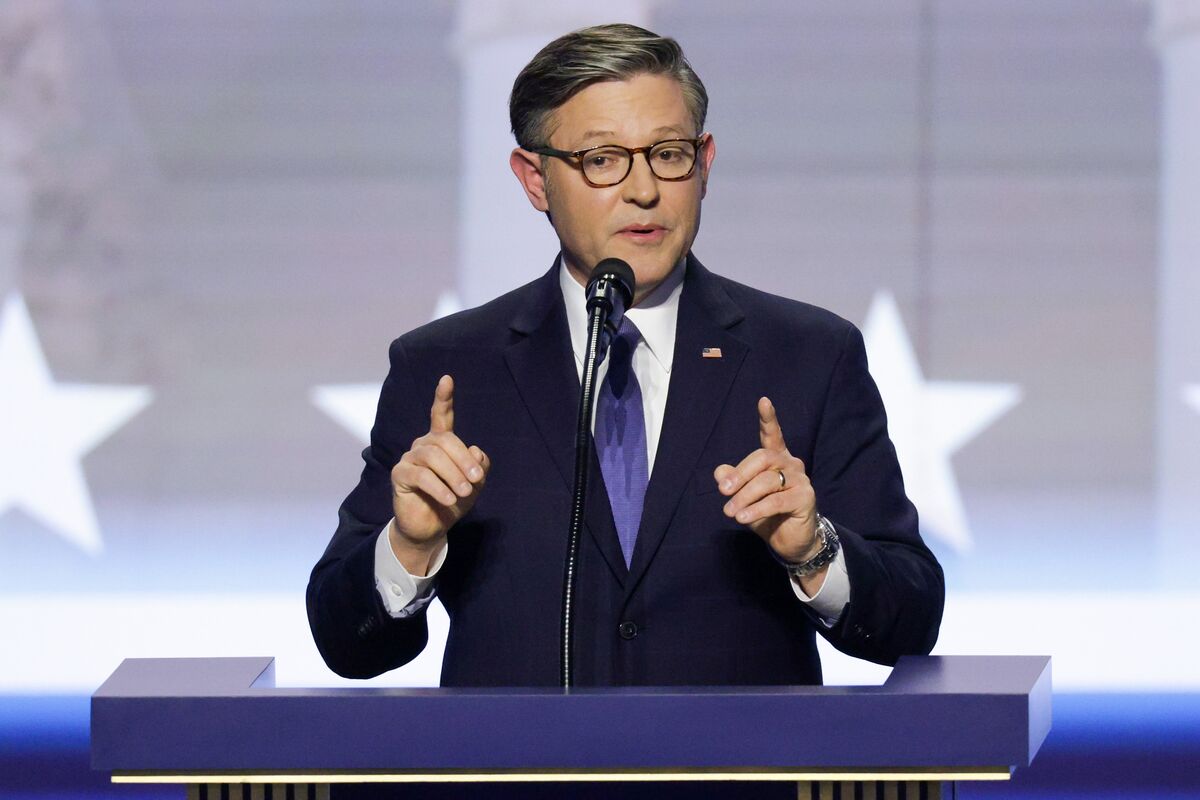
House Republicans are preparing for a leadership contest if the party loses control of the House in the midterms, with Mike Johnson likely to face competition for the Republican leader role. The excerpt provides no polling figures, election results, or market reaction.
Analysis
The market-relevant channel is legislative capacity, not the leadership contest itself. A contested post-election leadership transition could delay House agenda-setting and increase uncertainty around appropriations, tax policy, energy, and healthcare legislation. But one leadership challenge does not establish a change in conference control or policy outcomes; committee composition, Senate arithmetic, and the administration remain more important transmission points. The signal is low and conditional, so broad sector moves based on this item alone are unlikely to be justified.
Near term, expect limited market impact unless leadership uncertainty intersects with a funding deadline or another must-pass bill. Over the next 1–3 months, watch whether the contest delays committee assignments or budget negotiations; those developments could affect policy-sensitive industries. Over 6–18 months, sustained dysfunction could favor a status-quo assumption in policy-sensitive valuation models, but this is not yet evidence of a durable regulatory shift. The contrarian point: markets may over-attribute policy outcomes to the Speaker, while institutional constraints can preserve continuity even through a leadership change. The thesis weakens if leadership is resolved quickly and legislative milestones proceed without disruption.
AllMind Terminal
AI-powered research, real-time alerts, and portfolio analytics for institutional investors.
Request TrialMarket Sentiment
Overall Sentiment
mildly negative
Sentiment Score
-0.20
Key Decisions for Investors
- No standalone trade: the item offers little directional edge for equities or rates without evidence that legislative deadlines or policy proposals are being delayed.
- For portfolios with concentrated exposure to U.S. policy outcomes, monitor appropriations and tax/healthcare/energy committee timelines after the election; treat slippage in those milestones—not leadership speculation—as the actionable signal.
- Avoid pricing in a broad regulatory or fiscal regime change until the House majority, leadership outcome, and Senate constraints are clearer. Reassess if a leadership dispute demonstrably disrupts a must-pass bill or produces a material policy-platform shift.
More News
- ‘They are trying to intimidate us’: Indonesia’s Prabowo remains defiant in the face of an MSCI double downgrade
- Ready for a French test?: Five questions for the ECB
- Iran reveals ‘offensive’ doctrine, US issues alert: Is war imminent?
- Iran says seven ships hit in Hormuz Strait, warns US of wider response
- Meta stock sinks 6% as AI spend pushes free cash flow negative
- Japan considers ending gasoline subsidies in December- Reuters
From AllMind Research
- Anthropic IPO Preview: Valuation, Timing, and What to Watch
- Shein After the IPO: Venue, Valuation, and What Must Be Proved
- What AI Research Tools Should a Small Hedge Fund Buy First?
- Capital Intensity as Gravity: The AI Trade Enters Its Industrial Era (Looking at Q3 2025 Earnings in Tech)
- AI Portfolio Monitoring: Build an Alert Policy Analysts Can Audit