
S&P 500 and Nasdaq surge to record highs after AI chipmaker rally
Source: theguardian.com
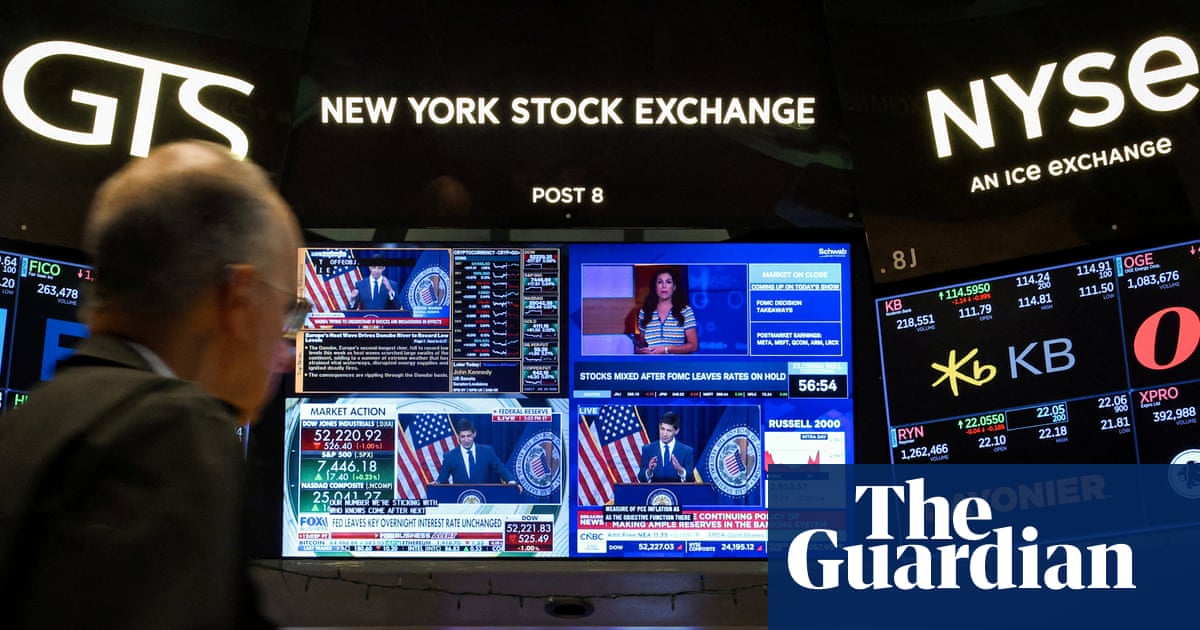
The S&P 500 gained 0.58% to close above 7,800 for the first time, while the Nasdaq rose 0.45% and the Dow climbed 0.49%, amid optimism about AI-chip demand and expectations that the Fed will leave rates unchanged in October. The rally contrasted with recent bond-market turmoil: the 10-year Treasury yield reached 5.349%, its highest since April 2022, before dipping on Tuesday. Energy costs remain a consumer headwind, with gasoline about $1.20 per gallon above a year earlier and diesel more than 40% higher.
Analysis
The key tension is whether lower yields reflect benign disinflation or weakening demand: the first supports AI valuations, while the second can undermine customers’ ability or willingness to sustain data-center capex. That distinction matters more than the index record. AI semiconductor optimism can remain durable, but price action alone does not establish incremental orders, revenue conversion, or returns on customers’ investment. For AMD, Broadcom, and Marvell, verify company-specific AI revenue, backlog, and customer concentration before treating the group as a uniform beneficiary; gains at one supplier need not imply comparable economics for the others.
In the near term, a renewed yield rise could compress long-duration equity multiples even if earnings expectations hold. Over 1–3 months, labor and inflation data—and the Fed’s response—are the main catalysts for whether the rate relief persists. Over 6–18 months, the test is whether AI infrastructure spending translates into sustained supplier revenue rather than a capex pause or substitution among vendors. Energy-cost pressure is a separate downside channel: persistent fuel costs can constrain consumer spending and raise transport costs, weakening demand beyond technology.
Contrarian view: a softer labor picture is not unambiguously bullish merely because it may defer tightening. If yields fall on growth fears, index-level support may conceal weaker earnings breadth. The thesis is falsified by renewed yield pressure alongside deteriorating AI order or revenue indicators; continued yield relief and improving company-level AI conversion would argue the rally has fundamental support.
AllMind Terminal
AI-powered research, real-time alerts, and portfolio analytics for institutional investors.
Request TrialMarket Sentiment
Overall Sentiment
mildly positive
Sentiment Score
0.15
Ticker Sentiment
Key Decisions for Investors
- Avoid chasing the broad-market breakout on its own. Consider staged, risk-sized exposure to AMD, Broadcom, or Marvell only where upcoming disclosures confirm AI revenue conversion and order durability; do not assume equal benefit across suppliers.
- For a relative-value expression, consider a beta-adjusted long in the AI semiconductor names with a short Nasdaq-100 futures hedge. This isolates execution and AI demand better than an unhedged momentum position, but can lose if semiconductor-specific exposure underperforms broader technology.
- Use renewed increases in Treasury yields together with worsening market breadth as a trigger to reduce long-duration equity risk. Reassess if labor and inflation data ease without deterioration in AI supplier guidance.
More News
- US stock market hits all-time high as investors bet big on AI
- What Marvell's rosy long-term guidance means for our AI chip stocks
- U.S. stock futures steady after tech rally lifts S&P 500, Nasdaq to records
- Meta Muse gives AMD a boost as AI momentum shifts to personal agents
- Why is Broadcom stock rallying today?
- How the S&P 500 can be at record highs, while the market remains oversold