
Lula Feels the Heat From Brazil’s Solar Boom
Source: Bloomberg
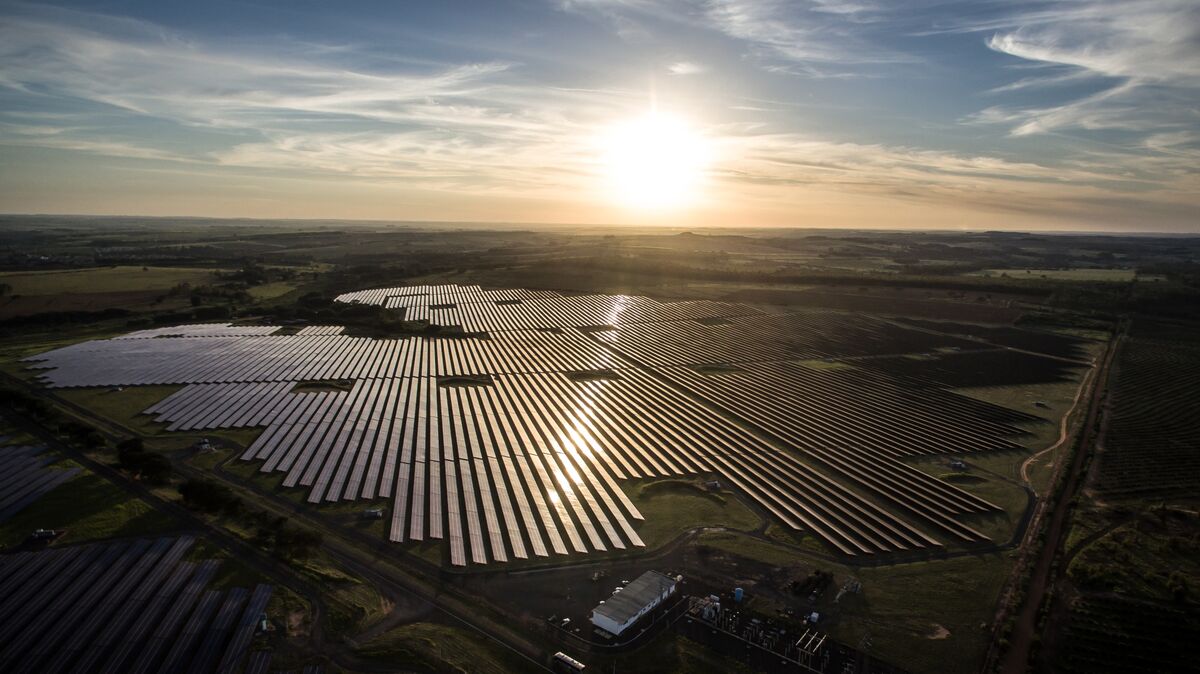
Brazil substantially expanded renewable-energy capacity during President Luiz Inácio Lula da Silva’s latest term, but the electricity system is strained and grid capacity needs to catch up. The article frames this infrastructure challenge as a key issue for Lula, who has emphasized his environmental credentials; it provides no quantitative capacity or investment figures.
Analysis
The investable issue is not renewable capacity growth itself but the mismatch between generation build-out and transmission, dispatch, and storage. If congestion forces more curtailment or depresses realized prices during high-solar hours, merchant renewables could under-earn even as national clean-power capacity rises; hydro-heavy generators may also face less valuable midday output. Conversely, regulated transmission owners and developers with contracted, deliverable projects could gain bargaining power—but only if permits, auctions, and construction convert into commissioned capacity. Verify regional curtailment, capture prices, connection queues, and the split between contracted and merchant exposure before assigning company-level winners. Eletrobras, Engie Brasil, and Neoenergia are reasonable names to screen, not automatic beneficiaries absent asset-level exposure data.
Near term (days): political attention may lift infrastructure expectations, but the article supplies no evidence of a funded policy response, so avoid chasing a broad renewables trade. Over 1–3 months, watch transmission auction terms, grid-connection rules, curtailment disclosures, and power-price spreads. Over 6–18 months, persistent bottlenecks could shift capital from generation toward grids, flexibility, and storage, while raising pressure for tariff support or market intervention. That creates a political risk: affordability measures could dilute returns or transfer costs to consumers and taxpayers.
Contrarian angle: the bottleneck may be more a queue and execution problem than a permanent shortage; a credible transmission build-out could restore value to curtailed generation and reverse the relative trade. Falsify the bearish-generation thesis with falling curtailment and improving realized capture prices; falsify the grid-beneficiary thesis with delayed auctions, weak project awards, or continued commissioning slippage.
AllMind Terminal
AI-powered research, real-time alerts, and portfolio analytics for institutional investors.
Request TrialMarket Sentiment
Overall Sentiment
mixed
Sentiment Score
0.00
Key Decisions for Investors
- Watch, rather than initiate, a relative-value position favoring regulated transmission exposure over merchant solar until asset-level exposure, curtailment, and auction data confirm the bottleneck is monetizable. Screen Eletrobras, Engie Brasil, and Neoenergia; do not assume their consolidated results track the sector uniformly.
- Set an alert for regional curtailment, generator capture prices versus reference power prices, and grid-connection delays. Rising curtailment alongside weaker capture prices would support reducing merchant-renewables exposure; sustained improvement would invalidate that signal.
- Track transmission auction awards, financing terms, and commissioning milestones over the next 1–3 months. Delays or cost overruns weaken the grid-investment thesis; credible delivery could support a 6–18 month recovery in constrained generation assets.
- Avoid a broad Brazil clean-energy or political-risk trade on this article alone: no specific policy commitment, company exposure, valuation, or market pricing is provided. Reassess if affordability interventions or tariff changes emerge.
More News
- Budget 2026 speech
- GE Vernova shares slip despite a beat-and-raise. What the sellers are getting wrong
- Asian shares fall as Alphabet earnings miss drags Wall St futures lower
- Burnham’s government unveils its first UK budget: What to expect
- Fed mantiene tasas sin dar muchas pistas sobre diciembre
- Trump methane policy rollback may have minimal impact on crude prices, EPA says