
Tomorrow.Mobility 2026 contribue concrètement à façonner l'avenir de la mobilité urbaine
Source: PR Newswire
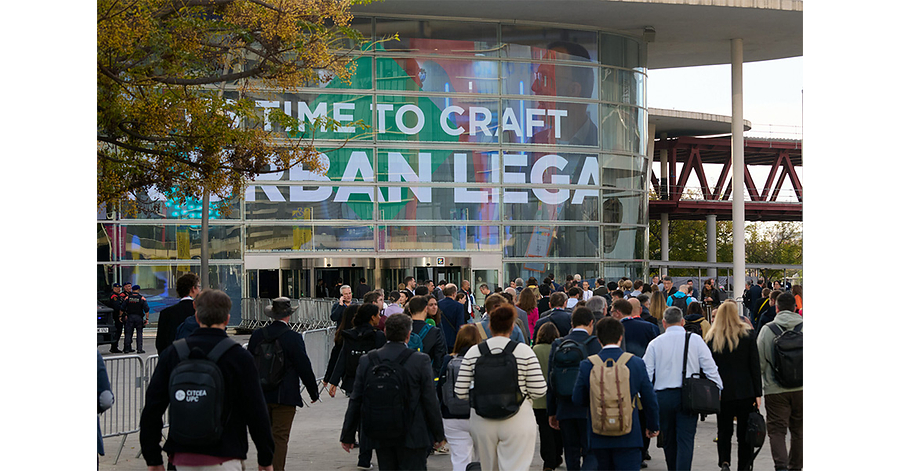
Tomorrow.Mobility World Congress 2026 will take place in Barcelona on November 3-5, bringing together more than 5,000 participants, 200 exhibitors and 240 speakers focused on sustainable, intelligent urban mobility. Key discussions will cover mobility data spaces, MaaS, autonomous vehicles, next-generation public transit, electrification and battery-waste circularity. The event’s Startup Zone and Innovation Playground are designed to promote collaboration and investment across the mobility-technology ecosystem, though the announcement is unlikely to materially affect public markets.
Analysis
This is not a fundamental catalyst for Brookfield Infrastructure (BIP); its appearance is likely BIP Consulting rather than the listed infrastructure partnership. The immediate risk is erroneous ticker association and low-quality retail flow, not a revision to BIP's cash flow, capital allocation, or valuation. No position should be initiated on the event itself.
The investable read-through is that European cities are moving from vehicle procurement toward software-led control of curb access, parking, payments and multimodal data. That favors recurring-revenue urban-mobility platforms and payment/toll-system vendors over capital-intensive shared-mobility operators, whose unit economics remain exposed to utilization, insurance and municipal permit terms. Relevant public beneficiaries are Conduent (CNDT), which has transit/payment exposure, and Kapsch TrafficCom (KTCG.VI); the more likely value creation, however, remains private and is not independently validated by a trade-show exhibitor list.
Over 6-18 months, EU data-sharing and urban-access policies could increase interoperability requirements, potentially commoditizing point solutions while favoring vendors with installed municipal contracts and cybersecurity credentials. The contrarian view is that city budgets remain constrained: pilots can proliferate without scaling into material procurement, particularly where public-transit subsidies, political opposition to congestion charging, or fragmented data standards delay implementation. November conference announcements should be treated as pipeline signals only until contract values, funding sources and deployment dates are disclosed.
AllMind Terminal
AI-powered research, real-time alerts, and portfolio analytics for institutional investors.
Request TrialMarket Sentiment
Overall Sentiment
mildly positive
Sentiment Score
0.22
Ticker Sentiment
Key Decisions for Investors
- Take no directional position in BIP from this release; confirm whether the named exhibitor is Brookfield Infrastructure or BIP Consulting before attributing any relevance. A valid BIP thesis requires an asset-level concession, acquisition, or guidance change.
- Add CNDT and KTCG.VI to a 1-3 month contract-monitoring watchlist around the conference; act only on signed municipal awards with disclosed multi-year recurring revenue, not partnership announcements or pilots.
- For European mobility exposure, prefer an installed-base vendor basket over capital-intensive micromobility or autonomous-vehicle operators until procurement conversion is evidenced. Falsify the relative thesis if major city tenders favor open-source/commodity systems or announced projects lack committed budget.
- Monitor EU urban-mobility funding, congestion-pricing decisions and data-space implementation milestones over the next 6-18 months. Delayed regulation or municipal budget cuts would reduce expected software adoption and support avoiding the theme.
More News
- Oil prices jump after Yemen’s Houthis claim attacks on Saudi facilities
- Saudi, Turkish, Pakistani chiefs plan urgent talks amid Yemen fighting
- Oil falls amid optimism over potential diplomatic solution to the Iran conflict
- Trump Versus Xi: How Their High-Stakes Summits Compare
- Trump, Xi Address AI, Taiwan During State Visit
- China's Xi urges U.S. to cooperate on AI