
Celerant and Worldpay Expand Partnership to Simplify Retailer Cash Flow
Source: PR Newswire
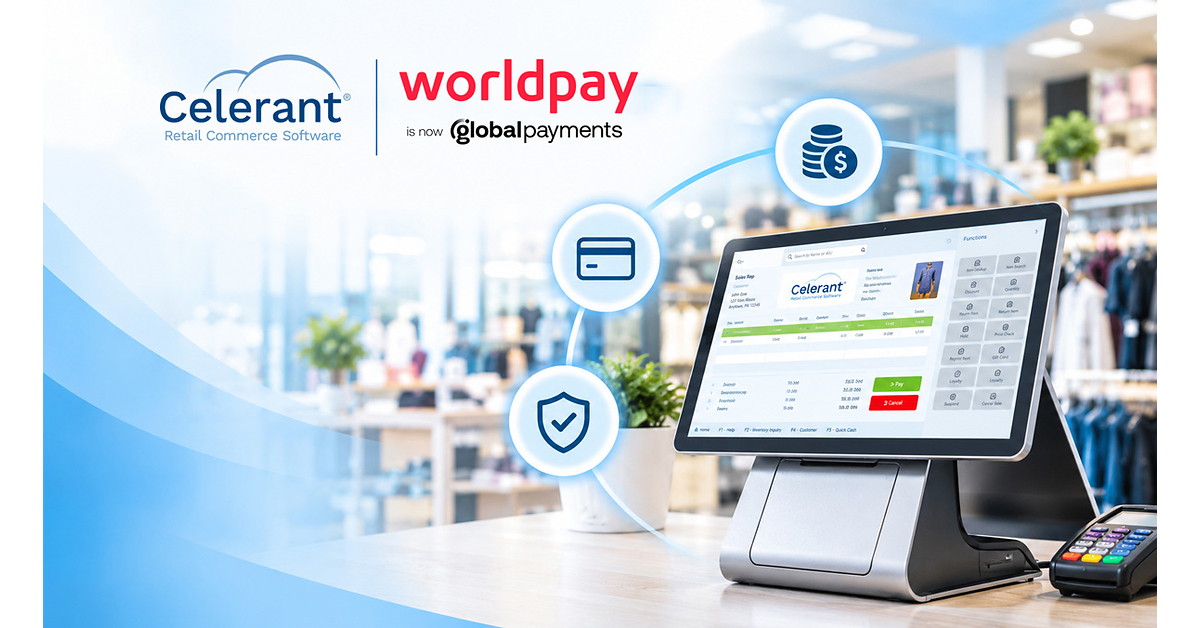
Celerant is rolling out Version 2.9 of Stratus Enterprise and Cumulus Retail, adding three optional Worldpay-powered embedded finance tools for eligible retailers: Working Capital, Fee Assist and Disputes Defender. Working Capital offers pre-approved financing, with funds potentially available within one business day after approval; the other tools support compliant surcharging and payment-dispute resolution. Dashboard access has no added cost or extra setup, though Disputes Defender charges a fee only when a dispute is resolved in the retailer’s favor.
Analysis
The strategic value is less the launch itself than the potential increase in switching costs: financing, fee management and dispute support can make a retailer’s payment relationship harder to unwind. If adoption is meaningful, Celerant may improve retention and Worldpay may deepen payment volume and gain cross-sell data; neither benefit is established by the announcement. The main competitive pressure is on standalone SMB tools and payment providers whose differentiation depends on offering similar services outside a retailer’s operating system. Platforms such as Shopify and Block already compete for that embedded-finance relationship, though this release alone does not indicate share loss.
The economics are asymmetric. Working-capital offers can support merchant liquidity but may expose the provider or its funding partner to credit losses; verify who underwrites loans and bears loss before treating loan availability as a durable revenue driver. Fee surcharging may reduce merchants’ effective processing expense, but customer friction, network-rule enforcement and jurisdictional restrictions could limit uptake. Dispute support is performance-fee based, making service quality and win rates central to unit economics.
Near term, this is not a standalone catalyst for a public-equity trade: adoption, eligible merchant count, funding economics and incremental revenue are undisclosed, and the supplied data identifies no listed company ticker. Over 1–3 months, retailer uptake and reported outcomes matter more than rollout language. Over 6–18 months, broader embedded-finance penetration could strengthen platform retention, but only if credit performance and merchant experience hold up. The contrarian risk is over-crediting a feature launch as monetization: optional, no-added-cost access may produce engagement without material earnings contribution.
AllMind Terminal
AI-powered research, real-time alerts, and portfolio analytics for institutional investors.
Request TrialMarket Sentiment
Overall Sentiment
mildly positive
Sentiment Score
0.30
Key Decisions for Investors
- No immediate trade: treat this as a strategic product signal, not evidence of near-term earnings growth. Do not infer a listed-equity exposure without verifying Worldpay’s current ownership and the relevant entity.
- Monitor for 1–3 months: seek adoption among eligible Celerant merchants, financed volume, fee-assist usage, dispute resolution outcomes, and any disclosed revenue-sharing or funding-partner terms. Reassess only if these show measurable scale.
- For a potential longer-term relative-value thesis, track embedded-finance penetration at Celerant against Shopify and Block; avoid a pair trade until there is evidence of merchant switching, payment-volume displacement, or a material change in retention.
- Falsifiers: weak retailer uptake, adverse credit performance or tighter eligibility, surcharge-related customer complaints or regulatory/network constraints, and no measurable improvement in retention or payment volume.
More News
- AMD stock jumps 7% on earnings as data center revenue nearly doubles
- Marvell-Lumentum Deal Puts Optical Networking at the Center of the AI Boom
- Marvell Technology could plunge on latest multibillion-dollar acquisition
- 5 things to watch on Election Day as Democrats push for control of Congress
- AI Inference Startup Fal Raises Capital at $16 Billion Valuation
- AMD’s OpenAI, Meta chip deals trigger $1 billion quarterly charge
From AllMind Research
- AllMind Platform Feature Updates - Fall 2026
- AI Credit Covenant Monitoring: From Clause to Review
- AI-Led Expert Interviews vs. Transcript Libraries
- The Great Divergence: North American Banking at the Crossroads of Monetary Policy and Agentic AI (Q4 2025 Bank Earnings)
- How to Extract KPIs From Earnings Transcripts With AI