
Hoymiles bringt 22-kW-V2X-Gleichstromladegerät auf den Markt und vervollständigt damit sein integriertes Energie-Ökosystem für Privathaushalte
Source: PR Newswire
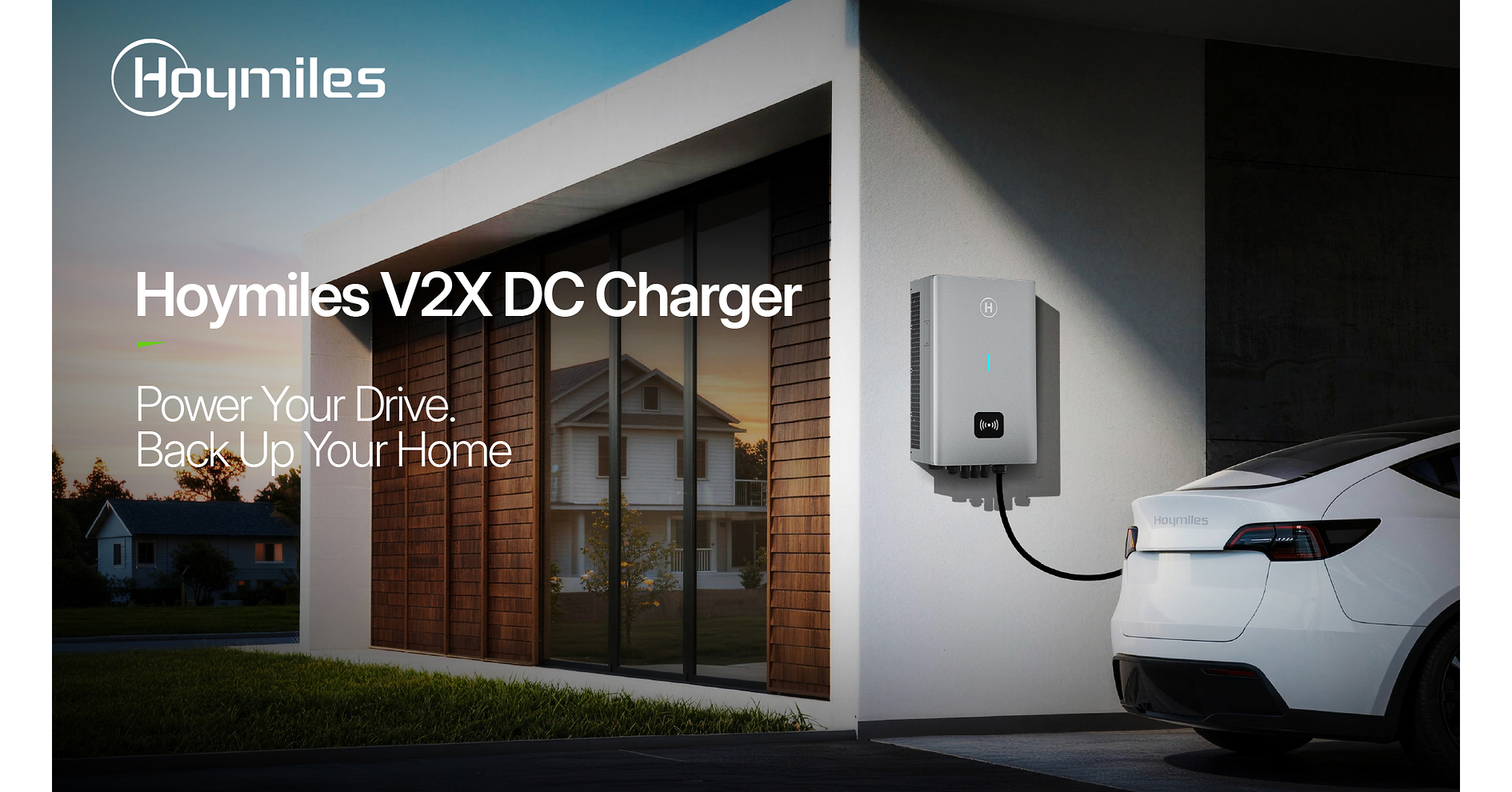
Hoymiles launched a 22-kW bidirectional DC V2X charger integrated with its HiOne residential battery energy-storage system, extending its home-energy ecosystem into EV charging. The unit supports V2H backup power and V2G/VPP participation, directly charges from solar and battery storage, and can add about 110 km of range per hour versus roughly 35 km for conventional AC charging. The charger supports 95% of mainstream EVs and is managed through Hoymiles' unified energy-management app.
Analysis
This is strategically more relevant as a system-attachment product than as a standalone charger. Integrated solar-storage-EV control can raise residential battery attach rates and reduce customer churn by making the home-energy platform the dispatch layer for mobility, backup power and tariff optimization. The near-term revenue impact is unlikely to be material for listed peers, but the product direction reinforces competitive pressure on single-function charging vendors such as Wallbox (WBX) and Alfen (ALFEN.AS), whose hardware margins are more exposed if DC bidirectional capability becomes bundled into storage ecosystems.
The key bottleneck is not charging power; it is vehicle-level bidirectional compatibility, local interconnection rules, utility compensation, and installer economics. Over the next 1-3 months, this is principally a product-validation event, with meaningful commercial impact requiring disclosed channel orders, certified vehicle integrations, and VPP partnerships. Over 6-18 months, broad adoption would favor vertically integrated home-energy vendors including Enphase (ENPH), SolarEdge (SEDG), and SMA Solar (S92.DE), but only if software/control revenue offsets the higher warranty, service and working-capital burden of integrated hardware.
Contrarian view: the market may overvalue the theoretical V2G opportunity before household economics are proven. EV owners may resist battery cycling absent attractive utility payments, while European residential solar demand remains highly sensitive to power-price spreads and subsidy regimes. A sustained decline in retail electricity prices, delayed V2G standardization, or weak installer uptake would limit the expected ecosystem premium and leave lower-cost AC charging as the dominant use case.
AllMind Terminal
AI-powered research, real-time alerts, and portfolio analytics for institutional investors.
Request TrialMarket Sentiment
Overall Sentiment
moderately positive
Sentiment Score
0.42
Key Decisions for Investors
- No immediate directional trade: treat the launch as an industry watch item rather than a revenue catalyst until third-party evidence shows vehicle certifications, installer adoption and utility/VPP contracts.
- Monitor WBX and ALFEN.AS for margin and order-book commentary over the next two earnings cycles; consider a short bias only if management cites pricing pressure or slower residential charger demand while integrated solar-storage vendors gain share.
- Maintain ENPH and SEDG on a 6-18 month thematic watchlist rather than adding solely on this development. A constructive entry signal would be rising storage attach rates and software/energy-management revenue without a corresponding increase in warranty reserves or inventory days.
- For European exposure, use S92.DE as a higher-quality confirmation proxy: upgrade the thesis only if residential storage orders and grid-services revenue accelerate together; falsify it if European rooftop-solar demand or battery backlog declines for two consecutive quarters.
More News
- Are global oil reserves sufficient to withstand renewed US-Iran war?
- EU entering winter with lowest gas reserves on record, IEA boss warns
- OpenAI Trims Target Value & Volvo Cars Cuts 2,500 Jobs
- Russia and Ukraine trade fresh strikes despite renewed push for U.S.-brokered peace talks
- U.S. oil holds above $100, Brent at five-month high as Iran says it’s prepared for warfare
- PG&E’s CEO says AI is ‘the best thing that could’ve ever happened to the grid’