
Delta Air Lines Expands Boston Flights for Spring Break Demand
Source: zacks.com
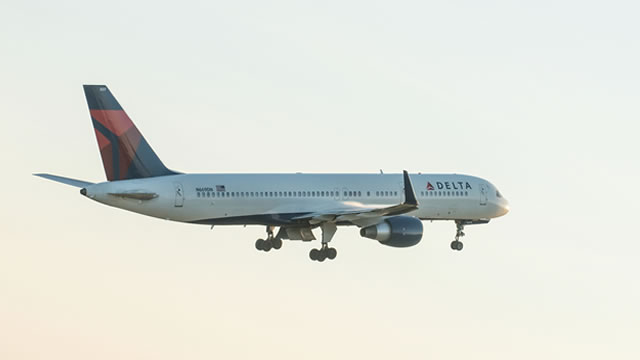
Delta Air Lines plans to add more than 45 round-trip flights and 6,000 seats in Boston for the 2027 Patriots' Day and spring break period. The seasonal expansion increases capacity on selected leisure routes by 15% versus the corresponding 2026 holiday period, responding to strong leisure-travel demand.
Analysis
The signal is strategically positive but likely immaterial to consolidated earnings absent evidence that the added seats earn attractive fares. The key mechanism is route-level: incremental leisure capacity can improve Delta’s Boston relevance and feed, but if competitors match schedules, the result may be lower fares and weaker unit revenue rather than durable share gains. The risk is concentrated on the selected routes, not necessarily across Delta’s Boston operation.
Near term, the announcement alone is unlikely to support a meaningful DAL re-rating. Over the 1–3 months before the travel period, monitor schedule matching and fare trends from JetBlue, American and United, alongside Delta’s booking pace and unit-revenue commentary. Over 6–18 months, repeated capacity additions that hold load factors and pricing would suggest a more durable Boston position; one seasonal schedule is not enough to establish that.
The contrarian read is that capacity growth can look like demand strength while actually increasing promotional pressure. The thesis improves if Delta sustains fares and load factors without further competitor matching; it is falsified by discounting, schedule pullbacks, or weaker unit-revenue guidance. Fuel, weather and operational disruption remain event risks, but the article provides no basis to quantify their impact.
AllMind Terminal
AI-powered research, real-time alerts, and portfolio analytics for institutional investors.
Request TrialMarket Sentiment
Overall Sentiment
mildly positive
Sentiment Score
0.30
Ticker Sentiment
Key Decisions for Investors
- No standalone trade on this announcement: the disclosed seasonal expansion is too small and too far ahead to establish a material earnings change for DAL.
- Treat DAL as a watch item into the booking window; track route-level fares, load factors, and competitor schedule responses before adding exposure.
- A relative-value thesis would be conditional, not immediate: favor DAL over Boston-focused competitors only if pricing and load factors hold as capacity is added; reverse that view if fare discounting or unit-revenue deterioration emerges.
- Reassess if Delta cuts the added schedule, lowers unit-revenue guidance, or reports sustained weakness in leisure bookings; stronger-than-expected fares with stable load factors would support the competitive-gain thesis.
More News
- Anthropic commits 5% stake to new ’public benefit fund’, Musk argues for direct share donations to kids
- BlackRock, GIC among investors chasing Indian telecom major Jio's IPO as anchor bids top $26 billion
- Gartner analyst behind tech rout: AI returns are not yet large enough to justify neocloud build-out
- Saudi Arabia cancels 2026 ‘Davos in the Desert’ amid Houthi attacks
- Alibaba Backs Chinese Robovan Maker in $400 Million Fundraising
- Walmart’s Flipkart is quietly building a food delivery challenger in India
From AllMind Research
- Anthropic IPO Preview: Valuation, Timing, and What to Watch
- Shein After the IPO: Venue, Valuation, and What Must Be Proved
- What AI Research Tools Should a Small Hedge Fund Buy First?
- AlphaSense Pricing: What Public Contract Data Shows in 2026
- Eli Lilly Q4 2025 Earnings: Revenue Surges 43% as Mounjaro and Zepbound Dominate the GLP-1 Market