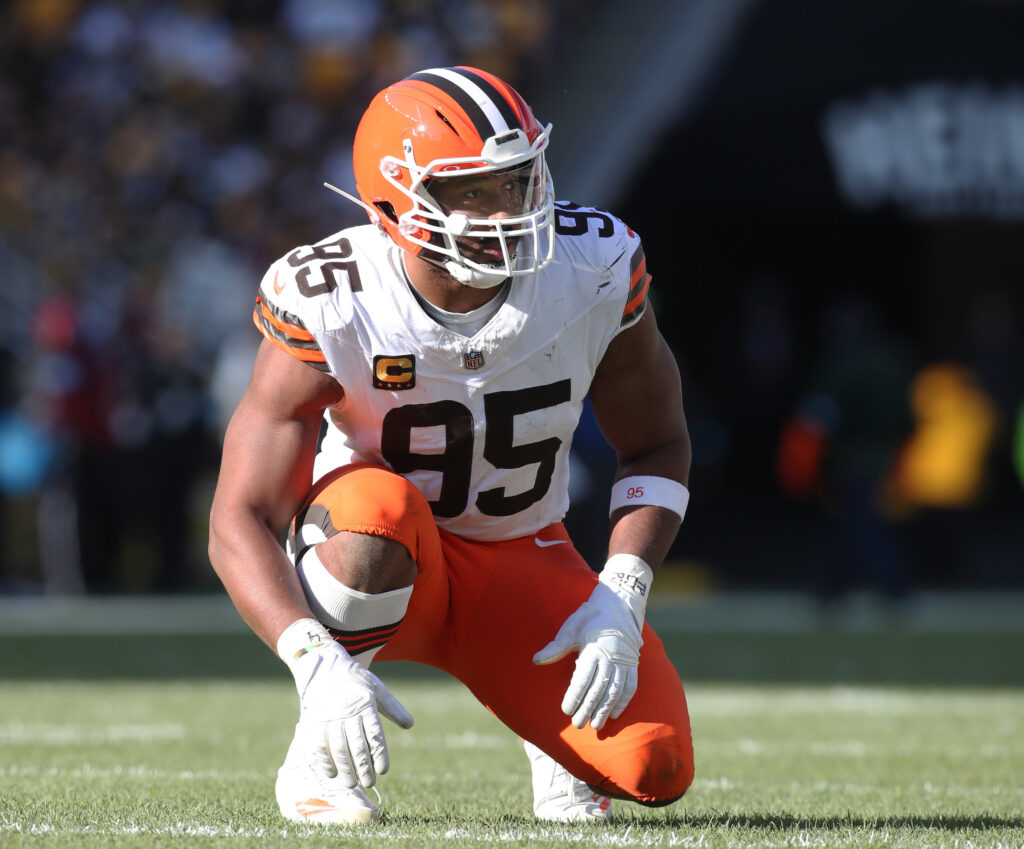
The article details the long negotiation behind the Browns’ trade of Myles Garrett to the Rams, including Los Angeles’ eventual need to include Jared Verse in the return and Garrett’s no-trade clause approval. It also clarifies that the Eagles never made a real run at Garrett and were not interested in sending Jalen Carter back to Cleveland. The piece further notes the Rams’ prior interest in Jermod McCoy before pivoting to Trent McDuffie.
This is less a football transaction than a signal about the Rams’ current capital-allocation regime: they are effectively converting draft optionality into near-term roster certainty. That shifts the team from a “keep powder dry” profile to an all-in, veteran-window posture, which tends to compress future flexibility and raise the probability of follow-on moves to protect the edge rush/secondary ecosystem around the new acquisition.
The second-order winner is not just the Rams’ pass rush; it is every adjacent defense input tied to quarterback pressure and turnover generation. If the upgraded front materially improves pressure rate, the marginal value spills into the secondary, coaching credibility, and even in-season public sentiment, which can support a broader “contender premium” across LA sports media inventory and team-adjacent monetization.
The underappreciated risk is concentration: high-end pass-rush moves have a fat-tail downside because they are expensive, age-sensitive, and injury-prone. The market often prices the first 8–10 games as proof of concept, but the real test is whether the move still looks justified after 12–18 months of cap friction, lost draft depth, and inevitable injury variance. If the player cost forces the team to patch multiple depth holes later, the net effect can be neutral even if the headline trade grades well.
Contrarianly, consensus may be over-indexing on the superstar addition and underpricing the opportunity cost of premium draft assets in a league where rookie contracts remain the highest-return instrument. If the Rams’ underlying roster is still one injury away from regression, the trade can improve week-to-week volatility without meaningfully improving title probability. That makes the setup more attractive as a sentiment/trade-flow story than as a clean fundamental compounding story.
AI-powered research, real-time alerts, and portfolio analytics for institutional investors.
Request TrialOverall Sentiment
neutral
Sentiment Score
0.15
