
PATEO impulsa la IA en vehículos con NVIDIA Nemotron y ByteDance Doubao
Source: PR Newswire
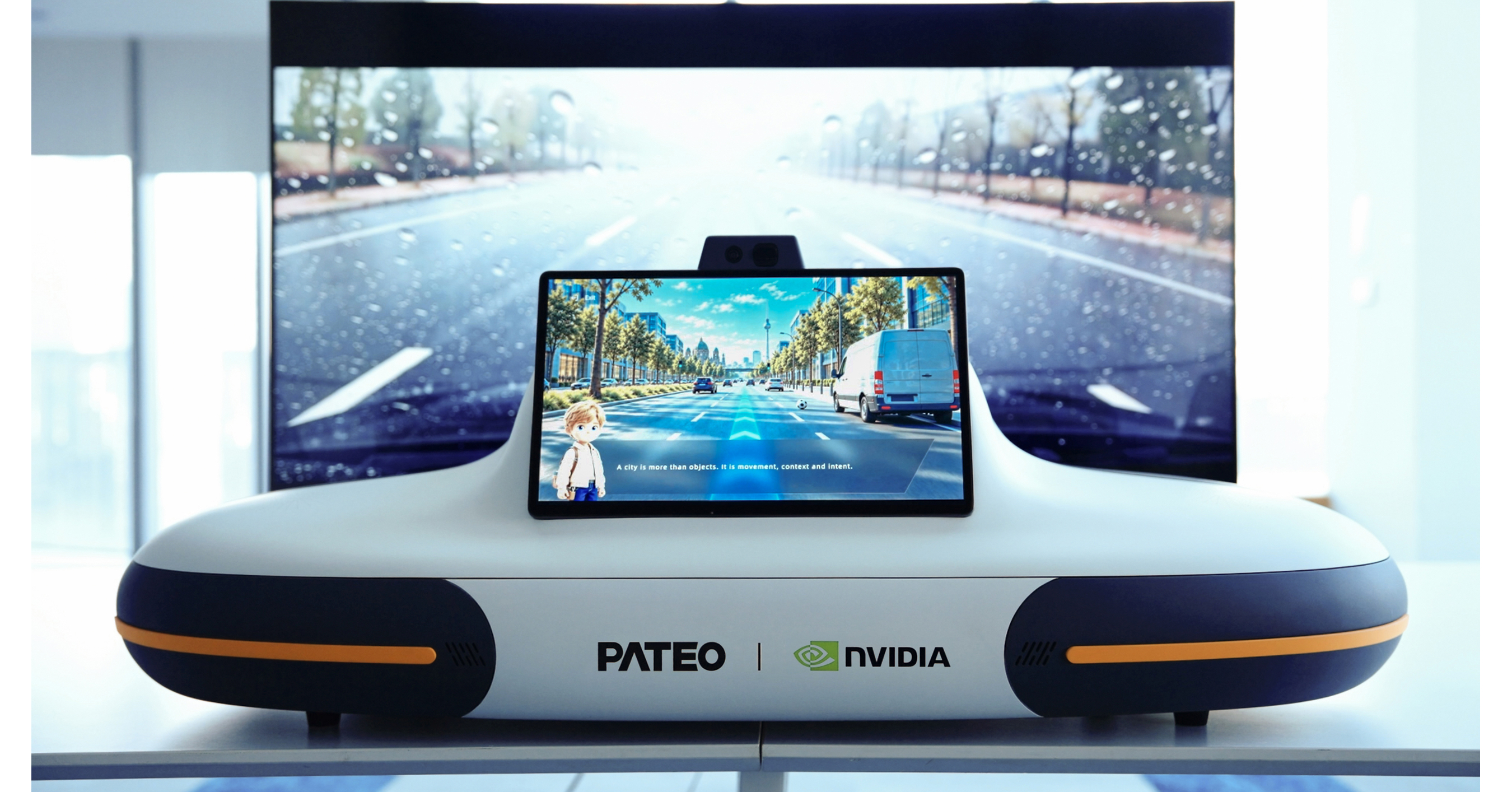
PATEO announced an in-vehicle AI Box built on NVIDIA DRIVE AGX Thor, integrating NVIDIA Nemotron and ByteDance’s 35-billion-parameter Doubao model for local, offline-capable and multilingual vehicle interactions. PATEO also said an unnamed leading new-energy vehicle manufacturer nominated it for a next-generation vehicle project, with mass production expected in Q2 2027. The release outlines potential recurring AI-service revenue and expansion into robotics, but provides no financial results or quantified commercial commitments.
Analysis
NVDA: strategically useful validation, not yet an earnings catalyst. The interesting mechanism is a dedicated, upgradeable in-cabin compute box: it could let automakers add multimodal AI without replacing the primary vehicle controller, lowering the architectural hurdle to NVIDIA DRIVE deployments and potentially increasing compute and memory content per vehicle. That is a favorable ecosystem signal for NVIDIA and a competitive reference point for Qualcomm and Mobileye, but this announcement does not establish displacement, production volumes, or meaningful revenue for any supplier.
The commercial proof is weak so far. PATEO’s project nomination and expected Q2 2027 production are forward-looking company claims; an unnamed OEM, no unit commitments, and no disclosed pricing or recurring-service adoption prevent a credible revenue estimate. “Tokenomics” is an aspiration, not evidence that consumers or automakers will pay recurring fees. Local inference may improve responsiveness and offline availability, but larger models also raise memory-bandwidth, power, thermal, validation, and vehicle-safety integration constraints. Persistent cabin context adds privacy and data-governance risk, particularly for connected services and model updates.
Timing: days, likely limited to sentiment; over 1–3 months, look for independently confirmed OEM programs and NVIDIA automotive commentary; over 6–18 months, production conversion and paid software attach rates determine whether this becomes a repeatable platform. The main contrarian point: the market may overread a polished demo as a design-win revenue signal, while underappreciating the longer-term possibility that auxiliary compute expands the addressable installed base. Thesis weakens if the nominated program slips, the OEM does not confirm production, or NVIDIA’s automotive commentary fails to show broader design-win conversion.
AllMind Terminal
AI-powered research, real-time alerts, and portfolio analytics for institutional investors.
Request TrialMarket Sentiment
Overall Sentiment
mildly positive
Sentiment Score
0.35
Ticker Sentiment
Key Decisions for Investors
- Do not chase NVDA on this announcement alone; treat it as ecosystem validation, not a material near-term earnings revision. Reassess only with confirmed production awards, volume/pricing evidence, or a change in NVIDIA automotive guidance.
- Set a 1–3 month watch for OEM confirmation, production timing, and evidence that PATEO’s box is paid for and deployed at scale. A nomination without those details is not a bankable catalyst.
- Track compute architecture and memory requirements across future cockpit programs. The potential second-order beneficiaries are automotive compute and high-bandwidth memory supply chains, but do not express that theme as a position until program-level content and supplier capture are disclosed.
- Monitor execution risks through production delays, thermal/power limitations, safety-validation issues, privacy or regulatory constraints, and evidence of weak subscription uptake; any of these would undermine the longer-term platform narrative.
More News
- AMD stock jumps 7% on earnings as data center revenue nearly doubles
- AI Inference Startup Fal Raises Capital at $16 Billion Valuation
- AMD’s OpenAI, Meta chip deals trigger $1 billion quarterly charge
- AMD forecasts quarterly revenue above estimates as data-center revenue hits record
- AMD Forecast Exceeds Estimates as AI Chip Demand Soars
- US tech stocks recover after selloff spooks investors over AI spending