
Quiq launches Voice Assist: agentic AI that acts during live calls
Source: PR Newswire
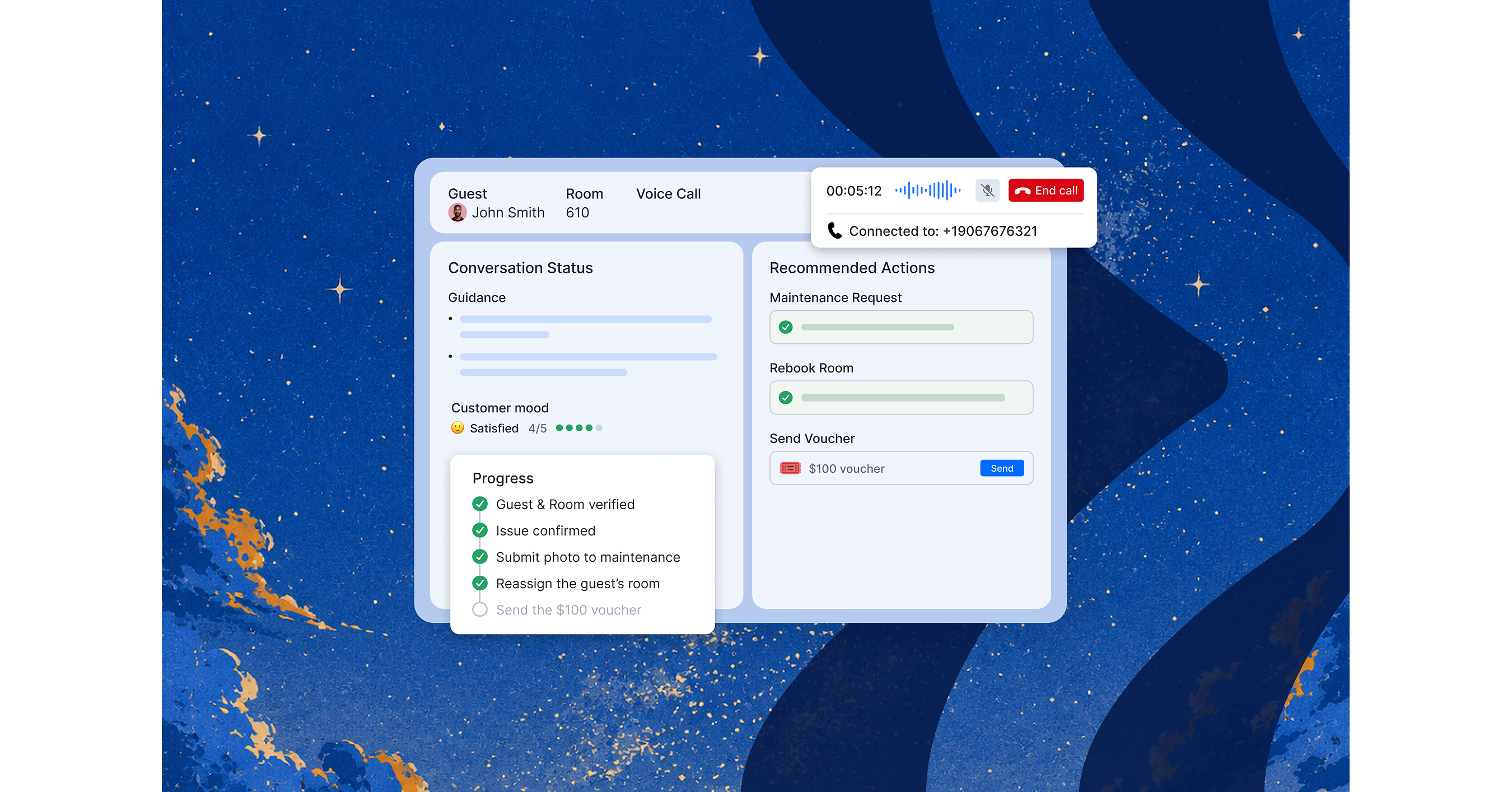
Quiq launched “Voice Assist,” extending its agentic AI assistants to live voice calls with real-time adaptive guidance and the ability to take customer-facing actions (e.g., sending tracking links/order details/gift vouchers) during the call on the same conversation thread. The company claims Voice Assist runs on the same governed platform and verification guardrails used for chat/SMS/email, and that existing digital customers saw a 20% decrease in human agent conversation time and 4.82/5 associate satisfaction. Overall, it’s a product capability upgrade rather than a financial result, with limited near-term market impact.
Analysis
This is more important as a proof-point for budget prioritization than as a standalone revenue event. The immediate equity read-through is strongest for software vendors that sell into contact-center automation and weakest for the private issuer itself; the economic value comes from lower average handle time, fewer post-call touches, and better containment of service labor, which shows up first in operating leverage rather than topline acceleration.
For named customers like ROKU, the second-order benefit is incremental SG&A efficiency and potentially lower churn from faster resolution, but the impact is likely immaterial to consensus until management quantifies it. The more interesting losers are labor-intensive BPOs and outsourced support models such as TTEC, where AI-assisted live calls compress billable minutes and weaken pricing power. That said, procurement cycles are long and regulated verticals will insist on human approval gates, so the near-term impact is more mix pressure than abrupt displacement.
The contrarian view is that the market may overread the announcement as evidence of broad enterprise adoption. Most buyers will pilot this in narrow queues first; if the tool creates even one visible compliance error, rollout slows materially. Watch the next 1-3 earnings cycles for commentary on reduced service costs, lower vendor spend, or seat rationalization—if those do not appear, this remains a marketing win, not an investable earnings catalyst.
AllMind Terminal
AI-powered research, real-time alerts, and portfolio analytics for institutional investors.
Request TrialMarket Sentiment
Overall Sentiment
mildly positive
Sentiment Score
0.25
Ticker Sentiment
Key Decisions for Investors
- Small tactical pair: short TTEC / long NICE over 3-6 months. Thesis is that AI-assisted call handling should pressure labor-heavy outsourcers faster than it adds incremental value to vendors already positioned as workflow platforms. Falsifier: TTEC holds margins and headcount while NICE fails to show margin expansion.
- Do not chase ROKU on this release; treat it as a modest operating-expense tailwind only. Use as an alert item into the next 1-2 quarters of guidance, looking for evidence of lower support cost or improved retention. If customer care expense does not move, the thesis is dead.
- Set a watchlist on public contact-center beneficiaries rather than the private vendor: NICE, FIVN, and CCaaS-adjacent software names should outperform only if they can show net-new AI attach in renewals. Entry should wait for disclosed pipeline conversion, not press-release tone. Risk/reward is asymmetric only if booked ARR or margin guidance moves up.
More News
- Indonesia stocks suffer biggest daily slump since 1998 as MSCI weighs downgrade
- Order to limit Starshield for Ukraine came from inside White House: Reuters reports
- The IPO drought is driving private equity-owned companies to the debt market to pay investors
- CoreWeave credit default swaps hit distress levels as investors sour on AI debt
- Taiwan to curb AI chip sales to China for more U.S. alignment- Bloomberg
- FDA approves Enspryng for thyroid eye disease treatment