
Warhound Launches with $200 Million to Rebuild America's Military Working Dog Supply, Using Advanced Genetics and Defense Technology
Source: PR Newswire
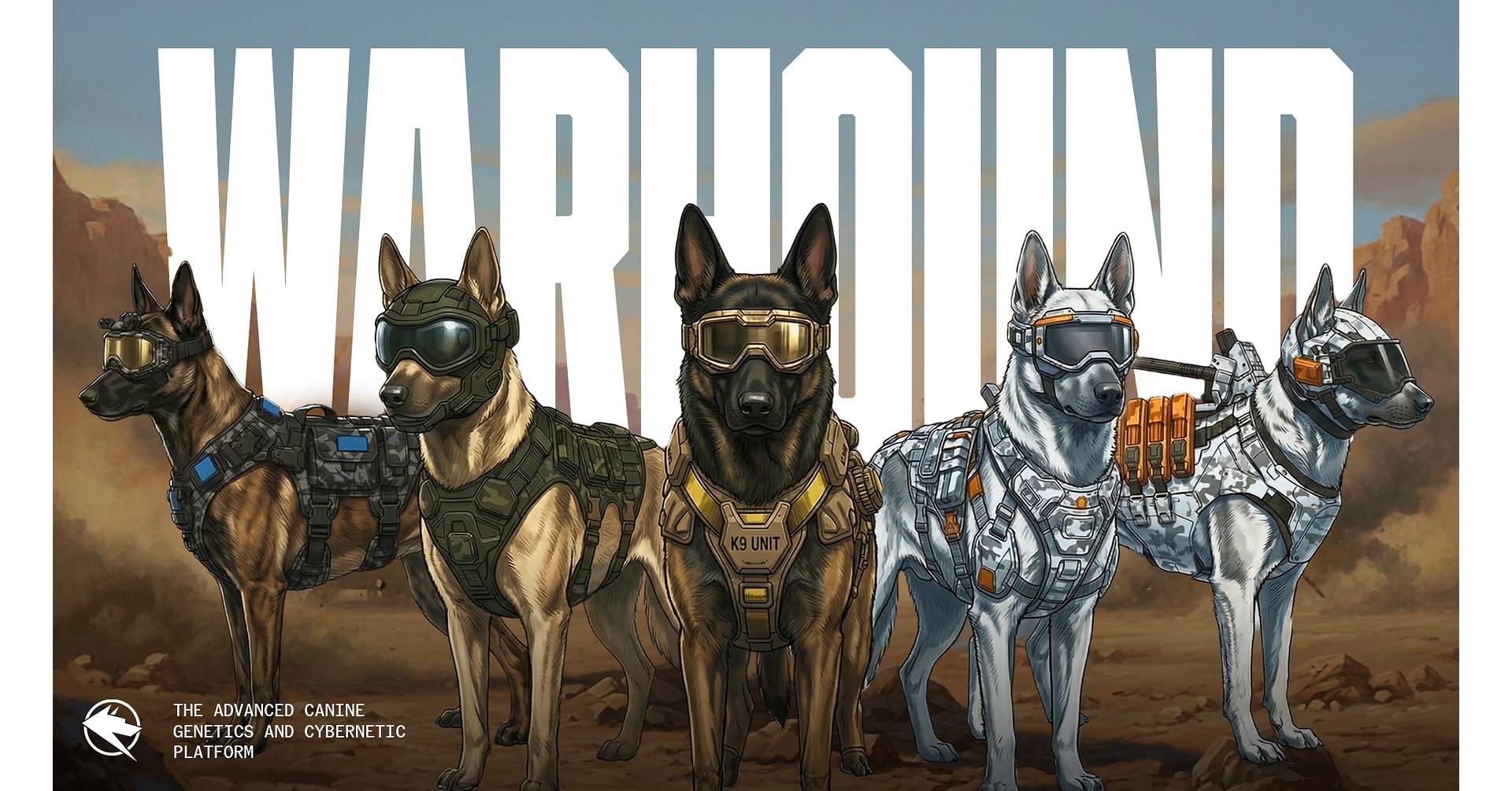
Warhound launched a Texas-based effort combining Colossal Biosciences’ genetics and cloning capabilities with Anduril technology to build a domestic supply of military working dogs; David Spirk was named CEO. The announcement cites more than 80% of U.S. military working dogs as currently sourced from Europe and says fewer than half of procured dogs ultimately qualify for service after a roughly three-year acquisition-and-training pipeline. Warhound says its program aims to improve canine health and training success, reduce foreign-supply dependence, and support dogs through retirement; the article provides no funding amount or market reaction.
Analysis
This is an early-stage procurement and execution option, not yet evidence of a material earnings stream for any mapped public company. The investable mechanism is whether improved candidate health and integrated field equipment can lower total cost per qualified dog and win durable government contracts; cloning or genetic advances alone do not establish that outcome. The critical proof points are independently measured training completion, health outcomes, lifecycle cost, and contract awards.
Near term, the announcement may create narrative spillover for defense-tech and biotech, but attribution is weak: Anduril and Colossal are private, and a former Palantir counselor leading Warhound does not establish a Palantir contract, product link, or revenue opportunity. Franklin Templeton's reported backing likewise does not imply material exposure for BEN without investment size and fund-level context. Do not capitalize either connection into public-company estimates.
Over 1–3 months, watch for disclosed procurement pilots, contract structure, and evidence of integration beyond a press-release partnership. Over 6–18 months, scaled domestic breeding, welfare oversight, and successful qualification could create a repeatable niche supplier; conversely, long qualification cycles, biological variability, ethics scrutiny, or failure to meet military specifications could strand the program before meaningful revenue. The contrarian point: foreign sourcing dependence is a strategic rationale, not proof that domestic supply will be cheaper or operationally superior. Thesis weakens if pilots fail to improve qualification or lifecycle economics, or if procurement does not progress to funded contracts.
AllMind Terminal
AI-powered research, real-time alerts, and portfolio analytics for institutional investors.
Request TrialMarket Sentiment
Overall Sentiment
mildly positive
Sentiment Score
0.35
Ticker Sentiment
Key Decisions for Investors
- No trade in PLTR or BEN on this announcement alone. Treat the Palantir personnel connection and Franklin Templeton backing as non-earnings-bearing until company-specific contract or exposure data is disclosed.
- Add Warhound/Anduril to a defense procurement watchlist; seek funded award details, evaluation milestones, and contract economics before expressing a public-equity view.
- Monitor evidence of independently verified training completion, animal health, and cost per qualified team. Without those data, treat claimed efficiency and welfare gains as hypotheses, not underwriting inputs.
- Reassess only if funded procurement scales and operational results validate the model; downgrade the thesis if pilots miss qualification targets, welfare oversight becomes contentious, or no contract path emerges over the next 1–3 months.
More News
- A startup called Warhound is genetically engineering dogs for the military
- AI Doubts Spread Cracks in Equities, Credit Markets: Evening Briefing Americas
- US-Iran war, then and now: How the landscape has changed since February
- With earnings in rearview mirror, SpaceX-Tesla merger chatter takes center stage
- Energy markets are adapting to the Iran war as a ‘forever conflict’ while oil producers keep supplies flowing and avoid ‘mutually assured destruction’
- Apple’s $2,000 iPhone Duo Debuts With Limited Supply
From AllMind Research
- Anthropic IPO Preview: Valuation, Timing, and What to Watch
- Shein After the IPO: Venue, Valuation, and What Must Be Proved
- What AI Research Tools Should a Small Hedge Fund Buy First?
- Weekly Update: New Reporting Features, UI Improvements, and Chat Optimizations
- Selecting an AI Research Platform for Institutional Investors