
GoldMining Commences Environmental Baseline and Permitting Work in Conjunction with Pre-Feasibility Study at São Jorge, Brazil
Source: PR Newswire
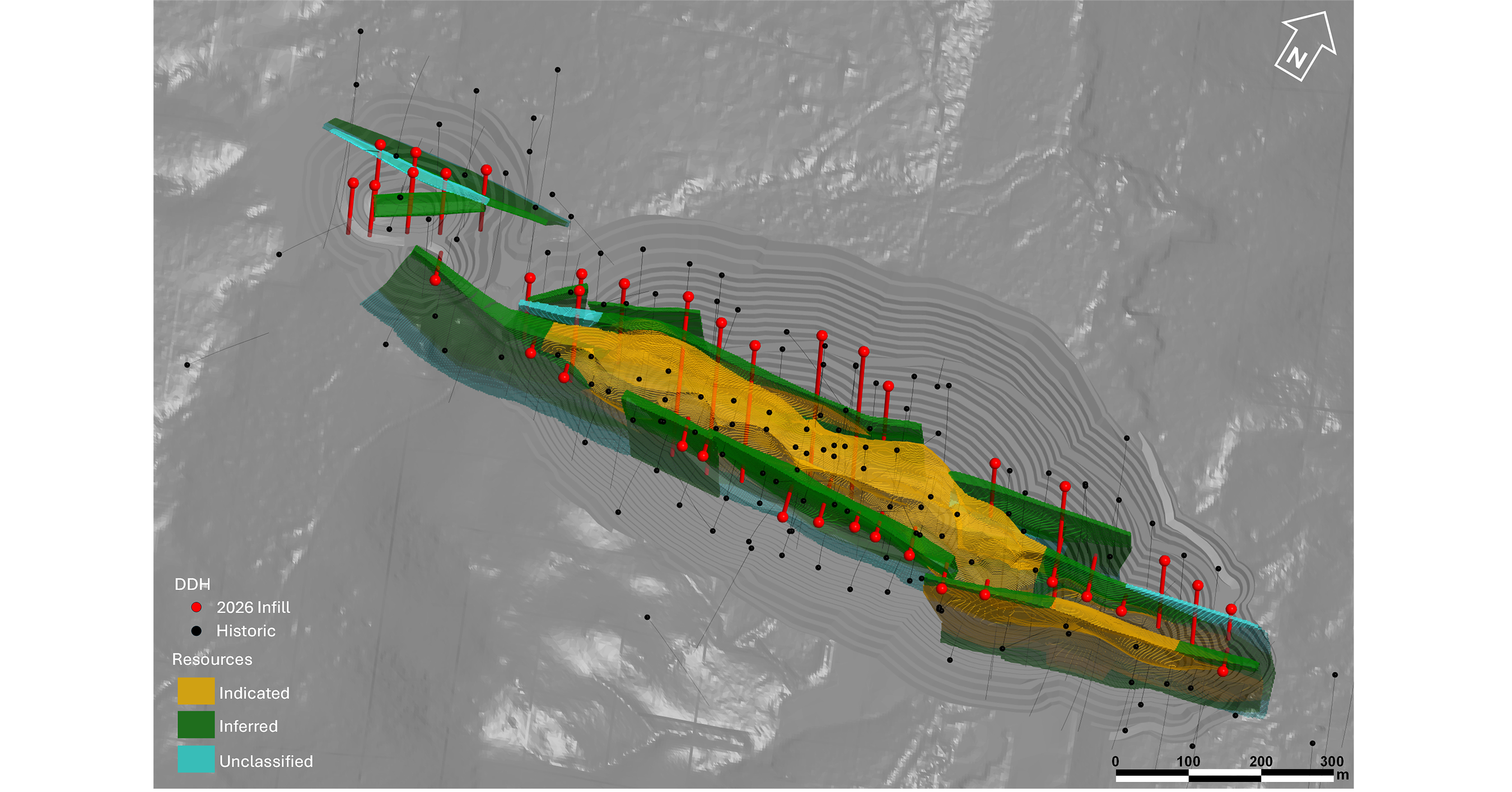
GoldMining has commenced environmental and socioeconomic baseline studies for the EIA and RIMA at its 100%-owned São Jorge Gold Project in Brazil and engaged SLR Consulting to lead PFS engineering and metallurgical work. Three rigs have drilled more than 1,000 metres of a planned 6,000-metre infill program intended to support resource confidence and provide technical data for the PFS. The prior PEA modelled an after-tax NPV at 5% of US$532 million and a 42.4% IRR, but is preliminary and includes Inferred Mineral Resources; development and permitting outcomes remain uncertain.
Analysis
This is a modest de-risking signal for São Jorge, not a change in GoldMining’s consolidated earnings profile: contractor appointments and baseline work are inputs to studies, not evidence of resource conversion, permit approval, or a financing-ready mine. The key valuation hinge remains whether infill drilling converts enough Inferred material and whether updated engineering supports the PEA concept. Because that PEA includes Inferred resources and uses a US$3,500/oz gold assumption, its headline economics should not be treated as a bankable project value; sensitivity to gold price, capital and operating costs, and recoveries needs verification in the PFS.
Near term, the release may support sentiment but offers no dated, independently verified economic milestone to justify chasing a move. Over 1–3 months, assay and technical updates could change confidence in continuity and metallurgy; over 6–18 months, the more material tests are PFS quality, environmental baseline results, the path through Brazil’s multistep permitting process, and funding capacity. Local technical expertise could reduce execution friction, but cannot remove social, regulatory, schedule, or financing risk. A second-order risk is that advancing a single project can increase cash needs before it generates revenue, making dilution or slower work programs relevant; current cash runway and planned study/drill budgets are not provided. The contrarian read: the market may over-credit the appointment of reputable consultants, while the more useful signal will be drill data and study assumptions. Conversely, successful resource conversion and permitting progress could earn the project more credibility than a routine exploration update.
AllMind Terminal
AI-powered research, real-time alerts, and portfolio analytics for institutional investors.
Request TrialMarket Sentiment
Overall Sentiment
mildly positive
Sentiment Score
0.20
Ticker Sentiment
Key Decisions for Investors
- No immediate trade on this release alone. Treat TSX:GOLD as a high-execution-risk project-development exposure; do not capitalize the PEA’s modeled NPV as a realized asset value.
- Use drill results and the PFS as decision catalysts rather than the consultant appointments. Reassess only after reviewing resource-category changes, recoveries, mine-plan assumptions, capital and operating-cost estimates, and gold-price sensitivities.
- Before adding exposure, verify GoldMining’s cash balance, committed project spending, corporate overhead, and funding plan. A short runway or financing on dilutive terms would weaken the thesis even if project work proceeds.
- Falsifiers: drilling fails to support conversion or continuity; PFS economics deteriorate materially versus the PEA under transparent assumptions; baseline work identifies material permitting or community obstacles; or the licensing path slips without a credible explanation.
More News
- Elon Musk once said the Cybertruck would be Tesla’s ‘best product ever.’ Now he’s winding down production
- Fox completes its $22B acquisition of Roku
- Elanco Shares Jump After Q3 Beat and Outlook Raise
- Paraguay’s Santiago Pena under arrest, new president Pedro Alliana sworn in
- Crusoe sells troubled Wyoming data center project to Google
- Tech stock rout, driven by US AI fears, continues in Asian trading
From AllMind Research
- AllMind Platform Feature Updates - Fall 2026
- AI Credit Covenant Monitoring: From Clause to Review
- AI-Led Expert Interviews vs. Transcript Libraries
- How to Evaluate AI Report Writers for Financial Analysis
- Augmented Intelligence: AllMind, Elevate Human Judgement With an Accessible, Powerful, Data-Driven Financial AI Toolkit