
Berkshire Hathaway: The Next Move, Hyperscaler Symbiosis, And Hard-Asset Arbitrage
Source: seekingalpha.com
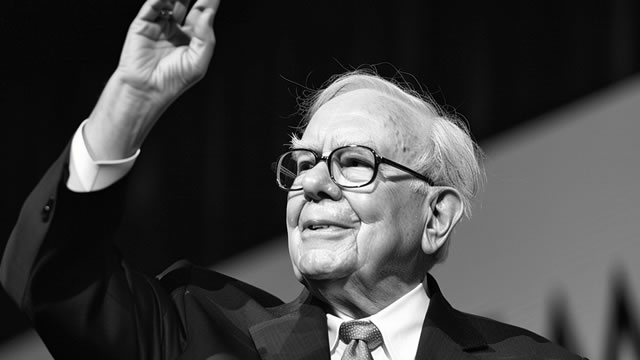
Berkshire Hathaway is characterized as a strong buy, supported by $365.5B of cash and $177.5B of insurance float available for capital deployment during Greg Abel's leadership transition. The thesis centers on potential equity-for-energy arrangements with AI hyperscalers, forming a higher-margin AI infrastructure business, alongside investments in vertically integrated housing and Japanese trading houses. These initiatives are presented as positioning BRK.B for superior returns in a roughly 5% yield environment.
Analysis
The investable issue is not succession optics but whether Berkshire can convert its funding advantage into regulated or contracted returns without paying peak-cycle AI-infrastructure valuations. A utility-funded hyperscaler buildout would lengthen BHE’s growth runway and raise the quality of incremental earnings, but regulated-rate constructs typically socialize upside; the market should not capitalize this as a pure-play AI multiple. The near-term benefit is likely a lower perceived governance discount rather than a material earnings step-up.
Berkshire’s balance sheet is most valuable if market dislocation produces forced sellers. At current risk-free rates, the hurdle for large acquisitions is materially higher than in the prior decade, making patience economically rational but leaving BRK vulnerable to relative underperformance if cash earns less than public equities during a continued risk-on rally. Japanese trading-house stakes remain a useful inflation and commodity hedge, but introduce yen and global-cycle sensitivity that can dilute the defensive narrative.
Housing vertical integration is a plausible 6-18 month call-option on lower mortgage rates, yet it is also the most cyclical component: Clayton and related building products face operating leverage if affordability remains constrained. Consensus may be overestimating the immediacy of AI monetization and underestimating the value of Berkshire’s dry powder in the next credit event. A credible large transaction at an attractive purchase multiple, or an acceleration in BHE rate-base growth, would be the catalysts needed to close any valuation gap.
AllMind Terminal
AI-powered research, real-time alerts, and portfolio analytics for institutional investors.
Request TrialMarket Sentiment
Overall Sentiment
moderately positive
Sentiment Score
0.62
Ticker Sentiment
Key Decisions for Investors
- Maintain/accumulate BRK.B (BRK.A is the equivalent economic exposure but less practical for most mandates) on 5-8% market pullbacks; treat it as a 12-24 month quality compounder and liquidity optionality position, not an AI beta trade. Thesis is impaired if acquisition discipline gives way to a large deal at a premium valuation or if insurance underwriting deteriorates materially.
- Pair: long BRK.B / short KIE over 6-12 months for investors seeking exposure to Berkshire’s capital-allocation advantage while reducing broad P&C pricing-cycle risk. Monitor GEICO loss-ratio trends and catastrophe losses; a sharp improvement in smaller insurers’ underwriting margins would compress the relative spread.
- Do not add AI-infrastructure upside to base-case valuation until BHE discloses committed customer contracts, permitted generation/transmission spend, expected regulated return framework, and capital requirements. Until then, use any AI-driven premium in BRK as an opportunity to rebalance rather than chase.
- Watch US 30-year mortgage rates and housing starts over the next 3-6 months. A sustained decline in mortgage rates would support Clayton/Berkshire building-products earnings and justify increasing exposure; persistently elevated rates plus weakening orders would argue for a smaller position despite the balance-sheet cushion.
More News
- The Biggest AI Adoption RIsk
- Warren Buffett Has a Stark Warning for Investors as the Market Repeats a Pattern Seen Only Twice in 155 Years
- ‘The Housing Supply Just Isn't There': Buffett Bought 10% of Lennar the Day After It Cut Guidance
- Warren Buffett Has Officially Left Berkshire Hathaway After 61 Years. But 3 of His Favorite Stocks Will Likely Live on in Berkshire's Portfolio for Decades to Come.
- Saudi, Turkish, Pakistani chiefs plan urgent talks amid Yemen fighting
- History shows financial calamities occur when rates rise rapidly like this: 'Something always breaks'