
The Future of Pet Ownership: How Rising Costs Are Shaping Budgets
Source: PR Newswire
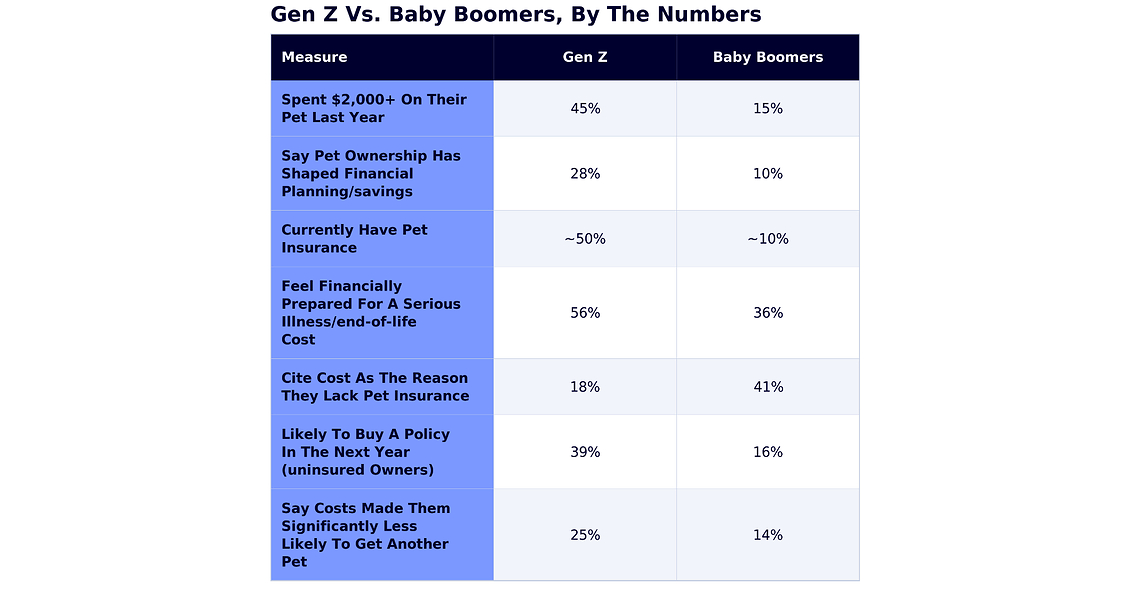
A Healthy Paws Pet Insurance and Money.com survey of 3,132 U.S. pet owners found that about 50% of Gen Z owners carry pet insurance, versus roughly 10% of Baby Boomers, while 39% of uninsured Gen Z respondents expect to buy coverage within a year. Rising pet-care costs remain a broad affordability constraint: 60% say pet ownership is becoming a luxury for lower-income households and 55% are less likely to get another pet. For uninsured Gen Z owners, awareness and inertia are larger barriers than premiums, with 22% unaware pet insurance exists and only 18% citing cost.
Analysis
The investable read-through for CB is modest: pet insurance is too small to move consolidated earnings, but the channel can add higher-growth specialty premium and customer-acquisition data. The more relevant implication is for pure-play TRUP, where younger-owner adoption can support policy growth; however, a more insurance-literate cohort is likely to buy after observing medical need, raising adverse-selection and lifetime loss-ratio risk unless underwriting, waiting periods, and pricing keep pace with veterinary inflation.
Awareness-led conversion favors scaled digital distribution and embedded acquisition partnerships over premium discounting. CB can monetize this through Healthy Paws without sacrificing underwriting standards, while TRUP and LMND face greater pressure to spend on acquisition or broaden partnerships. Increased coverage also reduces owners' price sensitivity at the point of care, potentially supporting veterinary-service demand and pricing, but this feedback loop ultimately feeds claim severity; insurers with annual repricing flexibility and disciplined claims controls should outperform growth-at-any-cost writers.
Near-term, this is not a standalone CB catalyst: the underlying survey is sponsor-backed, stated purchase intent is not binding, and no conversion, retention, premium, or loss-ratio data are supplied. Over 6-18 months, the thesis becomes actionable if pet-policy growth exceeds industry premium inflation while renewal pricing offsets medical-cost trend. Falsification would be accelerating pet claim severity, rising policy cancellations after renewal repricing, or a material deterioration in CB's specialty combined ratio.
AllMind Terminal
AI-powered research, real-time alerts, and portfolio analytics for institutional investors.
Request TrialMarket Sentiment
Overall Sentiment
mildly positive
Sentiment Score
0.18
Ticker Sentiment
Key Decisions for Investors
- No incremental standalone CB position on this release; retain CB only as a defensive P&C exposure. Reassess after quarterly disclosures for specialty-premium growth and combined-ratio commentary, with a negative signal if pet expansion coincides with reserve strengthening or higher claim severity.
- Put TRUP on a 1-3 month watchlist rather than chase: initiate only if reported subscription-policy growth and average monthly revenue per pet accelerate without deterioration in adjusted operating margin or retention. The upside is multiple expansion from durable penetration; the key risk is adverse selection masking itself as growth.
- Relative-quality screen: favor CB over TRUP if veterinary-cost inflation remains elevated, since CB's diversified balance sheet can absorb volatility whereas TRUP's valuation is more sensitive to loss-ratio execution. Reverse the preference only if TRUP demonstrates two consecutive quarters of improving margins alongside sustained policy growth.
- Monitor LMND pet disclosures for customer-acquisition efficiency and gross loss ratio before treating the category as a digital-insurance catalyst. Absent evidence that awareness converts at acceptable CAC and renewal economics, pet-insurance growth should be viewed as revenue growth with uncertain underwriting value.
More News
- Inside India newsletter: Foreign insurers get the red-carpet treatment — and policy uncertainty
- In photos: China's Xi hardens Taiwan warning as country celebrates week-long National Day holiday
- RAM supply set to worsen, says Micron, as CEO celebrates ‘much higher’ prices
- Tencent leases 100,000 chips from Oracle for $7 bln- FT
- Why is Nidec stock plunging today?
- Micron Forecast Tops Estimates on Booming AI Memory Demand