
University of Phoenix helps working adults understand how prior learning may count toward a college degree
Source: PR Newswire
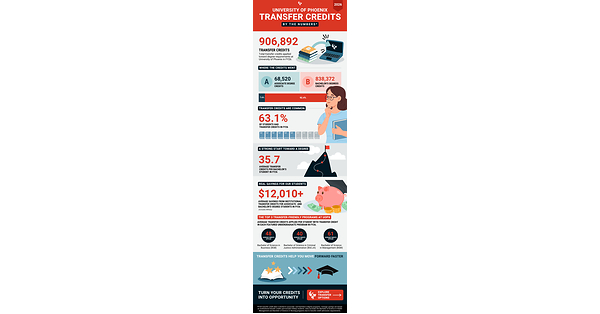
University of Phoenix says students who received credit for prior learning saved an average of $5,555 in tuition across their degree programs in fiscal year 2026. A Harris Poll survey found 90% of U.S. workers learn or develop skills at work, while 41% do not believe professional training courses can count toward a degree. The university is promoting evaluation of eligible work, training and life experience for academic credit, which may reduce time and tuition for qualifying students.
Analysis
This is a low-signal commercial positioning announcement, not evidence of a material earnings inflection. The economic trade-off is important: awarding prior-learning credit can reduce tuition per enrolled student, but may also lower the time, cost and perceived risk of enrolling. It is accretive only if the resulting lift in starts, persistence, completion or employer-sponsored enrollment outweighs tuition foregone; the reported average student savings does not establish that net effect. The survey is awareness research, and both the survey and savings figure are company-associated, so neither proves conversion or incremental profit.
The competitive implication is a modest pressure to make credit mobility easier to understand and use across adult-learning providers, including Purdue Global, Southern New Hampshire University and Western Governors University. Any advantage depends less on publicity than on how many credits students can actually apply to their chosen program, evaluation turnaround and employer relationships. Accreditation rules, program-specific requirements and transfer-credit limits can cap the benefit and create disappointment or reputational risk.
Near term (days), expect little fundamental repricing from this announcement alone. Over 1–3 months, watch enrollment, lead-to-start conversion and persistence disclosures for evidence the message changes behavior. Over 6–18 months, repeatable employer partnerships and PLA utilization could improve recruitment economics, but are not demonstrated here. Contrarian read: lower tuition per student is not automatically bearish if it improves acquisition and completion; equally, framing affordability as savings may mask revenue dilution if enrollment does not respond. No company identities or tickers are supplied, so there is no grounded direct security trade.
AllMind Terminal
AI-powered research, real-time alerts, and portfolio analytics for institutional investors.
Request TrialMarket Sentiment
Overall Sentiment
mildly positive
Sentiment Score
0.15
Key Decisions for Investors
- No trade on the announcement alone; treat it as marketing rather than a verified financial catalyst.
- Monitor University of Phoenix and adult-education peers for PLA credit utilization, enrollment starts, persistence, net tuition revenue per student and employer-sponsored cohorts. These data are needed to judge whether conversion offsets tuition waived.
- Revisit a relative-value thesis only if disclosures show sustained enrollment or persistence gains alongside stable net revenue per student; the thesis weakens if credit awards rise but starts, retention or revenue per student deteriorate.
- Treat the reported $5,555 average tuition saving as a student-level claim, not a company-wide margin or revenue estimate; verify cohort size, calculation method and degree-program applicability before modeling it.
More News
- With earnings in rearview mirror, SpaceX-Tesla merger chatter takes center stage
- Looters hit 3,000 French businesses. Within hours, the haul was trending on Vinted under the riot’s date
- Apple’s $2,000 iPhone Duo Debuts With Limited Supply
- Are global oil reserves sufficient to withstand renewed US-Iran war?
- Boeing 777 freighter output halted for two months over supplier row
- OpenAI Trims Target Value & Volvo Cars Cuts 2,500 Jobs