
Canadian Oil Merger Spotlights Alberta Boom
Source: Bloomberg
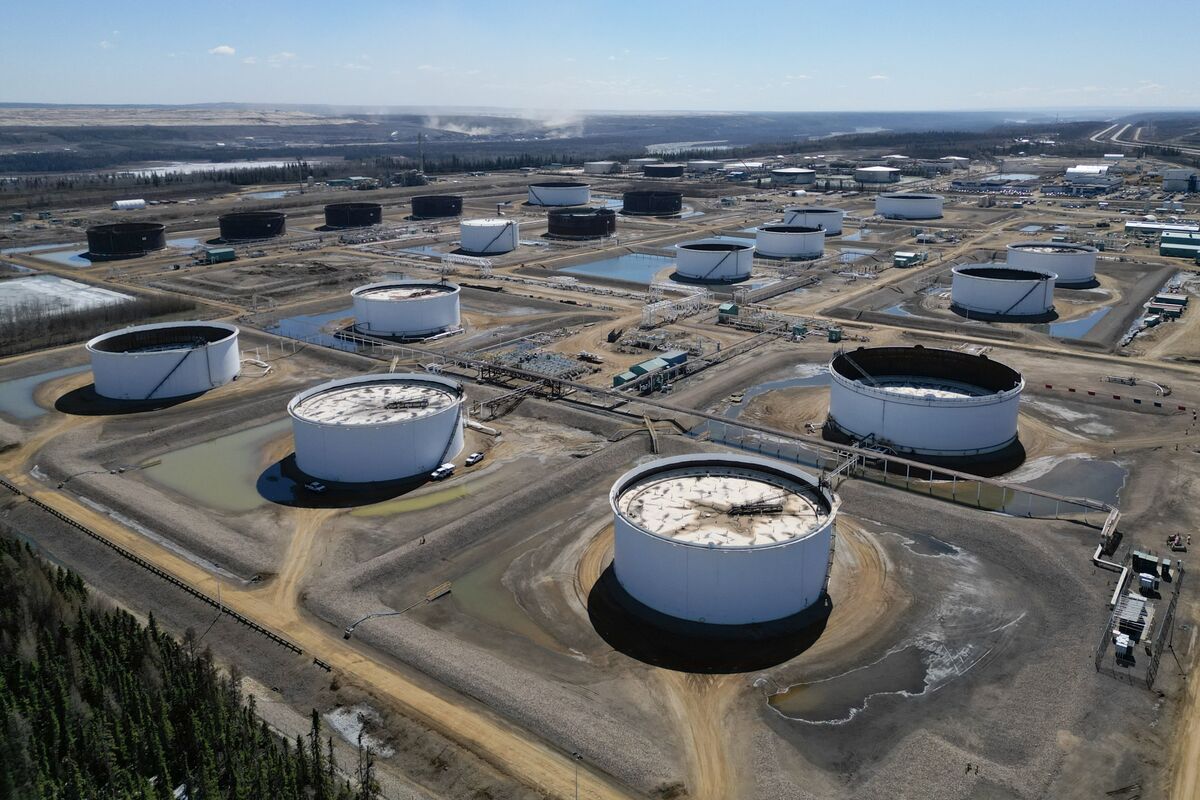
Tamarack Valley Energy's planned takeover of Headwater Exploration highlights rising consolidation and investor interest in Alberta's Clearwater heavy-oil play. The transaction reflects Canadian producers bulking up production capacity to address growing Asian demand for heavy crude, broadening Alberta's energy appeal beyond its traditional oil-sands assets.
Analysis
The strategic read-through is less about the acquired barrels than the implied scarcity value of low-decline, capital-efficient Canadian heavy-oil inventory. If the transaction establishes a higher per-flowing-barrel or per-2P-reserve benchmark, the most levered re-rating candidates are Clearwater-adjacent operators such as WCP and BTE, where undeveloped inventory has been discounted for smaller scale and infrastructure concentration. TVE’s ability to fund the deal without pushing leverage materially above its stated comfort range will determine whether the market awards consolidation synergies or applies an acquirer-risk discount over the next 1-3 months.
The key second-order risk is that consolidated production increasingly depends on egress and heavy-oil differentials rather than simply WTI. A widening WCS discount, apportionment on export systems, or a weaker CAD oil-price realization would disproportionately compress free-cash-flow estimates for Alberta-heavy producers despite a stable headline oil price. Conversely, sustained Asian demand and reliable export capacity could shift investor focus from reserve-life concerns toward FCF durability over 6-18 months, supporting multiple expansion for Canadian E&Ps versus similarly levered US shale names.
Consensus may over-credit near-term operating synergies while underpricing execution risks: integration costs, share issuance, and the possibility that acquired inventory requires higher sustaining capital than headline corporate decline rates imply. The most useful near-term verification points are TVE’s first post-close guidance, pro forma net-debt-to-funds-flow trajectory, realized WCS pricing, and whether management raises rather than merely reiterates its return-of-capital framework.
AllMind Terminal
AI-powered research, real-time alerts, and portfolio analytics for institutional investors.
Request TrialMarket Sentiment
Overall Sentiment
moderately positive
Sentiment Score
0.40
Ticker Sentiment
Key Decisions for Investors
- Do not initiate standalone merger-arbitrage exposure in HWX until the consideration mix, exchange ratio, closing conditions, and implied annualized spread are confirmed; buy only if the gross spread exceeds a conservative 10-12% annualized return after allowing for a 3-6 month close.
- Accumulate TVE only after management provides pro forma leverage and synergy guidance; target a 6-12 month position if net debt/funds flow remains at or below roughly 1.5x and the stock underperforms Canadian E&P peers by more than 5% on deal-announcement dilution concerns. Thesis fails on a material guidance cut or leverage moving above 2.0x.
- Express the consolidation read-through via a basket long WCP and BTE versus short XOP over 3-6 months, sized modestly: Canadian heavy-oil names offer a potential valuation catch-up if Clearwater transaction multiples reset, while the short leg reduces broad crude-beta exposure. Exit if WCS differentials widen above approximately US$20/bbl for several weeks or WTI falls below US$60/bbl.
- Monitor WCS-WTI differentials and export-capacity data weekly. If WCS tightens below US$12/bbl while WTI remains stable, increase Canadian-heavy E&P exposure; if differentials widen sharply despite firm WTI, reduce TVE/WCP/BTE before quarterly realization guidance resets.
More News
- Saudi Arabia intercepts missiles and drones as fighting with Houthis rages
- Israelis hold final rally against Netanyahu ahead of what may be the most consequential election in the country’s history
- How Pepsi fell behind in the cola wars—and then lost KFC
- Braskem creditors, shareholders near deal on $11bn debt restructuring
- Brookfield to open Qatar office as it expands Middle East operations
- First Russian diesel tanker heads to New York after Trump's deal with Putin to lower fuel prices