
VEVOR Steps Offline in Europe at IFA Berlin 2026, with First European Store Planned in France for 2027
Source: PR Newswire
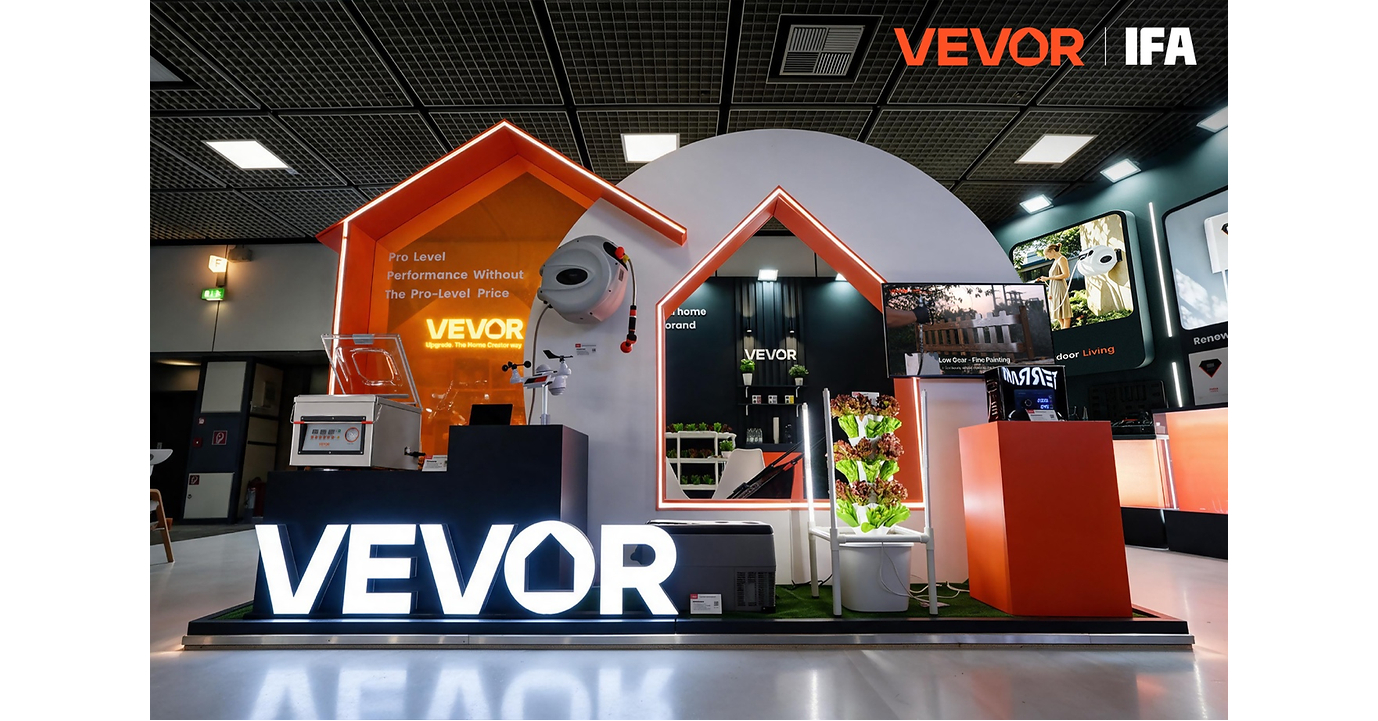
VEVOR is bringing its home-improvement lineup to European consumers in person for the first time at IFA Berlin 2026 (4-8 Sept), showcasing 20 products at Hall 11.1. The company says European business has grown ~50% annually over the past three years, operates 22 European warehouses, and sells ~15,000 SKUs in Europe. VEVOR also confirmed plans to open its first European store in France in 2027, highlighting expansion beyond online marketplaces into physical retail. While no financials were provided, the move signals continued momentum and investment in Europe.
Analysis
This is more signal on channel mix than on end-demand. A low-price, high-SKU home-improvement seller adding physical touchpoints in Europe implies the economics of bulky, high-return categories are getting harder to run purely through marketplace acquisition; the first beneficiaries are search and performance-marketing rails, while the main loser is the assumption that marketplace traffic alone is enough to own the customer. That modestly favors GOOGL over AMZN at the margin, because the path to conversion still starts with intent capture, but Amazon also benefits if the brand continues to seed demand and use its marketplace as a demand funnel.
The second-order risk for AMZN is not lost revenue so much as lower monetization quality: brands that use Amazon for discovery can increasingly steer repeat demand to direct/omnichannel channels once they have local presence and service credibility. For EBAY the read-through is weak; this reinforces that general merchandise and DIY are being won on trust, logistics and after-sales, not auction-like price discovery. Over 1-3 months, the catalyst is whether more EU sellers follow this playbook and lift ad intensity; over 6-18 months, the question is whether physical stores actually reduce return rates enough to justify the capital, or simply dilute margins.
Contrarian take: the market may overread this as a clean growth story when it could be a defensive spend to patch conversion and returns economics. If store traffic or conversion data disappoint, the physical expansion becomes an overhead burden and the company may lean harder on marketplace discounts, which would pressure category pricing more than it grows profit. The thesis is falsified if there is no measurable lift in repeat purchase, lower return rates, or higher average order values after the France launch and December product rollout.
AllMind Terminal
AI-powered research, real-time alerts, and portfolio analytics for institutional investors.
Request TrialMarket Sentiment
Overall Sentiment
mildly positive
Sentiment Score
0.15
Ticker Sentiment
Key Decisions for Investors
- Maintain a neutral stance on AMZN into the next 1-2 months; this is not enough evidence to buy the stock, and the upside from incremental marketplace volume is likely smaller than the risk of lower 3P monetization quality in EU hardlines.
- Small pair trade: long GOOGL / short AMZN for 1-3 months if EU seller omnichannel adoption keeps increasing, because intent capture and shopping ad spend should benefit more than marketplace take rates; stop if Amazon EU retail/media commentary shows no displacement.
- Do not initiate an EBAY position on this headline; treat it as a watch item only unless broader EU home-improvement weakness shows up in marketplace GMV or take-rate data.
- Set an alert for proof points by the France store launch in 2027: repeat purchase, return rate, and customer acquisition cost. If those metrics do not improve, the physical expansion narrative becomes a margin drag rather than a competitive moat.
More News
- X-Energy CEO on Amazon, AEP Nuclear Data Center Deal
- Walmart’s Flipkart is quietly building a food delivery challenger in India
- Amazon is a top pick and will get a big boost from a slew of catalysts, says Morgan Stanley
- Morgan Stanley’s favorite AI stock is 92% exposed to the $1.6 trillion buildout it’s bullish on
- Amazon to fund 12 small nuclear reactors at former Indiana coal plant
- Amazon says its AI chips will work with popular coding language, challenging Nvidia