
Raytron dévoile son modèle de vision infrarouge et de traitement du langage lors du salon CIOE 2026, faisant ainsi évoluer l'imagerie thermique de la simple perception à la compréhension
Source: PR Newswire
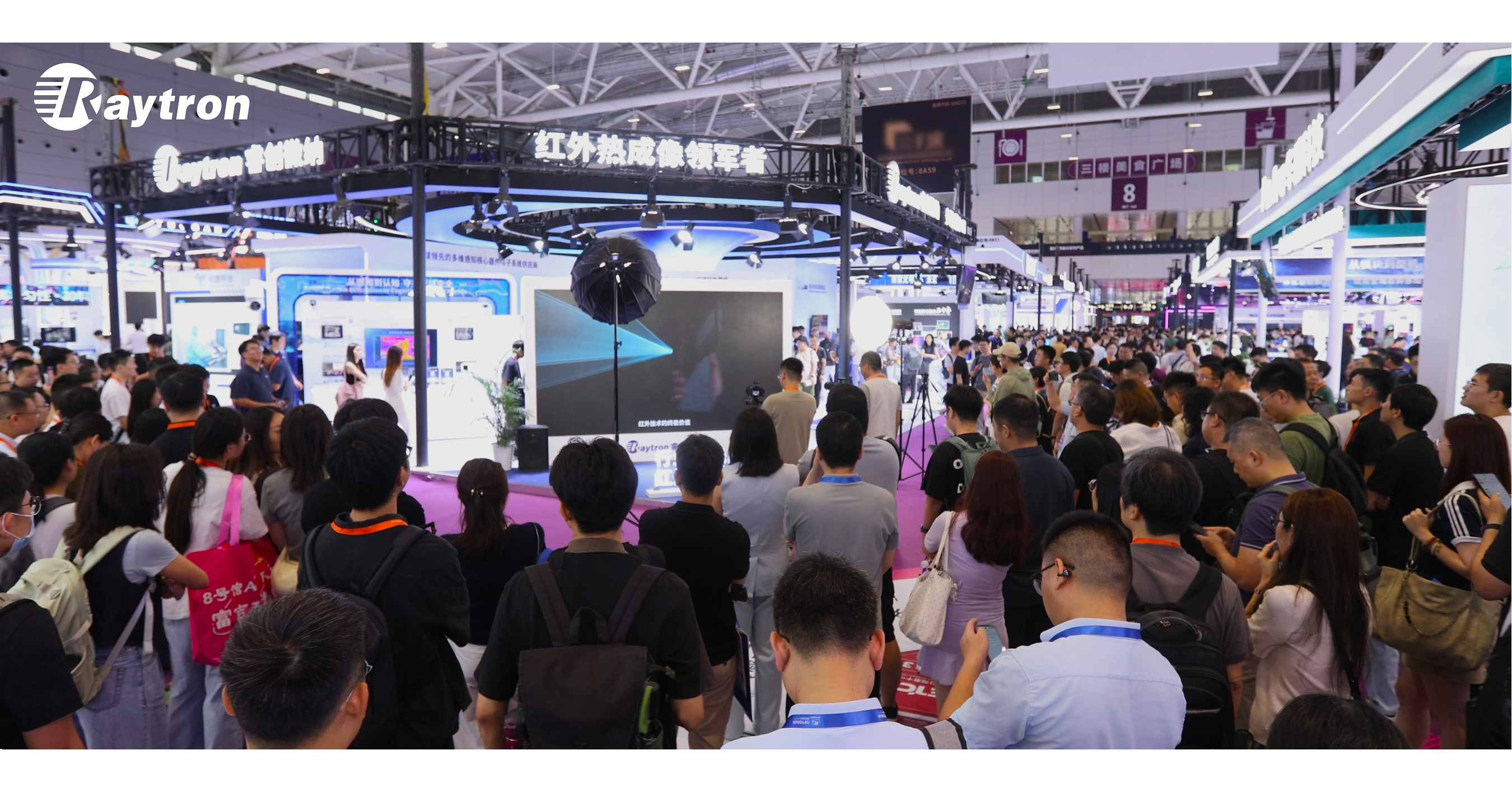
Raytron unveiled an infrared vision-language model at CIOE 2026, trained on more than 5 million proprietary multimodal infrared-data samples for industrial temperature measurement, night vision and gas-leak detection. The company also launched the third-generation AI-based Falcon 500 image-processing chip and expanded its 8 μm detector range from 640×512 to 1280×1024 resolution, alongside upgraded 12 μm products with NETD as low as 15 mK. The releases strengthen Raytron's edge-AI thermal-imaging offering, though the announcement provided no financial guidance, orders or revenue impact.
Analysis
The investable implication is not a near-term AI revenue event but a potential cost-curve shift in uncooled thermal systems. If smaller-pixel sensors and local inference reduce lens, compute and installation costs simultaneously, thermal cameras can move from specialized inspection equipment toward higher-volume deployments in utility monitoring, industrial maintenance and perimeter security. That would expand unit demand but compress hardware ASPs, favoring vertically integrated suppliers with detector, optics and embedded-software control rather than distributors or standalone camera assemblers.
Teledyne Technologies (TDY), via FLIR, has the most direct listed exposure to premium thermal imaging. A credible Chinese edge-AI alternative would matter primarily in price-sensitive international commercial markets, not immediately in U.S. defense, where procurement, cybersecurity and export-control barriers remain substantial; the initial risk is therefore mix and gross-margin pressure rather than wholesale share loss. The relevant 1-3 month evidence is TDY commentary on commercial thermal orders, pricing and backlog conversion; the 6-18 month risk is that gas-leak and electrical-inspection customers increasingly treat thermal analytics as a bundled, lower-cost feature rather than a premium instrument category.
Consensus may overvalue the model announcement absent independent field accuracy, false-positive rates, and certified gas-detection performance across weather conditions. In industrial safety, an AI system that produces actionable alerts but cannot meet auditability and reliability requirements may increase service cost rather than displace incumbent workflows. The more durable opportunity could accrue to operators able to monetize continuous monitoring—utilities and midstream firms—rather than sensor vendors, but only after regulatory acceptance and demonstrated reductions in leak-detection labor costs.
AllMind Terminal
AI-powered research, real-time alerts, and portfolio analytics for institutional investors.
Request TrialMarket Sentiment
Overall Sentiment
moderately positive
Sentiment Score
0.42
Key Decisions for Investors
- No directional trade solely on this release: Raytron is not a listed proxy and the claimed performance lacks third-party validation. Create an alert around TDY's next earnings call for commercial thermal-imaging organic growth, gross-margin commentary, and any mention of China-led price competition.
- Maintain TDY as a watch-list short hedge against a broader low-cost thermal-imaging commoditization thesis, not an immediate short. Escalate only if management cites commercial pricing pressure or commercial thermal growth decelerates materially for two consecutive quarters; cover if defense/security mix offsets the pressure or margins remain stable.
- For a 6-18 month thematic expression, favor selective long exposure to methane-monitoring beneficiaries only after contract evidence: watch Enbridge (ENB), Williams (WMB), and Kinder Morgan (KMI) for quantified leak-detection capex or emissions-compliance savings. The thesis is falsified if monitoring mandates weaken or deployment fails to reduce operating expense.
- Avoid extrapolating this into a broad AI-semiconductor long. Edge inference may shift value toward low-power processing, but the release provides no disclosed unit volumes, external chip sourcing, design wins, or pricing that would support a position in Ambarella (AMBA) or other compute suppliers.
More News
- Italy to deploy warships to protect shipping through Bab al-Mandeb
- Australia’s central bank chief warns inflation risks materialising
- This AI-picked stock jumps 18% on Amazon’s $8 billion power deal
- Asian stocks rise as oil retreat eases inflation fears, BOJ in focus
- US to Sell F-35s to Saudi Arabia in $24.3 Billion Deal
- California AG Bonta on Paramount-Warner Bros., Meta and AI