
Fed Hikes Rates for the First Time in 3 Years: What it Means for Banks
Source: zacks.com
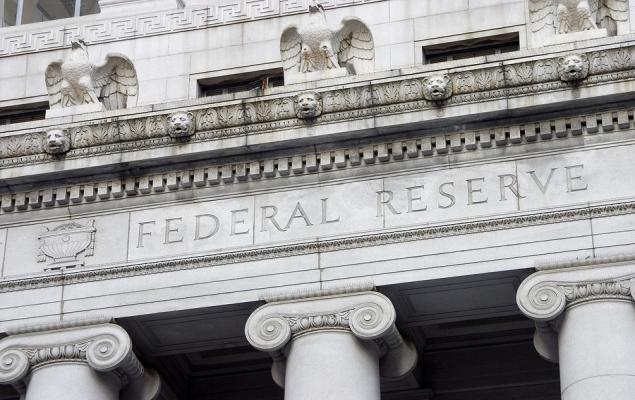
The Federal Reserve raised the federal-funds target by 25bps to 3.75%-4.00%, its first increase since July 2023, and its dot plot signaled the potential for another hike this year amid persistent inflation. The Fed lifted its 2026 PCE inflation forecast to 3.7% from 3.6%, while raising 2026 GDP growth to 2.3% from 2.2% and lowering the unemployment forecast to 4.1% from 4.3%. Bank stocks declined following the decision, with the KBW Nasdaq Regional Banking Index down 1.5% and the S&P Banks Select Industry Index down 1.7%, as higher asset yields may be offset by rising deposit costs, softer loan demand, credit losses and fixed-income portfolio pressure.
Analysis
The key equity dispersion is not asset sensitivity but funding resilience. JPM should retain a relative advantage through operating-deposit stickiness, scale in payments/markets fees, and capacity to absorb credit normalization; KEY remains the cleanest negative expression because a larger share of earnings depends on spread income while commercial real-estate and uninsured-deposit sensitivity constrain balance-sheet optionality. BAC’s large securities book makes its tangible-book recovery more duration-dependent than the market’s simple NII framing implies, while C’s international franchise adds a dollar and emerging-market funding channel that can dilute domestic rate benefits.
The initial selloff may be directionally right for regionals but too indiscriminate for money-center banks if nominal growth remains intact. A higher terminal rate lifts returns on transaction balances and cash collateral, benefiting JPM and potentially NDAQ through interest income on clearing collateral, while simultaneously reducing mortgage/refinancing activity and pressuring rate-sensitive fintech lenders. Over the next 1-3 months, deposit beta, noninterest-bearing deposit trends, and criticized CRE exposure—not management’s NII sensitivity tables—will determine relative performance.
The tail risk is a rate-volatility shock rather than one additional hike: a disorderly rise in long-end yields would widen AOCI marks, raise wholesale funding costs, and turn latent liquidity concerns into equity-multiple compression. Conversely, a benign disinflation path that lowers the 10-year yield without recession would sharply reverse the regional-bank short: funding pressure eases before loan losses emerge. Falsify the bearish regional thesis if deposit costs stabilize for two reporting periods, CRE charge-offs remain contained, and the 10-year yield declines materially while credit spreads stay tight.
AllMind Terminal
AI-powered research, real-time alerts, and portfolio analytics for institutional investors.
Request TrialMarket Sentiment
Overall Sentiment
mildly negative
Sentiment Score
-0.28
Ticker Sentiment
Key Decisions for Investors
- Initiate a 3-6 month pair: long JPM / short KEY, sized beta-neutral. The trade isolates deposit-franchise and fee-income quality from broad bank-factor risk; target 10-15% relative return, with a 5% relative stop if KEY shows sustained deposit inflows and lower funding costs.
- Remain underweight BAC versus JPM into the next earnings cycle. Add only after management quantifies securities repositioning, deposit beta, and tangible-book trajectory; a falling long-end yield is the main upside risk to this relative view.
- Use KRE puts or a KRE/ XLF short spread for the next 1-3 months rather than shorting all large banks outright. This captures the likely concentration of funding/CRE pressure in regionals while limiting exposure to a growth-driven NII upside surprise at money centers.
- Set alerts around quarterly deposit-cost growth, commercial-real-estate criticized-loan migration, and the 10-year Treasury yield. A 50bp-plus long-end yield rise or renewed deposit outflows warrants increasing regional-bank hedges; stable spreads and declining long yields argue for covering them.
More News
- Kevin Warsh, an angry Trump and Jerome Powell Déjà vu: how history is repeating itself
- Biweekly Investment Insights: Markets swirl
- Warsh says AI’s hyperscalers are part of why your borrowing costs are rising: ‘The competition for capital is real’
- The Fed is hiking again — and the rest of the world could feel the squeeze
- Goldman’s top strategist just added hard numbers to his earnings-bubble warning
- Stocks, Treasuries Rally on Optimism Around Fed Inflation Fight
From AllMind Research
- Anthropic IPO Preview: Valuation, Timing, and What to Watch
- Shein After the IPO: Venue, Valuation, and What Must Be Proved
- What AI Research Tools Should a Small Hedge Fund Buy First?
- Selecting an AI Research Platform for Institutional Investors
- Weekly Update: New Reporting Features and More Sources for Document Search