
ACES Diagnostics Research Demonstrates Potential of LymeSeek™ to Improve Detection of Early Lyme Disease
Source: PR Newswire
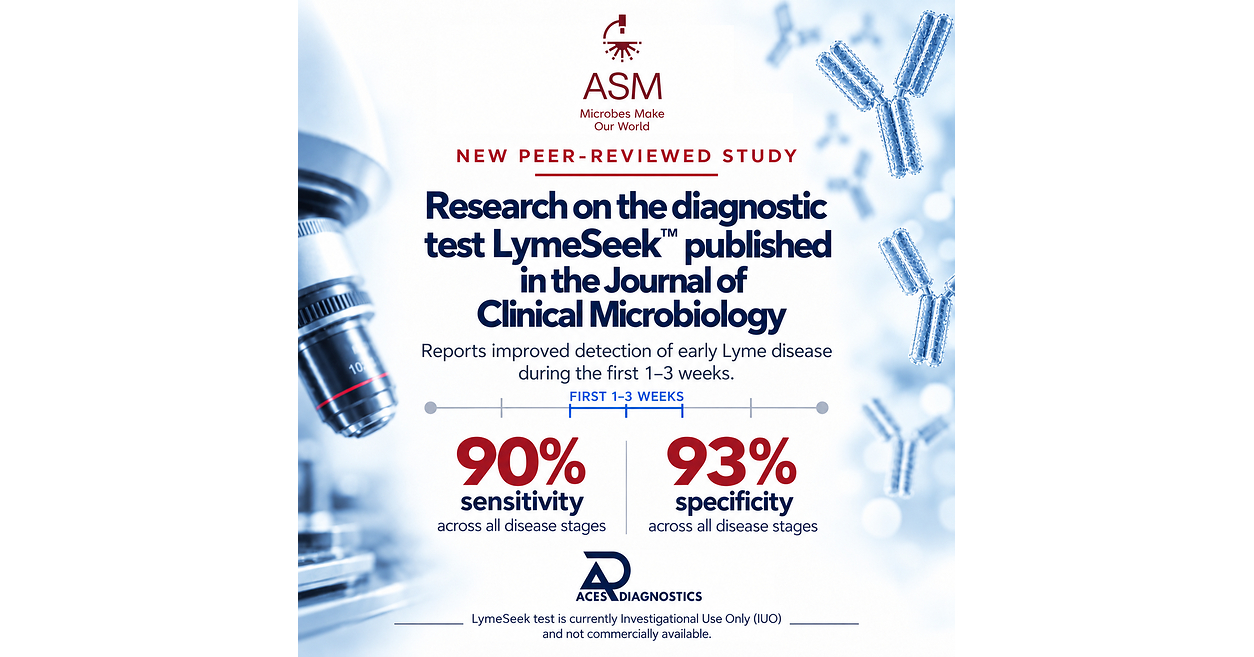
LymeSeek showed 90% sensitivity and 93% specificity in an initial 467-sample cohort; in a separate early-disease evaluation, it detected 100% of cases at 15–30 days after onset and 90% within two weeks. A separate cohort of more than 250 individuals showed 90% sensitivity and 98% specificity, with performance consistent after technology transfer. ACES Diagnostics plans to begin clinical trials at three laboratory sites in October 2026 and is targeting market availability in early Q2 2027, pending FDA 510(k) clearance.
Analysis
The commercial bottleneck is no longer just analytical performance: it is whether prospective, real-world testing confirms clinical utility, whether FDA clearance arrives on schedule, and whether labs and clinicians can adopt the assay within existing workflows and reimbursement. The reported specificity varies across cohorts (93% versus 98%); that matters because false positives can drive follow-up costs and erode clinician trust, particularly in lower-prevalence settings. The small early-infection cohorts and selected samples also leave room for performance to weaken in routine practice. Manufacturing transfer is encouraging, but preliminary reproducibility is not evidence of scalable production or regulatory readiness.
If cleared and adopted, LymeSeek could expand testing among patients in the early diagnostic window rather than simply take share from established two-tier testing. That may support incremental volume for reference laboratories such as Quest Diagnostics and Labcorp, while creating substitution risk for incumbent Lyme assays; the net effect on lab economics is unknown without pricing, reimbursement, and workflow data. ACES Diagnostics is not represented in the supplied public-company mapping, so the news offers no direct liquid equity exposure. Near term, this is a validation milestone, not a revenue catalyst. Over 1–3 months, trial initiation and protocol details matter; over 6–18 months, FDA review, payer coverage, guideline acceptance, and repeatable real-world performance determine commercial value. The bullish case is falsified by trial sensitivity or specificity materially below the reported ranges, regulatory delay, or no viable reimbursement/adoption pathway.
AllMind Terminal
AI-powered research, real-time alerts, and portfolio analytics for institutional investors.
Request TrialMarket Sentiment
Overall Sentiment
moderately positive
Sentiment Score
0.45
Key Decisions for Investors
- No immediate trade: do not infer commercial value or buy diagnostic-lab equities on this release alone; any benefit to Quest Diagnostics or Labcorp depends on incremental test volume and economics that are not disclosed.
- Set an alert for prospective trial design and results, FDA submission/clearance timing, reimbursement, and assay pricing. Reassess only when these establish a credible route from accuracy claims to recurring test revenue.
- Track false-positive performance by patient population and independent replication. A meaningful deterioration versus the reported specificity would weaken the adoption thesis even if early-stage sensitivity remains promising.
More News
- Why Dangote’s Nigeria Refinery IPO Is Such a Big Deal for Africa
- Singapore's Temasek warns of the ‘biggest risk’ facing markets right now
- A 32% beat, a +6% jump: the IT solutions name our models picked in July
- Nvidia Is on the Verge of a $6 Trillion Market Value
- Controversial $110 billion mega-merger of Paramount and Warner Bros. finally closes
- What Marvell's rosy long-term guidance means for our AI chip stocks