
Huawei presenta l'architettura di riferimento WAN intelligente per gli ISP
Source: PR Newswire
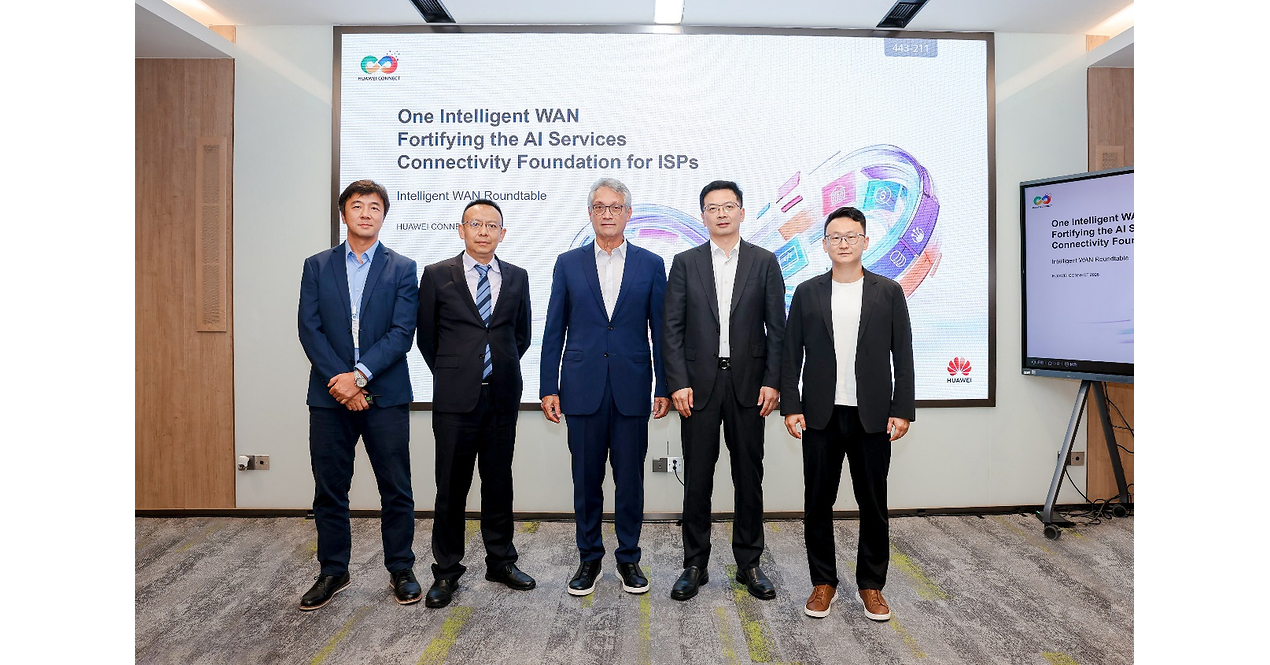
Huawei unveiled an Intelligent WAN reference architecture for ISPs at Huawei Connect 2026, aimed at supporting AI-service delivery through converged hierarchical IP+Optical networks. The company says agentic AI is shifting networks toward agent-to-agent connections, massive uplink traffic and end-to-end workflow assurance, creating demand for upgraded ISP infrastructure. Huawei also highlighted AI-driven operations tools intended to lower ISP OPEX and improve network-management efficiency, but disclosed no financial targets, customer contracts or deployment volumes.
Analysis
This is primarily a vendor-led architecture narrative rather than evidence of incremental ISP capex, so the near-term equity read-through is weak. The investable mechanism is an eventual shift in carrier budgets from standalone routing and transport upgrades toward integrated IP/optical, edge-compute, orchestration and network-assurance stacks. Huawei is positioned to capture that bundle where it remains eligible, but sanctions and security restrictions mean the more actionable beneficiaries in North America, Europe and parts of Asia are likely Cisco (CSCO), Ciena (CIEN), Nokia (NOK), Juniper/its acquirer HPE (HPE), and optical-component suppliers such as Lumentum (LITE) and Coherent (COHR).
The non-obvious constraint is monetization, not bandwidth demand. ISPs can deploy AI-aware networking before enterprise customers accept recurring premiums for latency, reliability, security and edge inference; absent measurable ARPU uplift, operators will prioritize automation projects with short OPEX paybacks over broad capacity builds. That favors software-defined operations and coherent-optics refreshes over a generalized telecom-equipment cycle during the next 6-18 months, while highly leveraged carriers remain reluctant buyers.
Consensus may overstate the implication of AI traffic for WAN spend. Hyperscalers can absorb much of the traffic internally, and inference may become increasingly local or on-device, limiting long-haul demand growth; meanwhile, more efficient models reduce bandwidth per task. A durable equipment-cycle signal would require carrier guidance explicitly linking AI services to transport/router orders, rising optical port shipments, and evidence that edge services produce revenue rather than merely higher capex.
AllMind Terminal
AI-powered research, real-time alerts, and portfolio analytics for institutional investors.
Request TrialMarket Sentiment
Overall Sentiment
mildly positive
Sentiment Score
0.32
Key Decisions for Investors
- No immediate directional trade from this announcement; treat it as a monitoring input, not a capex-order signal. Reassess after CIEN, CSCO, NOK and HPE report order backlog, service-provider demand and FY2027 guidance over the next 1-3 quarters.
- Watch-list long CIEN versus short IYZ (US telecom-services ETF) if carrier optical bookings accelerate while carrier capex remains disciplined. Target entry only after two consecutive quarters of service-provider order growth; thesis is 15-20% upside versus 8-10% downside, invalidated by weak backlog conversion or carrier capex cuts.
- Prefer LITE or COHR exposure to a verified coherent-optics/AI transport buildout over broad telecom operators: component vendors have greater operating leverage to port-volume growth, but require confirmation of datacom and telecom inventory normalization. Avoid entry on architecture announcements alone.
- For downside protection on an AI-networking equipment basket, monitor a widening gap between announced AI-service launches and carrier revenue/ARPU. If operators guide to capex growth without corresponding enterprise-service growth, favor short NOK or IYZ against long CIEN; the falsifier is material carrier contract wins that lift vendor backlog and gross-margin guidance.
More News
- Wall Street’s Nasdaq hits all-time high as AI frenzy gathers pace
- Oil falls on increased Gulf supply and hopes for US-Iran talks
- Data-Center Bet Makes ESDS One of India’s Best New Listings
- Asia stocks ride tech wave higher, oil stays subdued
- South Korean solar stocks jump as curbs on Chinese sector expected to remain in place
- ‘I have a big decision to make’: Trump had a ‘good meeting’ with Iranian officials warning he may ‘annihilate the Islamic Republic’
From AllMind Research
- Anthropic IPO Preview: Valuation, Timing, and What to Watch
- Shein After the IPO: Venue, Valuation, and What Must Be Proved
- What AI Research Tools Should a Small Hedge Fund Buy First?
- AI Tools for Independent Research Firms: A Publishing System
- Weekly Update: Options, Earnings Call Transcripts, AI Chat, Bookmarks & More