
BLUETTI, BSW-Solar, Shelly Group a Flatpeak spájajú hlasy z odvetvia na veľtrhu IFA 2026, aby formovali budúcnosť inteligentnejšej energetiky
Source: PR Newswire
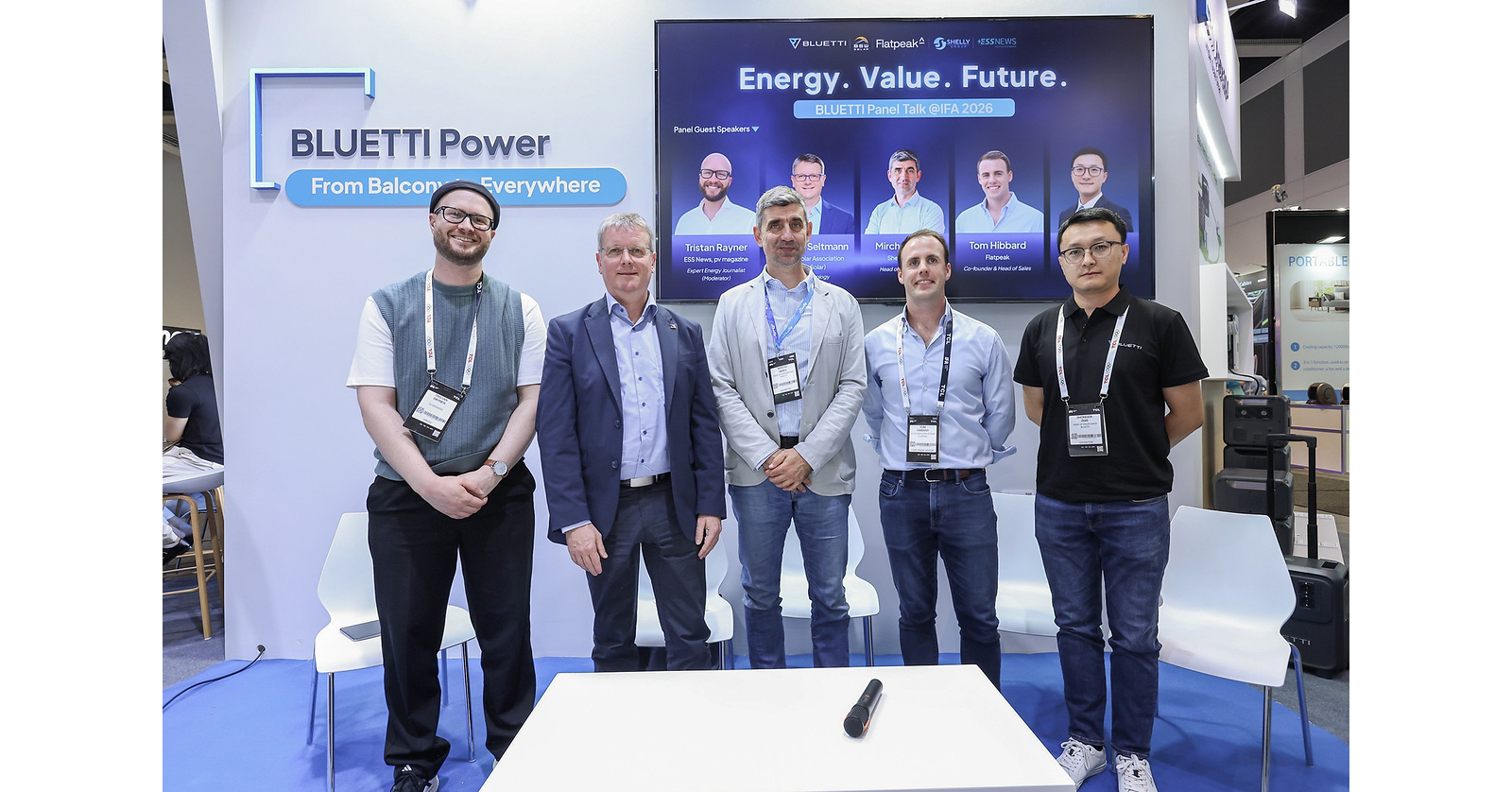
At IFA 2026, BLUETTI brought together BSW-Solar, Shelly Group, and Flatpeak to discuss how solar + home storage, real-time data, and AI can make household energy systems more automated and predictive. Speakers emphasized the need for open integration standards and reliable real-time data exchange, alongside clearer safety/product norms (e.g., a plug-in solar equipment product standard mentioned for late 2025). Flatpeak highlighted tariff-driven battery charging/discharging—charging when power is “cheapest/cleanest” and discharging otherwise—framing this as a practical route to increased household savings and grid flexibility.
Analysis
This reads less like an adoption catalyst and more like a standards battle. The incremental winners are the companies that own the control layer — tariff optimization, device orchestration, and interoperability — because they can monetize every installed battery/solar asset without carrying hardware gross-margin risk. That favors ecosystem-led names over pure panel or cell vendors, while commoditized OEMs risk becoming interchangeable boxes unless they can lock in software or financing.
Second-order, the real economic lever is utility revenue deferral rather than household bill savings. If enough behind-the-meter capacity starts responding automatically to spot tariffs, the pressure shows up first in peak pricing, then in distribution capex plans, and only later in broader retail load growth; that is a 6-18 month story, not a next-quarter earnings driver. Utilities with higher exposure to residential peak demand and weak demand-response programs are most vulnerable, while grid-edge software and home energy management layers gain negotiating power.
The contrarian point is that the addressable market may be overestimated because friction is still regulatory and behavioral, not technical: interconnection rules, product certification, installer complexity, and consumer trust can slow conversion despite flashy demos. If the promised open standards don’t translate into lower installed cost and measurable payback within 1-3 months of billing cycles, the narrative will fade into trade-show marketing. What would falsify the bullish ecosystem thesis is delayed standards adoption or evidence that battery arbitrage savings are too small after fees and taxes to drive mass uptake.
AllMind Terminal
AI-powered research, real-time alerts, and portfolio analytics for institutional investors.
Request TrialMarket Sentiment
Overall Sentiment
neutral
Sentiment Score
0.05
Key Decisions for Investors
- No immediate event-driven trade on the PR itself; treat as a 6-18 month theme, not a catalyst. Use it as a watchlist item for EU home-energy/software names rather than a momentum signal.
- If you want expression, favor a quality-vs-commodity pair: long ENPH / short SEDG on the thesis that open integration and software monetization matter more than hardware scale; reassess if SEDG shows meaningful margin stabilization or attach-rate improvement over the next 1-2 quarters.
- For broader sector exposure, buy TAN only on weakness rather than into the headline; the cleaner catalyst would be evidence of rising residential storage attach rates in channel checks, not press-release collaboration.
- Watch regulated utility names with high residential peak exposure as potential relative losers over 6-18 months; if peak load forecasts are revised down or demand-response spend rises, consider shorting the most exposed regional utilities versus XLU.
- Set an alert for any EU product-standard or interconnection-rule updates that lower installation friction; that would be the first real fundamental confirmation that this ecosystem story is moving from narrative to demand.
More News
- Putin reportedly suggests summit with Trump and Xi to decide fate of Ukraine
- Ukraine launches over 1,000 drones at Russia, setting oil facilities ablaze
- China's CXMT sees shares drop over 6% as investors look past chipmaker's profit turnaround
- Trump defends Russian sanctions relief, lashes out at Zelenskyy
- China’s Coal Output Drops as Concerns Build Over Winter Supply
- Asian stocks skid, Wall Street and bonds aided by oil slip