
Breakfast News: The Quarter in Charts
Source: fool.com
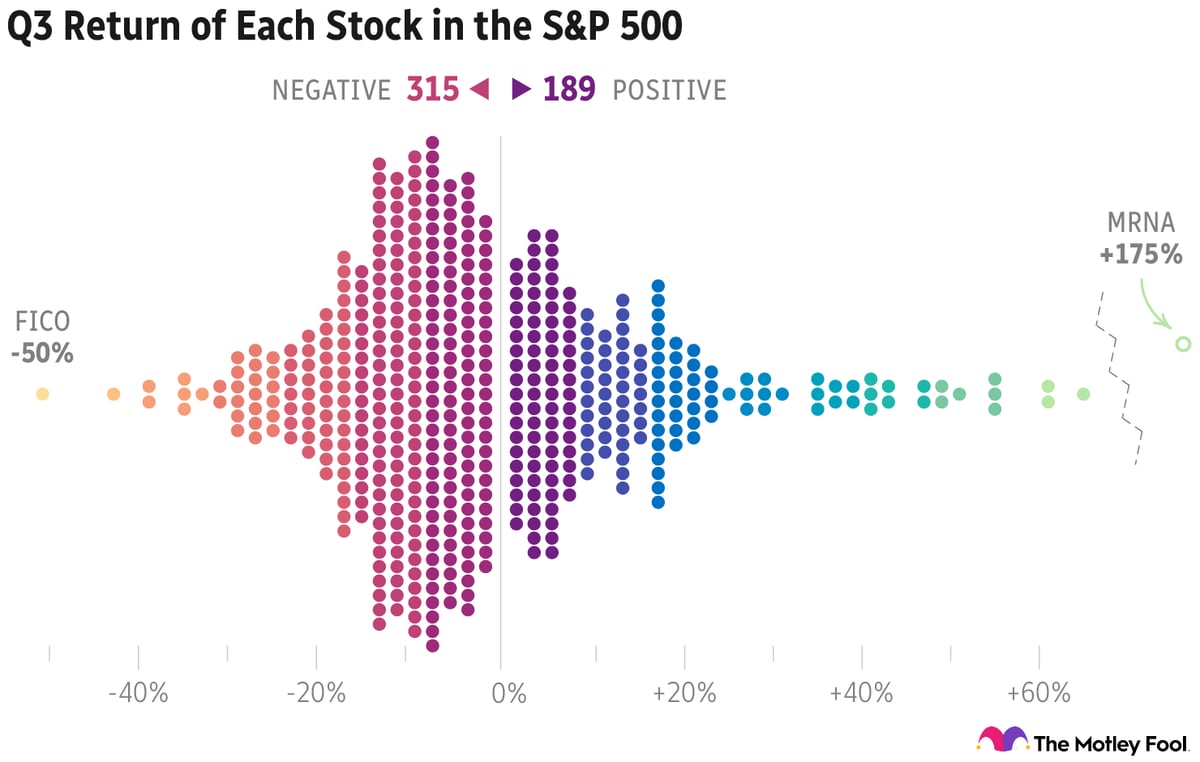
The S&P 500 rose 2% in the third quarter, bringing its year-to-date gain to 11.8%, but most index constituents lost ground and the equal-weight S&P 500 ETF fell 2.2%. Technology gained 2.7%, while energy rose 16% as oil prices shifted; rising bond yields and Fed signals of further rate increases weighed on the market. Moderna surged 177% on Aug. 19 after positive Phase 3 results for its partnered melanoma therapy, while Fair Isaac fell more than 25% on Sept. 29 after Fannie Mae and Freddie Mac opened the door to a competing credit score.
Analysis
The useful signal is not the index return but the breadth gap: cap-weighted strength alongside weakness in the equal-weight benchmark leaves the market unusually dependent on a small group of large stocks. That can persist while mega-cap earnings and buybacks hold up, but it makes index exposure vulnerable to a handful of guidance misses; broadening participation would be needed to validate a more durable rally.
For Microsoft, cash generation alongside higher investment supports the AI buildout narrative, but capex is not itself evidence of attractive returns. Over the next 1–3 months, watch cloud growth and management’s evidence that AI demand is translating into paid usage; over 6–18 months, depreciation and competitive spending could pressure returns if monetization lags. Meta’s product launch may help engagement, but it does not eliminate regulatory or execution risk.
The FICO threat is a potentially structural pricing-power challenge, not yet proof of lost economics: agency adoption, lender workflow changes, and actual score-volume migration matter more than an announced alternative. For Moderna and Merck, the trial result creates optionality, while full efficacy, safety, regulatory review, and commercial economics remain necessary gates; the sharp repricing raises the risk of buying ahead of confirmation.
Macro-wise, choppy yields and oil argue against extrapolating a single quarter’s sector leadership. The contrarian risk is that investors read large-cap resilience as broad market health; the equal-weight divergence argues for tighter risk limits on index beta.
AllMind Terminal
AI-powered research, real-time alerts, and portfolio analytics for institutional investors.
Request TrialMarket Sentiment
Overall Sentiment
mixed
Sentiment Score
0.05
Ticker Sentiment
Key Decisions for Investors
- Avoid adding broad cap-weighted index beta solely on headline index strength. Track equal-weight relative performance and market breadth; consider a tactical long RSP versus SPY only if participation improves, and unwind if breadth continues to deteriorate.
- Keep FICO on a downside watchlist rather than initiating an unconditional short. Reassess after evidence on lender adoption, score volumes, and pricing; thesis weakens if agency implementation stalls or FICO retains economics through a successful transition. Avoid treating Fannie Mae or Freddie Mac as direct equity proxies for the competitive threat.
- Do not chase Moderna after the repricing. Revisit exposure after detailed Phase 3 data and regulatory milestones; falsifiers include an adverse safety signal, weaker-than-expected durability, or unclear commercial terms with Merck. Merck offers a partnership-linked watch item, not a standalone earnings thesis from this report.
- For Microsoft, hold or add only against evidence that cloud growth and AI monetization keep pace with investment. A guidance slowdown or rising capex without corresponding usage/revenue evidence would challenge the thesis; monitor the same return-on-investment question across Meta’s AI spending.
More News
- Nvidia GPUs are everywhere. Here are the ways companies are accessing them
- AI's Supercharging a Scam Economy Bigger Than the Cocaine Trade
- Big Tech is betting $700 billion on AI. Healthcare will decide whether the bet pays off
- AI agents like Muse can shop for you. Here's what that means for retail stocks
- Moderna options activity surges as Nasdaq-100 inclusion and melanoma data drive call buying
- Trump Visa Crackdown Raises Questions for Tech Talent