
India’s Housing Boom Faces a Festive-Season Test
Source: Bloomberg
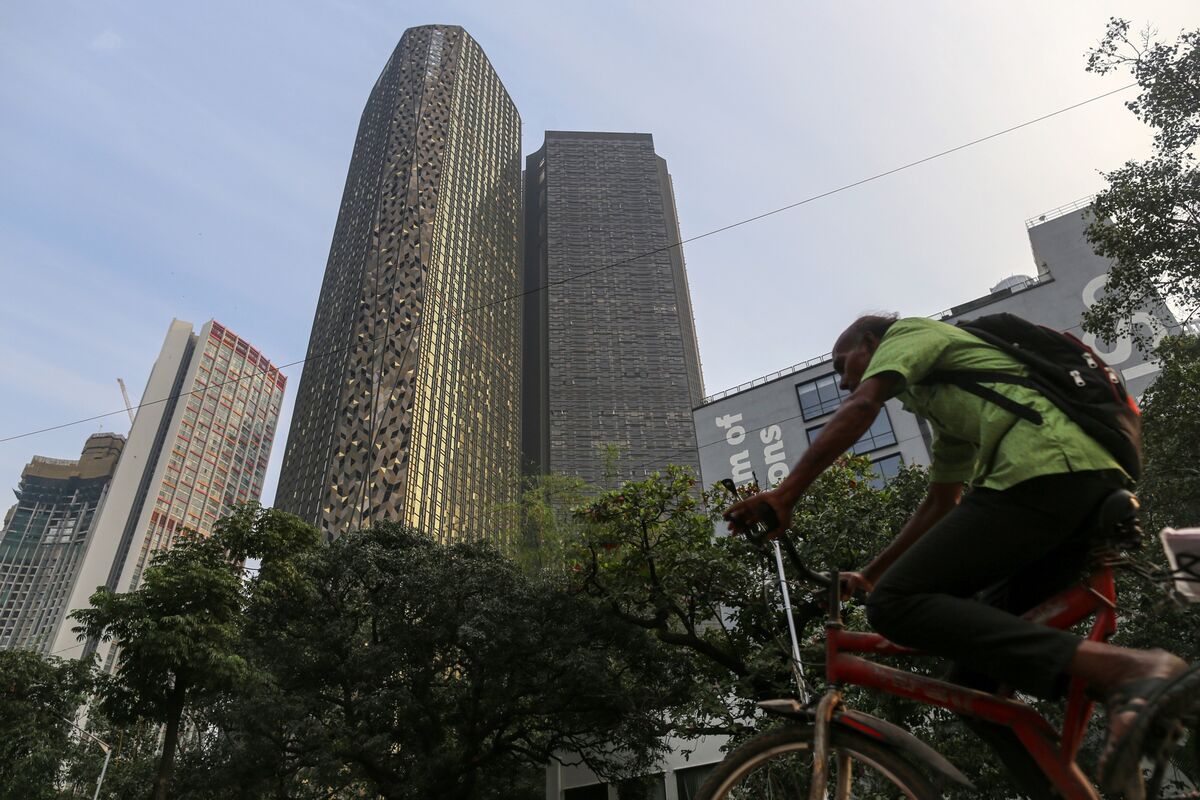
India's premium housing market faces a festive-season demand test, with developers potentially needing to accept lower margins to stimulate sales. The article points to a pause in high-end housing demand, creating near-term pressure on developer profitability, while also highlighting refiners' benefit from a global diesel shortage.
Analysis
The key equity transmission is not headline booking volume but the trade-off between absorption and realized pricing. For DLF, Godrej Properties, Oberoi Realty, Prestige Estates and Macrotech Developers, incentives that preserve stated prices can still dilute EBITDA through broker commissions, fit-out waivers and payment-plan financing; the effect will likely appear first in Q3/Q4 pre-sales quality and only later in reported margins given revenue-recognition lags. Premium developers with low-cost land banks and strong balance sheets should take share if smaller regional builders are forced to discount outright.
Banks and housing-finance lenders are a less obvious near-term loser only if developers use increasingly aggressive subvention schemes: those can pull demand forward while increasing cancellation and underwriting risk. HDFC Bank, ICICI Bank and SBI should be monitored for mortgage disbursement growth versus developer-reported collections, rather than reservation volumes. Building-material names such as UltraTech Cement, Kajaria Ceramics and Asian Paints are relatively insulated if unit sales hold, but a prolonged premium slowdown would eventually pressure renovation demand and dealer inventory turns over 6-18 months.
The refining angle creates a cleaner earnings asymmetry than real estate: strong middle-distillate economics improve Reliance Industries' integrated refining earnings, while IOC, BPCL and HPCL retain greater exposure to domestic fuel-price intervention, inventory losses if crude rises abruptly, and policy risk around export levies. Consensus may overreact to softer high-end housing indicators as a broad consumer-demand signal; the more important question is whether discounting spreads from selective premium projects into mass-market launches, where affordability is more rate-sensitive and sector multiples would compress.
AllMind Terminal
AI-powered research, real-time alerts, and portfolio analytics for institutional investors.
Request TrialMarket Sentiment
Overall Sentiment
mildly negative
Sentiment Score
-0.30
Key Decisions for Investors
- Maintain a 1-3 month relative-value bias long DLF or Godrej Properties versus short a broad India real-estate proxy only after monthly booking data confirm discounting is contained to weaker projects; favor balance-sheet quality and land-bank optionality over headline pre-sales growth.
- Avoid adding to smaller leveraged Indian developers until disclosures show collections tracking bookings and no material rise in customer incentives. Thesis is falsified positively by two consecutive months of improving absorption without higher commission/subvention expense.
- Prefer Reliance Industries over IOC/BPCL/HPCL for 1-3 months while diesel cracks remain elevated; the pair reduces exposure to domestic administered-price and levy risk. Exit if Singapore diesel cracks normalize sharply or crude strength drives adverse inventory and policy risk.
- Set a watch alert on Q3/Q4 developer commentary for realized price declines, cancellation rates and construction-cost guidance. A broad 5%+ realized-price reset would warrant reducing Indian real-estate exposure and reassessing UltraTech/Kajaria dealer-demand assumptions over the following 6-12 months.
More News
- Are global oil reserves sufficient to withstand renewed US-Iran war?
- EU entering winter with lowest gas reserves on record, IEA boss warns
- OpenAI Trims Target Value & Volvo Cars Cuts 2,500 Jobs
- Russia and Ukraine trade fresh strikes despite renewed push for U.S.-brokered peace talks
- U.S. oil holds above $100, Brent at five-month high as Iran says it’s prepared for warfare
- PG&E’s CEO says AI is ‘the best thing that could’ve ever happened to the grid’