
In HelloNation, Real Estate Expert Dennisha Denney Explains How Commercial & Residential Real Estate Differ in Hunt County
Source: PR Newswire
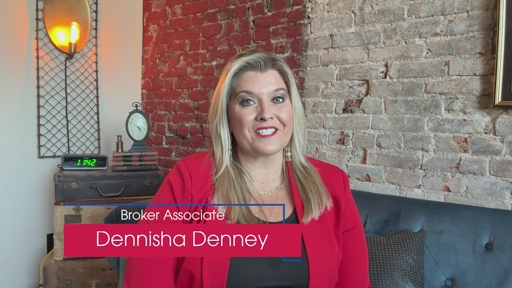
The article provides a neutral overview of how commercial real estate underwriting and due diligence differ from residential transactions in Hunt County, focusing on longer lender timelines, greater documentation (cash flow, leases, business plans), and zoning/environmental review. It highlights that commercial loans rely more on property performance and projected revenue (often with higher down payments) and can have more variable interest-rate outcomes. Overall, it’s informational content with no direct market-moving figures or company-specific catalysts.
Analysis
This is not a stock-specific catalyst; it is essentially a reminder that CRE is a balance-sheet business while residential is a flow business. The investable read-through is that tighter underwriting and longer diligence windows tend to slow transaction velocity first, then show up later in refinance volume and cap-rate discovery, which matters more for local lenders than for brokers. In that framework, any real market impact would likely surface through small-bank CRE concentrations, not through a generic housing headline.
For CRMT, the link is too attenuated to justify a direct trade. If anything, the only plausible second-order effect is that weaker small-business formation and slower commercial development can bleed into local employment and consumer credit quality over a 6-18 month horizon, but that channel is noisy and already partially embedded in credit underwriting. Near term, there is no obvious earnings or margin sensitivity here, and the correct stance is to wait for hard data: CRE delinquency trends, regional bank guidance, or loan growth inflections.
Contrarian view: the consensus often overweights residential housing chatter and underweights the fact that commercial deals can stall for months without visible price signals, especially when financing becomes the gating item. That means the first place to look for stress is not home prices but loan documentation, extension activity, and borrower equity checks. Absent evidence of widening spreads or rising charge-offs, the article itself is not a tradable signal.
AllMind Terminal
AI-powered research, real-time alerts, and portfolio analytics for institutional investors.
Request TrialMarket Sentiment
Overall Sentiment
neutral
Sentiment Score
0.00
Key Decisions for Investors
- No position in CRMT on this article alone; treat it as non-actionable noise unless there is a subsequent update tying local commercial activity to consumer credit deterioration.
- Set a watchlist on regional banks with elevated CRE exposure (KRE; names like WAL, PACW, FITB) and look for a 1-3 month catalyst in 30+ day CRE delinquencies or management commentary on refinancing extensions before expressing a view.
- If CRE stress broadens, consider a pair trade long XLF / short KRE to isolate the loan-book risk; the thesis only works if charge-offs and reserve builds start moving in the next 1-2 quarters.
- Use this as an alert for title/inspection and local transaction-volume proxies rather than a stock trade; the earliest market signal would be declining transaction counts, not pricing, over the next 1-3 months.
More News
- Indonesian stocks plunge to six-year low as MSCI downgrade fears mount
- China's CXMT sees shares drop over 6% as investors look past chipmaker's profit turnaround
- China's economic growth quickens to 4.6% as exports surge, stimulus rolls out
- Australia’s Cleanaway agrees to $6.5 bln EQT buyout bid; shares surge
- India’s Finance Minister blames easy exits and excess liquidity for equity market's underperformance
- China’s Q3 GDP growth accelerates to 4.5%, beating forecast
From AllMind Research
- Anthropic IPO Preview: Valuation, Timing, and What to Watch
- Shein After the IPO: Venue, Valuation, and What Must Be Proved
- What AI Research Tools Should a Small Hedge Fund Buy First?
- Capital Intensity as Gravity: The AI Trade Enters Its Industrial Era (Looking at Q3 2025 Earnings in Tech)
- AI Portfolio Monitoring: Build an Alert Policy Analysts Can Audit