
China-U.S. Youth Exchange Brings Together 170 Young People Across Shandong and Beijing
Source: PR Newswire
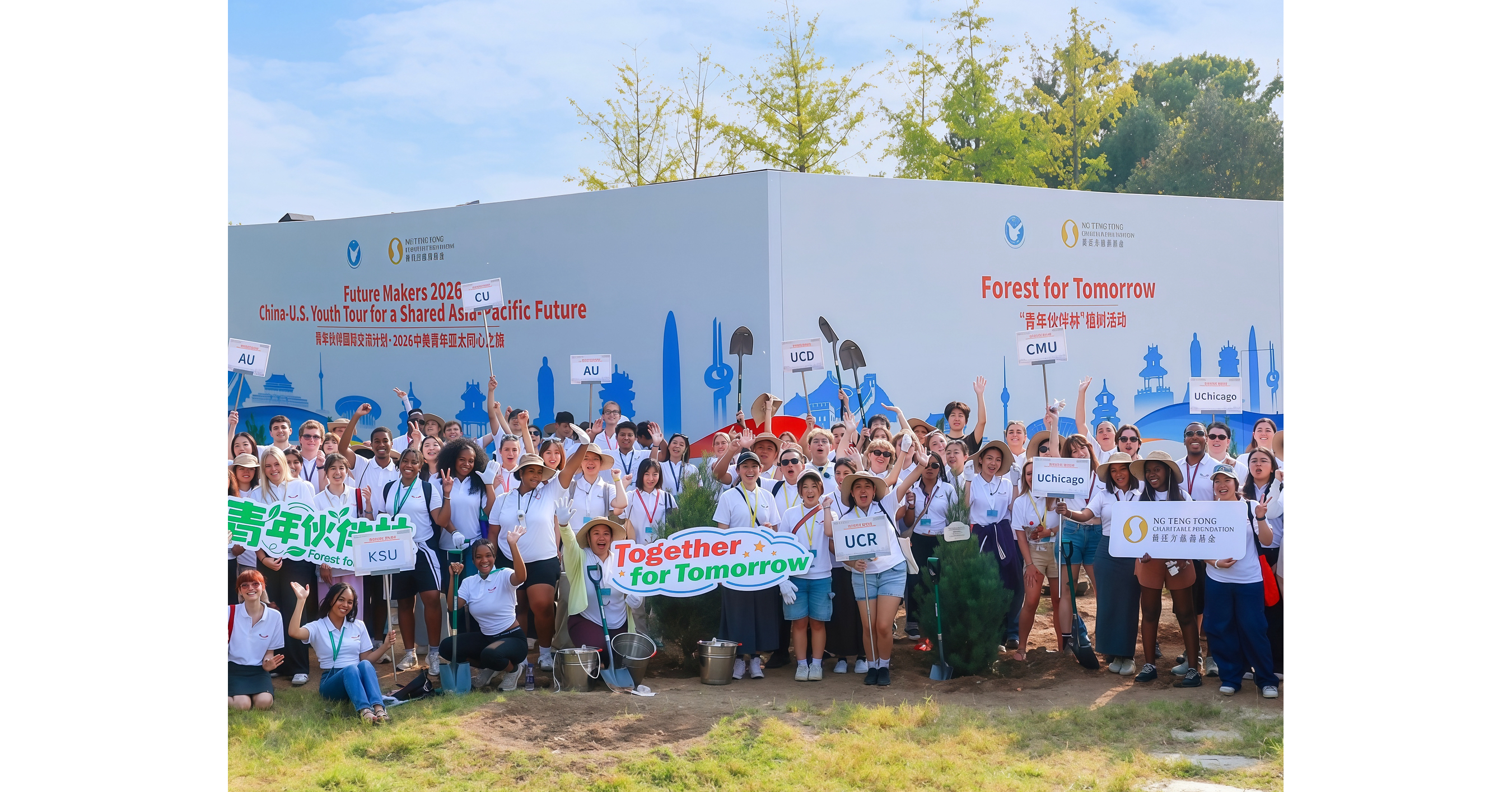
Future Makers 2026 brought together 170 Chinese and U.S. young people, including 100 students from 10 U.S. universities, for a week-long cultural and technology exchange during China’s APEC host year. The participants toured robotics, AI, autonomous-driving and EV-manufacturing sites in Beijing, alongside historical and academic dialogue events in Shandong and Beijing. The initiative signals modest people-to-people engagement between China and the U.S. but has no material near-term market implications.
Analysis
This is soft-power signaling rather than an investable policy development. The featured exposure to robotics, autonomous driving and EV manufacturing may marginally support China’s domestic innovation narrative, but it does not change export controls, U.S. procurement rules, capital-market access, or demand forecasts—the variables that determine valuations for Chinese technology assets.
Near term (days to 3 months), the only potential market relevance is optionality around the 2026 APEC calendar: a sustained increase in people-to-people exchanges could be used to establish a more constructive backdrop for limited bilateral engagement. That would be directionally supportive for China ADR beta (KWEB, FXI) and selected supply-chain names, but the probability-weighted earnings impact is negligible absent concrete movement on tariffs, semiconductor restrictions, outbound-investment rules, or EV trade barriers.
The contrarian point is that highly visible cultural diplomacy can coexist with continued economic decoupling. Investors should not extrapolate a program involving academic exchanges into improved market access for SMIC, Huawei-linked suppliers, Chinese EV exporters, or autonomous-driving platforms. APEC-related optimism is more likely to create short-lived headline rallies than a durable multiple rerating unless accompanied by verifiable regulatory concessions.
AllMind Terminal
AI-powered research, real-time alerts, and portfolio analytics for institutional investors.
Request TrialMarket Sentiment
Overall Sentiment
mildly positive
Sentiment Score
0.18
Key Decisions for Investors
- No standalone trade: treat this as low-signal soft-power news; avoid adding China-tech or EV exposure solely on an anticipated thaw in bilateral relations.
- Set an event-driven alert into China’s 2026 APEC meetings: consider a tactical long KWEB versus short EEM only if announced tariff relief, export-control licensing changes, or outbound-investment exemptions provide a measurable catalyst. Use a 1-3 month horizon and exit if no implementable policy follows summit rhetoric.
- Maintain caution on China EV export exposure, including LI, NIO, XPEV and battery-chain proxies: the key falsifier for the decoupling thesis is a reduction in U.S./allied tariff or local-content barriers, not cultural-exchange headlines.
- For AI/robotics exposure, favor firms with domestic Chinese revenue visibility over export-dependent semiconductor names until U.S. technology restrictions show actual loosening; watch BIS actions and APEC communiqués for any change in the operating constraint.
More News
- Here’s the ‘core economic flaw’ in the AI bull case as stock and bond trades unravel, according to a top economist
- Iran says won’t allow US warships to get close as Trump ponders new attacks
- American embassies tighten security as Iran threat warnings intensify ahead of U.S. midterm elections
- France’s latest debt warning describes a country where governance is breaking down — and even doing too little, too late is barely possible
- Saudi-led coalition says it intercepted Houthi ballistic missiles targeting Saudi cities
- Biotech stocks are surging. How investors can play the new drug innovation boom