
Musk Targets Delta, the Missing Link in Airline Satellite Fight
Source: Bloomberg
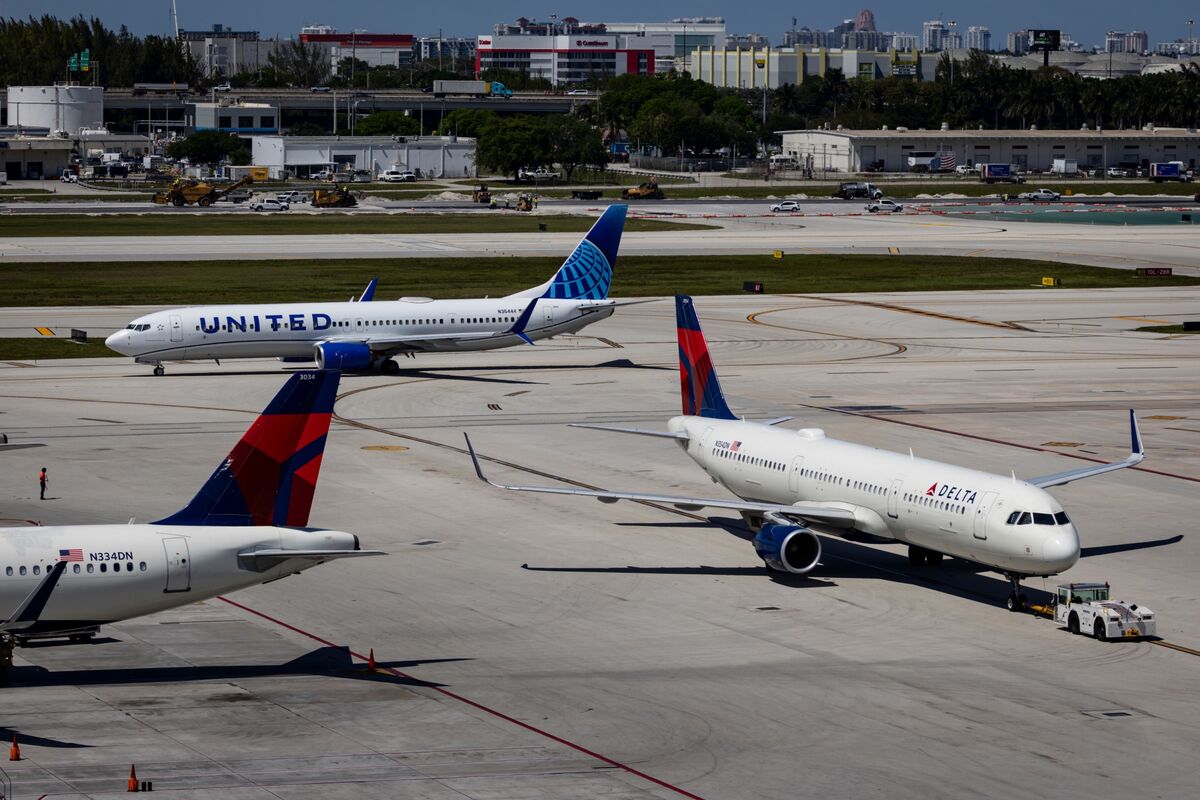
Delta is described as a holdout as U.S. airlines race to deploy SpaceX’s Starlink satellite Wi-Fi. Elon Musk is reportedly pressuring a Delta executive who has declined to adopt Starlink; the excerpt provides no further details or financial figures.
Analysis
The investable issue is bargaining power, not a near-term change in airline earnings: without contract terms, fleet rollout timing, or verified performance data, the excerpt does not establish a material financial impact for either SPCX or DAL. If Starlink becomes the default across more fleets, scale and operational familiarity could strengthen SpaceX’s negotiating leverage and make alternative providers harder to retain. Conversely, Delta’s holdout may preserve a credible outside option and limit pricing power if competing systems meet passenger expectations at lower total cost.
For DAL, the trade-off is connectivity quality and customer differentiation versus installation, integration, and contract economics; those costs and benefits are not quantified here. A public pressure campaign could also make supplier choice a reputational or governance issue, potentially complicating procurement rather than accelerating it. Competitors such as Viasat and Intelsat could benefit if Delta’s stance sustains demand for alternatives, but the article provides no evidence of a Delta award or displaced contract.
Near term, headline risk may move sentiment more than estimates. Over 1–3 months, watch for a Delta vendor decision, disclosed commercial terms, and aircraft rollout plans. Over 6–18 months, fleet-wide adoption could favor providers with reliable service and low integration friction; certification, capacity, and service performance remain execution risks. The contrarian point: a holdout is not necessarily a laggard—if it improves Delta’s negotiating position, switching only makes sense when verified passenger or operating benefits exceed full lifecycle costs.
AllMind Terminal
AI-powered research, real-time alerts, and portfolio analytics for institutional investors.
Request TrialMarket Sentiment
Overall Sentiment
neutral
Sentiment Score
0.00
Ticker Sentiment
Key Decisions for Investors
- No directional trade on this excerpt alone: the key missing inputs are Delta’s current contract economics, competing bids, installation costs and schedule, and any measurable passenger or operational benefit.
- Treat DAL as an event watch, not a short: reassess if Delta announces a provider or fleet plan. A decision favoring Starlink without disclosed economics is not by itself evidence of earnings accretion; look for guidance or expense implications.
- For SPCX, treat additional airline adoption as a potential strategic validation catalyst, not a quantified revenue thesis. Verify signed fleet commitments, deployment pace, service performance, and whether pricing remains attractive as airline bargaining power shifts.
- Falsifiers: a credible alternative delivering comparable service on better terms would weaken the Starlink scale thesis; delayed certification or rollout, capacity constraints, or adverse service data would undercut adoption. A disclosed Delta deal with favorable lifecycle economics would reduce the holdout-risk concern.
More News
- Elon Musk blames Indian 'oligarchs' for stalling Starlink launch
- FCC to vote on auctioning 25MHz of 'prime spectrum' in move that could benefit Amazon, SpaceX
- Bezos says Blue Origin likely to pursue IPO in coming years
- SpaceX Seeks $40B for Nvidia Chips as AI Megadeals Loom
- The FCC proposes new mid-band spectrum auction and unlocking 800MHz for drones
- BofA Sees Strong Demand for OpenAI, Anthropic IPOs
From AllMind Research
- Anthropic IPO Preview: Valuation, Timing, and What to Watch
- Shein After the IPO: Venue, Valuation, and What Must Be Proved
- What AI Research Tools Should a Small Hedge Fund Buy First?
- Augmented Intelligence: AllMind, Elevate Human Judgement With an Accessible, Powerful, Data-Driven Financial AI Toolkit
- AI Research Systems for Hedge Funds: A Pilot Design