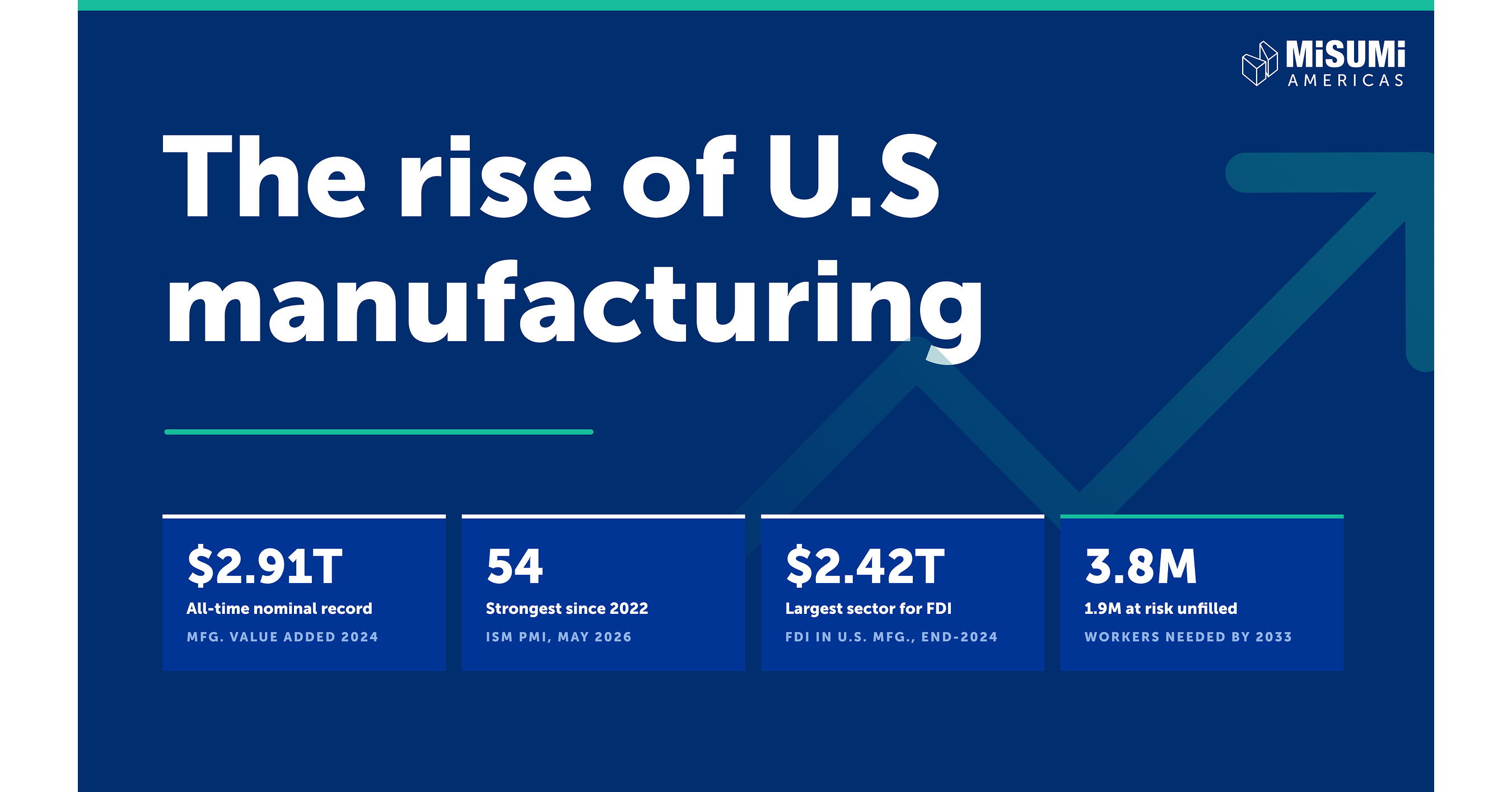
U.S. manufacturing hit a record $2.91T in 2024, while the ISM Manufacturing PMI rose to 54 in May 2026—the strongest since 2022—alongside a factory construction spending surge to a 2024 peak of $235.6B. However, the report flags a looming constraint: the industry needs 3.8M additional workers by 2033, with 1.9M at risk of going unfilled without action. MISUMI Americas is backing H.R. 9097, which would fund 6–12 months of hands-on advanced manufacturing training in allied countries to help close the skilled-worker gap.
The investable read is not “more factories,” it is “more automation per factory.” If the labor gap persists, the incremental dollar of U.S. manufacturing capex is more likely to flow into robotics, machine vision, controls, and software than into broad-based headcount, which supports margins for names like ABB, ROK, EMR, TER, and semiconductor equipment vendors over labor-intensive assemblers. The second-order loser is any domestic manufacturer relying on low-skill labor to scale new capacity; they may show top-line growth but miss on gross margin and commissioning timelines as projects take longer to staff and qualify.
The near-term market reaction should be muted because this is mostly a policy-and-structural narrative, not a fresh demand shock. The catalyst path is 1-3 months for sentiment around industrial automation and vocational-training beneficiaries, but 6-18 months for actual revenue if H.R. 9097 becomes real and if firms accelerate capex to offset wages. Falsifiers: a rollover in ISM/new orders back below 50, or evidence that factory construction continues but backlog conversion and employment gains lag, which would argue the story is being financed without being monetized.
Contrarian view: consensus is overestimating how quickly reshoring translates into earnings. The bottleneck may delay the revenue ramp while still inflating costs, which is bearish for companies with fixed-price projects and thin labor buffers, and bullish only for the picks-and-shovels layer. If the bill stalls, the better trade is not industrial beta but a relative long in automation/execution names versus labor-heavy manufacturers and staffing-sensitive cyclicals.
AI-powered research, real-time alerts, and portfolio analytics for institutional investors.
Overall Sentiment
neutral
Sentiment Score
0.05
Ticker Sentiment
