
A $30 Billion Healthcare Funding Problem Is Dividing California
Source: Bloomberg
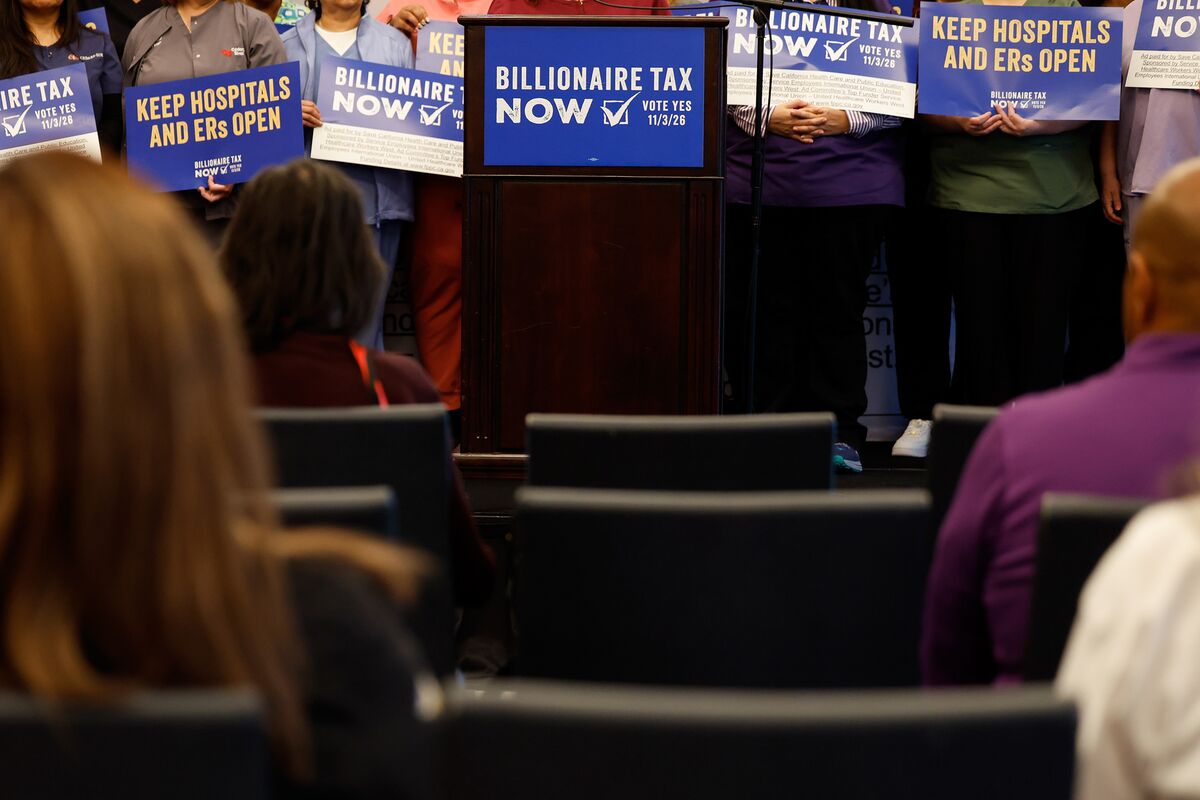
California faces a reported $30 billion funding shortfall that is creating political divisions, with healthcare funding identified as a central dilemma. The provided article excerpt contains no details on the affected programs, proposed remedies, timing, or broader economic impact.
Analysis
The investable transmission is unlikely to be broad California-equity weakness; it is a reimbursement and payment-timing problem concentrated in safety-net providers, Medicaid-adjacent managed-care operators, and local-government issuers. A funding gap that is resolved through lower provider rates, enrollment restrictions, or delayed supplemental payments would pressure EBITDA and working capital before it appears in reported revenue. For-profit hospital exposure is most relevant through THC and, to a lesser extent, HCA; their California operations are not the dominant earnings driver, but reimbursement pressure can matter disproportionately for facilities with high uninsured and Medicaid mix.
Over the next 1-3 months, legislative negotiations and the chosen funding mechanism—not the headline deficit—are the catalyst. The market should distinguish recurring revenue remedies from one-time transfers, provider assessments, and accounting deferrals: the latter preserve near-term services but leave a larger fiscal hole for FY2027 and increase receivable risk. California-focused municipal credits could see modest spread widening if the solution shifts costs to counties or special districts; this is more a credit-selection issue than a reason to short broad muni duration.
The contrarian view is that listed managed-care companies may be less exposed than investors assume. California's largest Medi-Cal plans are substantially nonprofit or geographically concentrated, while CNC, MOH, ELV and UNH have diversified earnings bases; a sector-wide selloff would likely create a better entry point than a structural short. The thesis turns materially more negative only if enacted measures reduce per-member rates, cap risk-corridor support, or cause provider payment delays extending beyond one quarter.
AllMind Terminal
AI-powered research, real-time alerts, and portfolio analytics for institutional investors.
Request TrialMarket Sentiment
Overall Sentiment
mildly negative
Sentiment Score
-0.25
Key Decisions for Investors
- No broad equity or options trade at this stage; set an alert around the final California budget and any Medi-Cal rate notice over the next 30-90 days. A confirmed rate reduction or payment deferral is the actionable trigger, not preliminary funding estimates.
- Maintain a watchlist short on THC versus long HCA for a 1-3 month window if California-specific supplemental-payment cuts are enacted. THC has potentially greater sensitivity to California safety-net economics; target a 5-8% relative move, with a stop if THC discloses immaterial California EBITDA exposure or funding is backfilled with recurring federal/state revenue.
- Use any indiscriminate managed-care weakness to selectively add MOH or CNC only after verifying California membership and rate exposure in filings. Risk/reward is favorable if the selloff exceeds 5% without a company-specific guidance cut; exit if management identifies a 2027 earnings headwind exceeding roughly 2-3% of EBITDA.
- For municipal portfolios, reduce concentration in lower-liquidity California county, hospital-district, and safety-net revenue bonds rather than shorting CMF or MUB. Require incremental spread compensation versus California GO debt; payment-delay risk can impair liquidity even when ultimate default risk remains low.
More News
- Trump vs Europe as US presses for release of emergency diesel stocks
- New aircraft carrier, 10,000 US troops: Is the Iran war about to escalate?
- France debt crisis: Bond investors have rendered a ‘guilty’ verdict and are pricing in growing odds of a sovereign default, analyst says
- US job growth slows as unemployment rises before midterm elections
- France’s Bond Crisis Deepens, US Jobs Data on Deck
- Your health insurance premiums may take a big jump in 2027 — here's why
From AllMind Research
- Anthropic IPO Preview: Valuation, Timing, and What to Watch
- Shein After the IPO: Venue, Valuation, and What Must Be Proved
- What AI Research Tools Should a Small Hedge Fund Buy First?
- Index and ETF Holdings Data for AI Research
- Capital Intensity as Gravity: The AI Trade Enters Its Industrial Era (Looking at Q3 2025 Earnings in Tech)