
Should Investors Buy AZO Stock as Growth Meets Margin Concerns?
Source: zacks.com
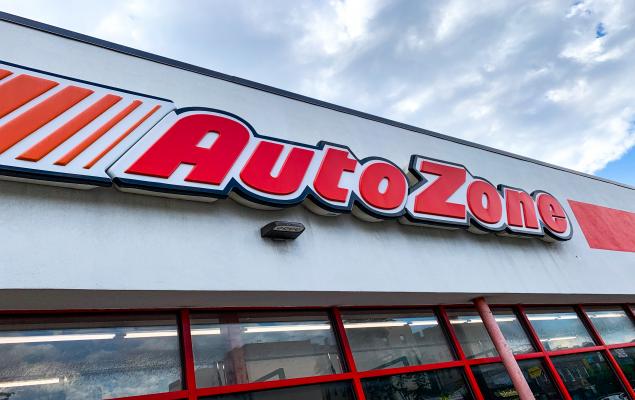
AutoZone's domestic commercial sales rose 10.6% in fiscal 2026, while the company opened a record 374 stores and plans roughly 400 additional openings in fiscal 2027. Offsetting these growth drivers, gross margin declined 29bps to 52.3%, DIY same-store sales fell 0.6% in Q4, and fiscal 2027 domestic same-store sales are projected to be flat to up low single digits. AutoZone generated $1.8 billion of free cash flow and repurchased $2.0 billion in stock, but ended the year with $9.1 billion in debt and 2.5x EBITDAR leverage; consensus projects fiscal 2027 sales and EPS growth of 7.6% and 13.4%, respectively.
Analysis
The key underwriting issue is not unit growth but incremental return on invested capital. A more professional-customer-heavy mix requires deeper local inventory, faster fulfillment and larger hubs; these investments can raise working-capital intensity before they produce mature-store productivity. AZO's buyback-driven EPS model is therefore less resilient if capex and inventory absorb cash while interest costs remain elevated: a modest gross-margin miss combined with reduced repurchases could make consensus EPS growth unattainable without a meaningful acceleration in same-store sales.
Competitive dynamics favor the scale players, but not necessarily AZO uniquely. O'Reilly Automotive (ORLY) has a similarly entrenched professional-parts network and is the cleaner relative hedge because commercial share gains may be competed away through service levels and pricing rather than retained as margin. Advance Auto Parts (AAP) is the likely loser: an expanding hub footprint increases local availability pressure in markets where AAP is attempting a turnaround, potentially extending its sales-recovery timeline.
Over the next 1-3 months, the actionable catalyst is evidence that commercial growth is becoming lower-quality—inventory growth outpacing sales, delivery-cost inflation, or gross margin failing to improve sequentially excluding accounting effects. Over 6-18 months, an aging U.S. vehicle fleet and higher repair-versus-replace economics remain structural supports, but these are broadly reflected across the aftermarket group. The contrarian view is that incremental margin can recover once hub density matures; that requires commercial sales staying double-digit while DIY transactions stabilize, neither of which should be assumed from management's current outlook.
The article's references to HMC, OSK and PCAR do not create a fundamental linkage to AZO. PCAR and OSK are more exposed to freight, industrial order cycles and dealer inventory than to retail aftermarket demand; using their estimate revisions as a read-through for AZO would be a category error.
AllMind Terminal
AI-powered research, real-time alerts, and portfolio analytics for institutional investors.
Request TrialMarket Sentiment
Overall Sentiment
mixed
Sentiment Score
0.05
Ticker Sentiment
Key Decisions for Investors
- Maintain a neutral AZO core position into the next earnings report; do not add solely on the apparent forward-multiple discount. Upgrade only if commercial sales remain above 8-10% while gross margin expands sequentially and inventory growth stays below sales growth; these conditions would support a 6-12 month rerating.
- Implement a 3-6 month relative-value watch: long ORLY / short AZO only if AZO's next report shows another gross-margin decline or a reduction in buyback pace. Target 8-12% relative return; cover if AZO delivers margin expansion above 25 bps with stable DIY comparable sales, as hub maturity could reverse the spread.
- For a higher-beta competitive expression, remain underweight AAP versus AZO and ORLY for 6-12 months. Escalating local availability and delivery competition raises the execution bar for AAP's turnaround; reassess if AAP demonstrates sustained positive comparable sales and meaningful gross-margin recovery.
- Set a balance-sheet alert around net leverage and interest expense rather than headline debt alone: reduce AZO exposure if leverage rises above roughly 3.0x EBITDAR or if free cash flow no longer covers capex plus shareholder distributions. That would convert a manageable capital-allocation issue into a multiple-compression risk.
More News
- In photos: China's Xi hardens Taiwan warning as country celebrates week-long National Day holiday
- Tencent leases 100,000 chips from Oracle for $7 bln- FT
- RAM supply set to worsen, says Micron, as CEO celebrates ‘much higher’ prices
- Why is Nidec stock plunging today?
- Why is Kioxia stock rallying today?
- Nidec Corp shares slump after auditor declines to sign off on earnings