
EvoDECO® Next: Sidel brings new freedom and material efficiency to roll-fed labelling
Source: PR Newswire
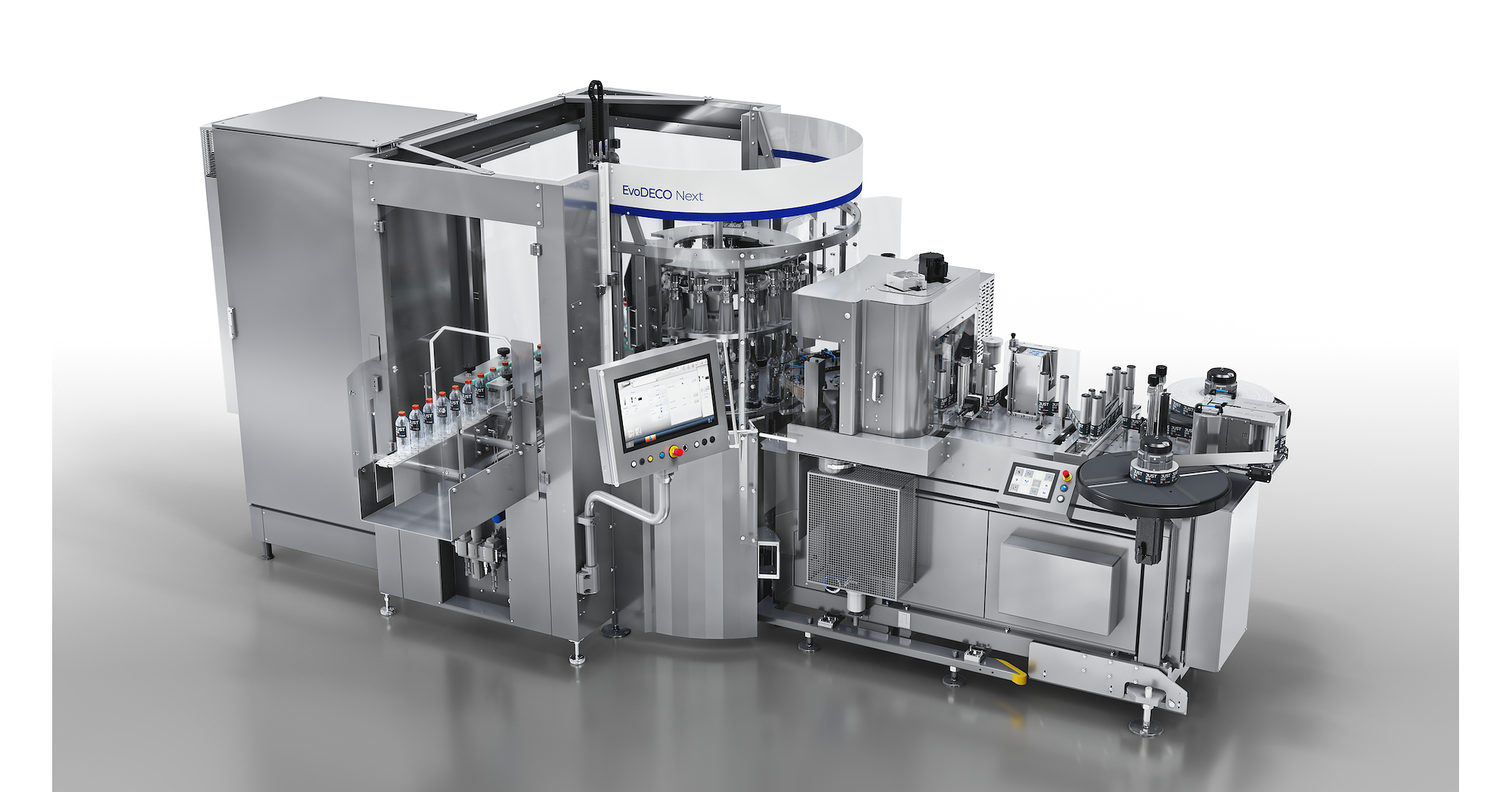
Sidel introduced EvoDECO Next, a roll-fed labelling platform that supports partial labels; its 90° configuration can reduce label surface by up to 75% versus a conventional wraparound label. In a Sidel-modeled example based on a 61,000-bottle-per-hour line producing about 459 million bottles annually, switching to a 90° partial label would reduce BOPP use by 208.4 tonnes and associated CO₂ emissions by 346 tonnes, with approximately €723,000 in annual raw-material savings. Sidel notes that actual savings depend on product, material specifications and operating conditions.
Analysis
The economic signal is not the maximum label-area reduction; it is whether customers can realize material savings without sacrificing line uptime, brand visibility, or regulatory information space. If validated at scale, shorter labels could lower customers’ packaging cost and potentially strengthen Sidel’s equipment proposition, while pressuring demand for BOPP label film and label-converting capacity at the margin. The modeled savings are a single-line illustration, not evidence of realized customer returns or broad adoption.
Near term (days to weeks), this looks like a limited catalyst: a product launch alone does not establish orders, pricing power, or a material earnings contribution. Over 1–3 months, watch for named installations, customer payback disclosures, and order commentary. Over 6–18 months, adoption could be constrained by line-compatibility and changeover economics, brand teams’ preference for larger decoration areas, and packaging-label requirements that vary by market and product. Less label material also does not automatically mean lower total packaging cost if customers need redesigns or incur qualification costs.
The contrarian angle is that the headline efficiency claim may overstate the commercially addressable opportunity: the maximum reduction is configuration-specific, while buyers optimize total cost and consumer recognition, not material use alone. Krones and other packaging-equipment vendors may face pressure to offer comparable flexibility, but the article provides no evidence of a durable Sidel technology moat. No direct equity trade is justified from this announcement without confirming Sidel’s ownership/listing exposure and subsequent order conversion.
AllMind Terminal
AI-powered research, real-time alerts, and portfolio analytics for institutional investors.
Request TrialMarket Sentiment
Overall Sentiment
mildly positive
Sentiment Score
0.35
Key Decisions for Investors
- No immediate trade: treat this as a product-positioning signal, not an earnings catalyst, until Sidel reports customer wins, order intake, or quantified revenue contribution.
- Watch packaging-material exposure rather than assuming a broad BOPP demand shock. Consider a relative-value view only if label-film producers or converters show sustained volume or pricing deterioration tied to partial-label adoption.
- Track customer validation over the next 1–3 months: realized material savings, line speed and uptime, retrofit or qualification costs, and repeat orders. Reassess positively if independent customer evidence confirms payback without production penalties.
- Falsification/watch items: limited uptake, slower-than-standard operating performance, customer redesign costs that offset material savings, or competitor responses that quickly make the feature non-differentiating. Verify Sidel’s ownership and investable exposure before expressing any company-level position.
More News
- Why is Samsung Electronics stock plunging today?
- SK Hynix plunges 8% amid Asia tech rout as Fed rate hike fears, AI funding worries mount
- Elon Musk says Trump is 'ultimately' responsible for any curbs on Ukraine's Starshield systems
- SK Hynix seeks U.S. chip equipment exports to China tied to new factory
- Dell stock plunges 11%, leading data center sell-off on concerns about 'enterprise AI timing'
- Why is Rocket Lab stock tumbling today?