
CATL lance la production expérimentale de cellules de batterie en Hongrie
Source: PR Newswire
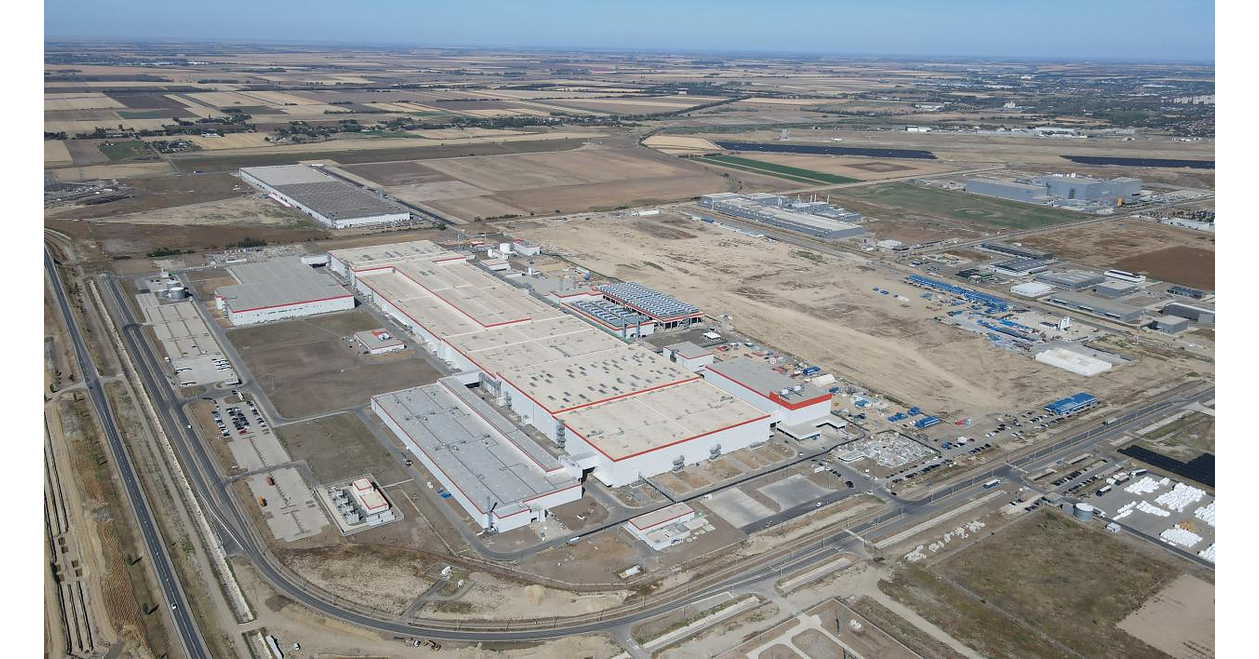
CATL began trial production on September 22 at its newly built Debrecen, Hungary battery-cell plant after securing occupancy, environmental and operating approvals. The facility, which has already produced 537,000 battery modules since autumn 2024, is intended to become CATL's largest production base outside China once fully operational, with 100 GWh of capacity. The project strengthens CATL's supply links to European EV manufacturers, although full serial-production timing was not disclosed.
Analysis
The investable implication is not incremental European EV demand; it is a potential reduction in battery logistics, inventory buffers and qualification risk for OEM assembly plants in Central Europe. BMW (BMW.DE) and Mercedes-Benz (MBG.DE) should be the cleanest indirect beneficiaries because locally sourced cells can improve plant utilization and working-capital turns before they materially change vehicle gross margins. The first market reaction should be limited: trial output does not establish automotive-grade yields, customer qualification, or stable delivered cost.
Over the next 1-3 months, the key read-through is whether OEMs disclose launch timing, cell chemistry, and committed volumes alongside their 2027 production plans. Successful ramp would intensify pricing pressure on European battery aspirants and materials suppliers whose investment cases rely on a localized, non-Chinese cell supply chain—particularly VARTA (VAR1.DE) and Umicore (UMI.BR), where customer leverage and capacity-utilization assumptions matter more than headline EV penetration. It also weakens the strategic scarcity premium attached to regional cell manufacturing, even if European demand growth remains intact.
The contrarian risk is that local manufacturing does not eliminate geopolitical exposure. EU trade-defense measures, battery-passport requirements, potential foreign-subsidy scrutiny, and dependence on China-linked cathode/anode inputs could constrain customer adoption or raise compliance costs despite physical production in Europe. For CATL (300750.SZ), the 6-18 month upside requires a clean yield ramp and credible return on European capital employed; a delayed qualification cycle would turn the facility into a fixed-cost drag rather than a competitive moat.
AllMind Terminal
AI-powered research, real-time alerts, and portfolio analytics for institutional investors.
Request TrialMarket Sentiment
Overall Sentiment
strongly positive
Sentiment Score
0.52
Key Decisions for Investors
- Maintain a 1-3 month watch-list long in BMW.DE and MBG.DE rather than chase immediately; initiate only on OEM confirmation of local-cell qualification or raised EV production guidance. Thesis is improved supply certainty and lower working capital, with risk controlled by exiting on EV launch delays or procurement diversification away from CATL.
- Consider a 6-12 month relative-value basket: long BMW.DE / short UMI.BR, sized modestly. The trade expresses OEM purchasing-power gains versus margin and utilization pressure at a European cathode-material supplier; invalidate if Umicore secures binding, high-volume non-CATL customer awards or materially lowers capex.
- Do not underwrite CATL (300750.SZ) European earnings uplift until disclosed utilization, scrap/yield, and customer qualification data are available. Set an alert for EU battery-origin or foreign-subsidy actions: any measure targeting China-controlled production rather than imported cells would impair the localization thesis.
- For VARTA (VAR1.DE), avoid treating this as a sector-positive localization signal; use any sympathy strength to reassess downside hedges over 3-6 months. The relevant falsifier is evidence of contracted automotive-cell volumes at economics sufficient to support its own capacity base, not broader European EV sales.
More News
- Oil falls on report Asia will import highest volume of crude since start of Iran war
- America’s Asian allies want a Trump-Xi truce — but not at their expense
- Chinese authorities reportedly in possession of F-35 components in Hong Kong
- Meta announces new lightweight virtual reality glasses to one-up Apple’s Vision Pro
- Trump evalúa prohibir exportaciones de diésel de EE.UU.
- ASPI's Cutler on Trump-Xi Summit, Trade Relations
From AllMind Research
- Anthropic IPO Preview: Valuation, Timing, and What to Watch
- Shein After the IPO: Venue, Valuation, and What Must Be Proved
- What AI Research Tools Should a Small Hedge Fund Buy First?
- 2026 Global Markets Outlook: Asset Allocation After the Great Disconnect
- Fintool Alternatives After the Microsoft Acquisition