
Xinhua Silk Road: Chinese solutions for meteorological early-warning help more countries tackle climate challenges
Source: PR Newswire
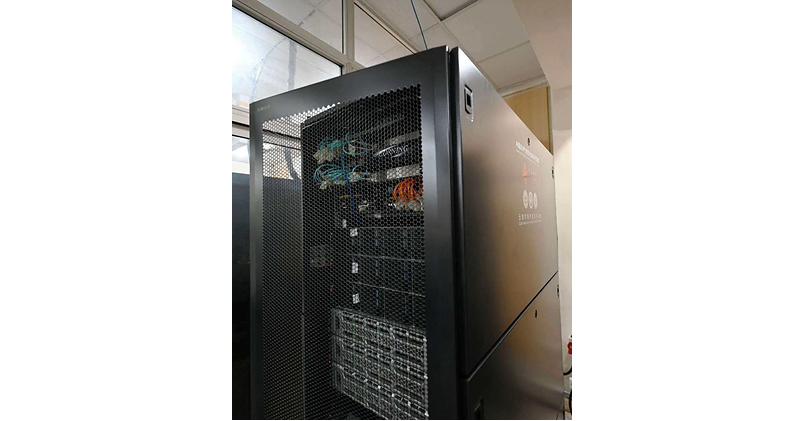
China's AI-enabled MAZU meteorological early-warning platform is undergoing cloud-based trials in more than 40 countries and has been deployed in markets including Pakistan, Ethiopia, Sri Lanka, Jordan and Djibouti. The system combines AI forecasting models, Fengyun satellite data, multi-source monitoring and cloud computing under the UN's Early Warnings for All initiative. China has also trained nearly 1,000 early-warning specialists from more than 100 developing countries, expanding international adoption of its climate-disaster technology.
Analysis
This is strategically relevant but not yet investable as a standalone revenue signal: the delivery model appears state-led, with concessional technology transfer and training likely prioritized over commercial software monetization. The near-term economic beneficiary is China’s geopolitical technology stack—satellite data, cloud infrastructure, and AI models—but the article provides no contract values, recurring revenue structure, or identifiable listed corporate recipient. Treat claims of international deployment as adoption evidence rather than proof of earnings impact.
Over 6-18 months, broader deployment could marginally pressure commercial weather-data and climate-risk vendors competing for public-sector contracts in developing markets, particularly where cost and bundled satellite access outweigh best-in-class proprietary forecasting. The more material second-order effect is standards-setting: if recipient countries build workflows around Chinese data formats and cloud tools, switching costs may lock in downstream demand for Chinese communications, compute, and satellite services. That thesis is falsified if deployments remain pilot programs, recipient countries retain multi-vendor procurement, or disclosed overseas service revenues fail to emerge.
Consensus should avoid extrapolating UN visibility into monetizable AI leadership. Climate-resilience spending is growing, but purchasing decisions are typically donor-funded, sovereign, and lengthy; the commercial value accrues only when pilots convert into multi-year operating, connectivity, and data-service contracts. The relevant catalyst window is 1-3 months for disclosed bilateral agreements and 6-18 months for procurement conversion, not an immediate public-equity re-rating.
AllMind Terminal
AI-powered research, real-time alerts, and portfolio analytics for institutional investors.
Request TrialMarket Sentiment
Overall Sentiment
moderately positive
Sentiment Score
0.42
Key Decisions for Investors
- No directional trade recommended on this release; there is no named listed beneficiary, contract economics, or independently verifiable revenue linkage.
- Create an alert for disclosed paid international contracts tied to Fengyun data, MAZU cloud operations, or associated connectivity services; require contract value, duration, and named commercial counterparty before underwriting a China technology-services exposure.
- Monitor VAIAS.HE (Vaisala) and listed satellite/earth-observation proxies such as AIR.PA (Airbus) and HO.PA (Thales) for tender losses in emerging-market meteorological infrastructure over the next 6-18 months; isolated pilot announcements are insufficient to justify a short.
- For climate-risk exposure, favor companies with disclosed recurring, enterprise-funded revenue rather than sovereign pilot narratives; reassess only if Chinese deployments demonstrate conversion to contracted service revenue and durable data-platform lock-in.
More News
- Wall Street’s Nasdaq hits all-time high as AI frenzy gathers pace
- Data-Center Bet Makes ESDS One of India’s Best New Listings
- Asia stocks ride tech wave higher, oil stays subdued
- U.S. regulators rush to write crypto rulebook after Clarity Act stalls in Senate
- How Kevin Warsh’s rate hike exposed a 2-speed U.S. economy, with AI and housing at the poles
- Meta is breaking out after introducing Muse AI agent. Where the stock is going, according to the charts
From AllMind Research
- Anthropic IPO Preview: Valuation, Timing, and What to Watch
- Shein After the IPO: Venue, Valuation, and What Must Be Proved
- What AI Research Tools Should a Small Hedge Fund Buy First?
- Reading Conviction in the Tape: What Level 3 Order Book Data Really Tells Discretionary PMs
- AI Tools for CFA Charterholders: An Evidence Standard