
Chonnam National University Researchers Investigate How Biodiesel Feedstocks and Production Pathways Affect Their Life Cycle Sustainability
Source: PR Newswire
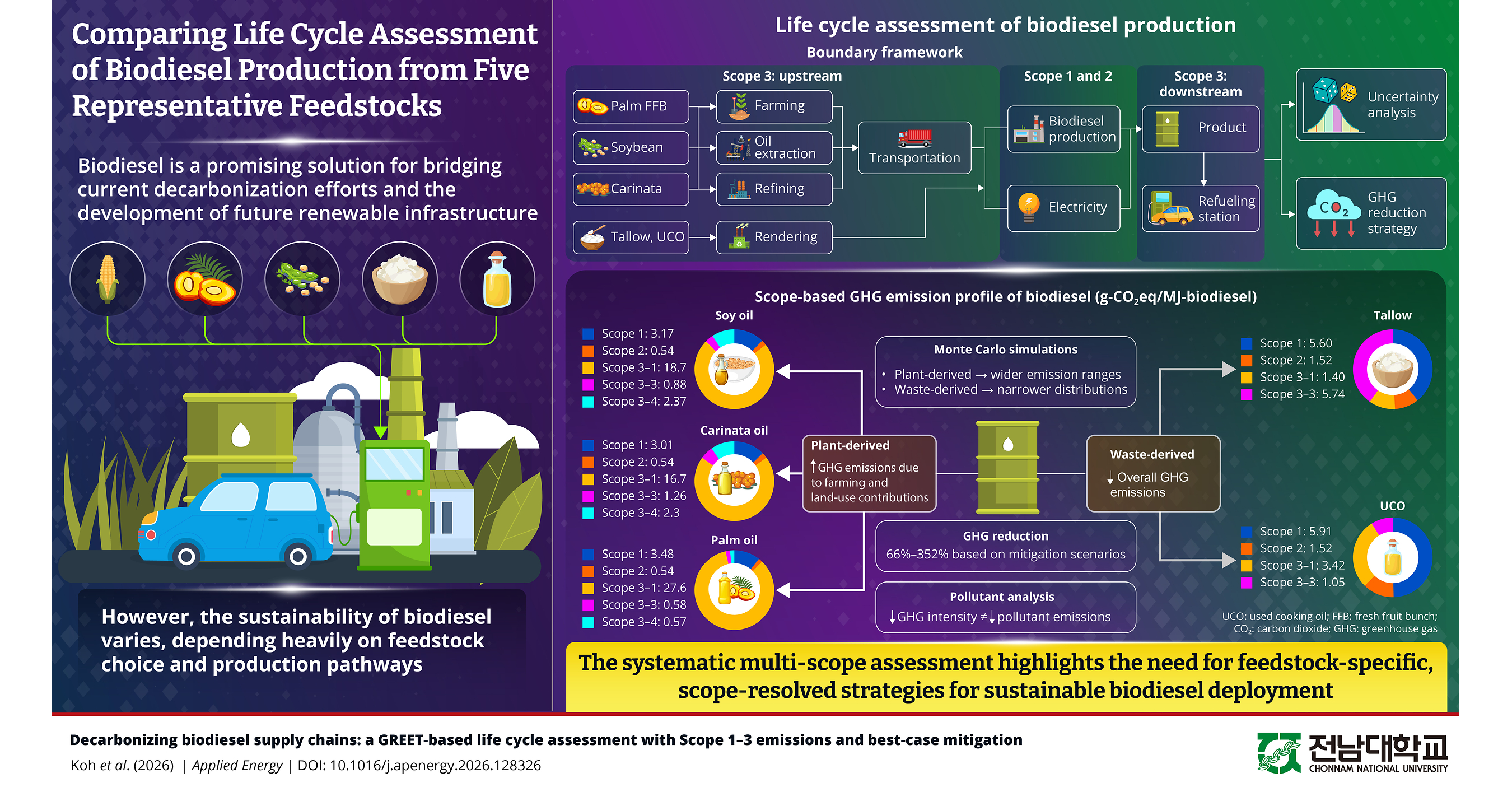
A Chonnam National University study using a GREET-based life-cycle assessment (Scope 1–3) finds waste-derived biodiesel feedstocks (used cooking oil, beef tallow) consistently cut GHG emissions versus plant-based oils, with best-case mitigation scenarios showing 66%–352% reduction potential. Net-negative outcomes are possible—up to 346%–352% versus conventional-input baselines—when renewable energy powers rendering and refining, while plant-based pathways show wider uncertainty and higher Scope 3 farming contributions. The framework is positioned as a feedstock- and region-aware tool to help policymakers design biofuel policies that can extend to aviation and marine fuels.
Analysis
This is not a broad "more biofuels" trade; it is a relative-value trade on feedstock quality and credit eligibility. The economic winner is the party that controls scarce waste-derived inputs, because those barrels are the ones most likely to earn the highest lifecycle credit intensity and the lowest policy risk. That favors renderers/feedstock aggregators over stand-alone biodiesel producers, while virgin-oil chains face a ceiling on valuation rerating because their margin is still hostage to soy/palm input inflation and land-use scrutiny.
Second-order, the bottleneck likely shifts upstream from refining capacity to collection, traceability, and contamination control. If regulators or corporate buyers start differentiating by full lifecycle score, the UCO/tallow market can tighten fast, lifting spreads for DAR-type businesses and compressing economics for smaller renewable diesel plants that rely on spot feedstock. The 6-18 month risk is supply scarcity: waste feedstocks are finite, so the winners may be the toll collectors, not the end-product producers.
Contrarian view: the market may be overpricing how quickly an academic LCA becomes cash flow. Without a policy change in LCFS/RFS/SAF accounting, this is mostly an argument for better procurement, not an earnings revision. The thesis breaks if policy remains feedstock-neutral for the next 6-12 months or if UCO/tallow premiums mean-revert, because then the relative advantage does not translate into a durable spread or multiple move.
AllMind Terminal
AI-powered research, real-time alerts, and portfolio analytics for institutional investors.
Request TrialMarket Sentiment
Overall Sentiment
mildly positive
Sentiment Score
0.25
Key Decisions for Investors
- Long DAR / short SOYB as a 3-6 month relative-value expression on feedstock differentiation; add on any policy headline that explicitly weights lifecycle emissions. Falsify if soy oil premiums spike on weather or policy stays feedstock-neutral.
- Use rallies to fade BG and other virgin-oil-exposed ag processors rather than chase them on generic "biofuel demand" headlines; the upside is capped if waste-derived credits gain share. Keep this as a tactical short against cleaner waste-feedstock winners, not a standalone directional bet.
- If DAR lags after any SAF/LCFS consultation, buy 6-12 month call spreads instead of stock for convexity; the reward is policy re-rating with defined downside. Exit if the spread between waste and virgin feedstocks stops widening.
- No broad ESG/clean-energy beta trade here; wait for a regulatory catalyst before touching sector ETFs. This is a relative-spread theme, not an index-level growth story.
More News
- US forces disable ship ‘attempting to run’ Iran blockade in Gulf of Oman
- Middle East war, high debt levels to dominate IMF-World Bank meetings in Bangkok
- Attack on Saudi airport kills 12 people and wounds more than 300—the deadliest strike in any Gulf Arab country since the start of the Iran war
- Musk says Terrafab chip factory could outperform rivals despite challenges
- Nvidia GPUs are everywhere. Here are the ways companies are accessing them
- Stocks saw new highs and big declines: How the volatile AI trade moved last week's market
From AllMind Research
- Anthropic IPO Preview: Valuation, Timing, and What to Watch
- Shein After the IPO: Venue, Valuation, and What Must Be Proved
- What AI Research Tools Should a Small Hedge Fund Buy First?
- AI Tools for Family Offices: A Stack by Decision Type
- Reading Conviction in the Tape: What Level 3 Order Book Data Really Tells Discretionary PMs