
Home Care Expert Beth Bigham Explains Dementia Support at Home in HelloNation
Source: PR Newswire
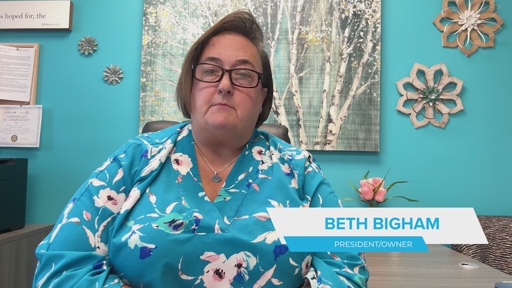
HelloNation published guidance featuring home care expert Beth Bigham on assessing whether a person with dementia can safely continue living alone. It identifies recurring issues with meals, medication, home safety, finances, and daily tasks as potential signs that more support may be needed, while emphasizing that decisions should reflect patterns and individual circumstances rather than a single incident or diagnosis.
Analysis
This is educational, promotional content—not evidence of a change in dementia prevalence, care utilization, or reimbursement—so it is not a near-term earnings catalyst. The investable mechanism is gradual substitution toward in-home support as families seek to defer institutional placement. If that preference translates into paid hours, fragmented home-care operators could benefit; the constraint is likely execution and caregiver availability, not simply addressable need. Labor scarcity and wage inflation could absorb revenue gains, while an increase in hours per client may raise service intensity without improving margins. Medicaid reimbursement, where relevant, and families’ ability to pay out of pocket are key demand filters.
Public proxies such as Addus HomeCare (ADUS) and The Ensign Group (ENSG) offer different, imperfect exposures; neither should be treated as a pure read-through to ComForCare or dementia-specific home care. Brookdale (BKD) is more exposed to senior housing and institutional operating dynamics, so a broad “home care wins, facilities lose” trade is too simplistic: higher-acuity needs can still lead to facility placement.
Near term, expect no material price signal from this article. Over 1–3 months, monitor company disclosures on authorized hours, same-store growth, caregiver turnover, labor costs, and payer mix. Over 6–18 months, policy and workforce capacity determine whether preference for aging at home converts into profitable growth. The contrarian point: growing care need does not guarantee listed-operator upside; private-pay affordability and staffing may limit capture. Thesis weakens if reported service growth is accompanied by deteriorating labor costs or if reimbursement fails to keep pace.
AllMind Terminal
AI-powered research, real-time alerts, and portfolio analytics for institutional investors.
Request TrialMarket Sentiment
Overall Sentiment
neutral
Sentiment Score
0.00
Key Decisions for Investors
- No trade on the article alone: it supplies no new utilization, financial, or policy evidence.
- Put ADUS on a diligence watchlist rather than initiating a position; verify home-care revenue mix, growth in billable hours, caregiver retention, wage trends, and payer exposure in filings and earnings commentary.
- Avoid a simple long-home-care/short-senior-housing pair. Higher care needs can shift some households toward facilities, and the named public companies have materially different business mixes.
- Reassess only after a measurable catalyst—such as sustained reported service-volume growth, a reimbursement change, or improving labor-cost leverage. A volume increase without stable margins would falsify the profitable-growth thesis.
More News
- Sovereign wealth funds' China and Hong Kong investments surge 190% after a bruising slump
- Arcus Biosciences prices $250 million stock offering at $17.50
- AstraZeneca says U.S. FDA approves rare kidney disease drug
- UnitedHealth's Earnings Jumped 60%. Is the Comeback Stock a Buy, Sell, or Hold?
- Moderna is about to release the trial results for its cancer vaccine. A lot is riding on this data.
- Why is Intuitive Surgical stock tumbling today?
From AllMind Research
- Anthropic IPO Preview: Valuation, Timing, and What to Watch
- Shein After the IPO: Venue, Valuation, and What Must Be Proved
- What AI Research Tools Should a Small Hedge Fund Buy First?
- AI Vendor Landscape for Institutional Investment Teams
- AllMind Fixed Income Compass for October 2025: Navigating Policy Divergence and Political Risk