
Hanwha Power Receives ABS Approval in Principle for 1,700 TEU Battery-Powered Containership Design
Source: PR Newswire
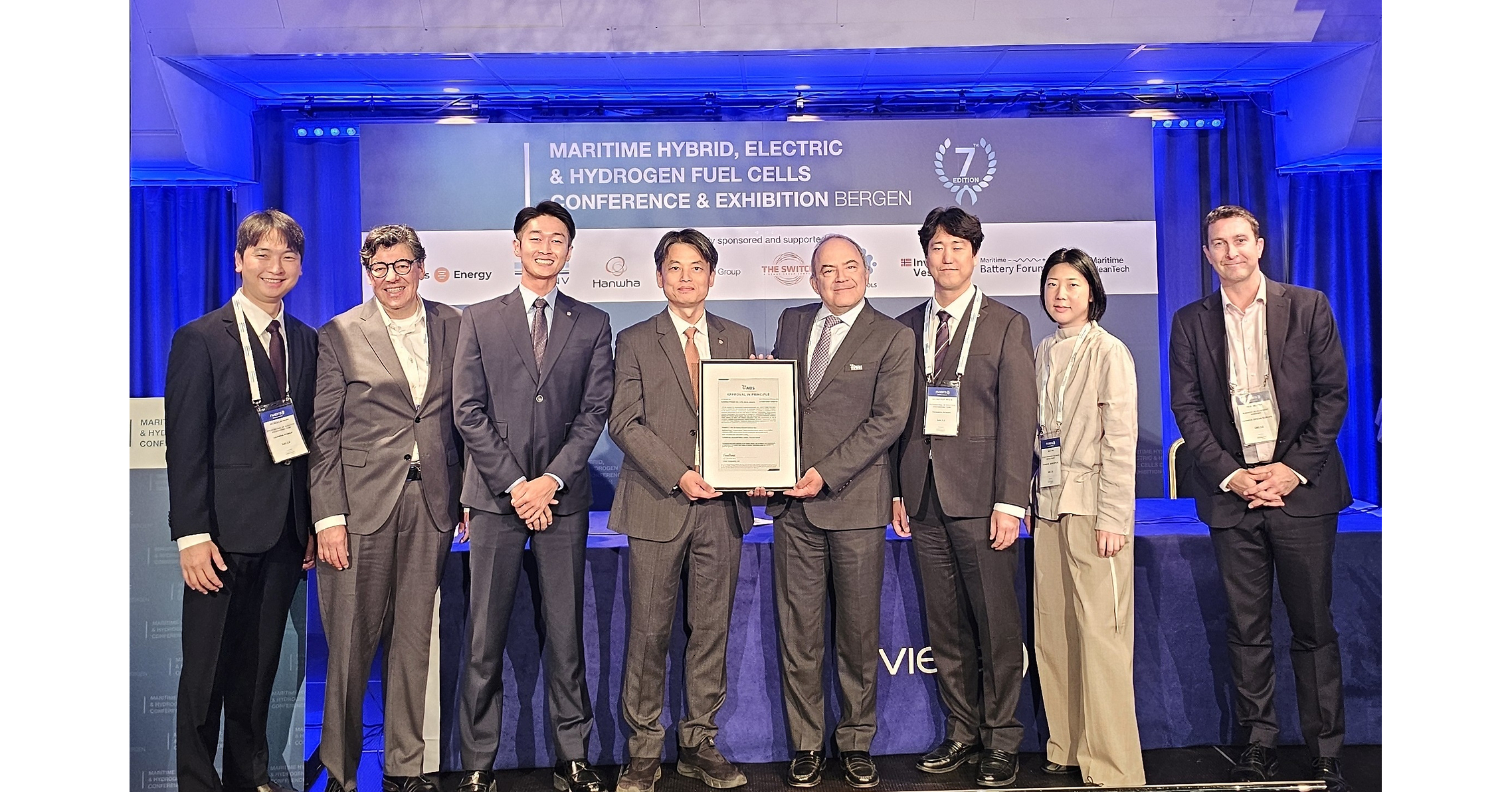
Hanwha Power received Approval in Principle from ABS for a 1,700 TEU fully electric containership design powered by a 151 MWh battery energy storage system, intended to operate without direct carbon emissions using port charging infrastructure. The company has also completed the basic design of a 1,000 TEU battery-powered vessel and says the approval expands its marine propulsion portfolio; no commercial orders or financial impact were disclosed.
Analysis
Commercial significance is limited at this stage. ABS Approval in Principle reduces design and classification uncertainty; it does not establish a build order, final vessel approval, route economics, or recurring equipment revenue. Treat this as a capability signal for Hanwha Power, not evidence of near-term earnings contribution.
The gating issue moves from vessel design to the operating system around it. A 151 MWh vessel requires dependable, high-throughput port charging and substantial grid capacity. Port connection delays, peak-power charges, or battery degradation could erase the benefit of modular swaps. Containerized batteries also create a trade-off between service flexibility and cargo-slot utilization that needs validation in the final operating configuration. Lifecycle emissions depend on the electricity source, so “zero-carbon” at the vessel is not necessarily zero-carbon end-to-end.
Over days, the announcement may support narrative sentiment but offers little basis for a durable valuation change. Over 1–3 months, the useful catalysts are a named shipowner, firm order, route and charging plan, and disclosed battery supplier or replacement economics. Over 6–18 months, successful deployment could expand demand for marine battery integration, shore-power equipment, and grid upgrades, while increasing competitive pressure on conventional and alternative-fuel propulsion for short-sea routes. ABS’s design-level approval alone does not validate that substitution economics.
Contrarian read: the headline’s scale may attract attention, but project economics and infrastructure—not battery-vessel design capability—are likely to determine adoption. No company identity or ticker is supplied, and no trade is warranted on this announcement alone.
AllMind Terminal
AI-powered research, real-time alerts, and portfolio analytics for institutional investors.
Request TrialMarket Sentiment
Overall Sentiment
mildly positive
Sentiment Score
0.35
Key Decisions for Investors
- No immediate position: the approval is not a vessel order or proof of commercially attractive economics. Avoid treating the announcement as a near-term earnings catalyst for Hanwha Power.
- Set a 1–3 month watchlist trigger for a named customer, firm order, route-level charging plan, and evidence on battery cost, replacement life, and cargo capacity. Reassess only when these are disclosed.
- Monitor marine battery integrators, shore-power/grid equipment, and port infrastructure as potential second-order beneficiaries; keep this as a sector watch rather than a single-name recommendation until suppliers and project scope are identified.
- Falsify the adoption thesis if customer diligence shows charging-grid constraints, battery replacement costs, or lost cargo capacity make regional routes uneconomic; strengthen it if a firm order proceeds to final approval with operating and infrastructure economics disclosed.
More News
- AI Doubts Spread Cracks in Equities, Credit Markets: Evening Briefing Americas
- With earnings in rearview mirror, SpaceX-Tesla merger chatter takes center stage
- Apple’s $2,000 iPhone Duo Debuts With Limited Supply
- Are global oil reserves sufficient to withstand renewed US-Iran war?
- Boeing 777 freighter output halted for two months over supplier row
- Exclusive-Boeing supplier dispute has halted 777 freighter production for two months, sources say