
Bay Area's Valley Humane Society Helps Turn Local Experience into First-in-the-Nation California Law
Source: PRWeb
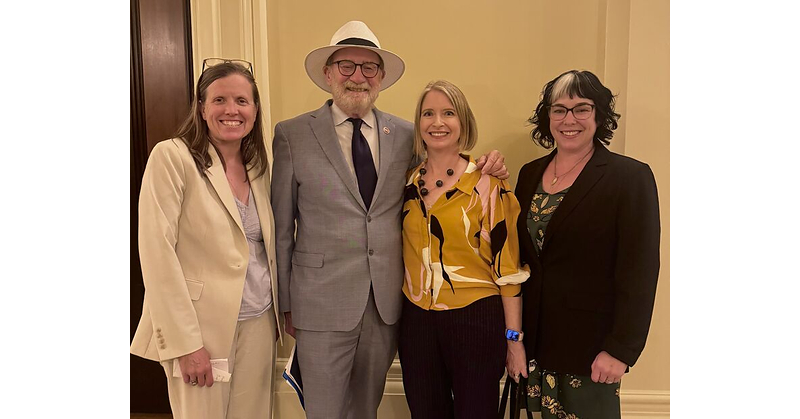
California Governor Gavin Newsom signed SB 1288, the Legacy Act, requiring financial institutions to make reasonable, good-faith efforts to notify named beneficiaries of nonprobate securities within 60 days after learning of an account owner's death. Once required documentation is complete, beneficiaries generally must receive their designated share within 60 days, while institutions cannot require them to open accounts or coordinate claims with co-beneficiaries. The law takes effect for qualifying nonprofit beneficiaries on January 1, 2027 and individual beneficiaries on January 1, 2028, making California the first state to extend RIFT-style protections to individuals.
Analysis
This is immaterial to near-term earnings for diversified custodians, but it creates a modest operational-cost and litigation-risk headwind for California-facing broker-dealers, banks, and retirement-account administrators. SCHW, MS, BAC, JPM, and WFC already maintain death-notification, escheatment, and beneficiary-service workflows; the incremental burden is primarily systems integration, documentation controls, and auditability rather than balance-sheet exposure. The more relevant second-order effect is competitive: firms with fragmented legacy recordkeeping could face disproportionately higher per-account servicing costs, while scaled custodians can absorb compliance and market stronger estate-settlement service.
The investable issue is potential state-policy replication, not California implementation itself. If similar rules spread across large states over the next 6-18 months, dormant-account liabilities may decline but servicing expense, beneficiary fraud controls, and complaint exposure could rise across wealth platforms. The likely financial effect remains too small to alter consensus estimates absent evidence of broad adoption or enforcement actions; the press-release source also provides no quantification of affected accounts, assets, or institutional compliance costs.
Contrarianly, faster beneficiary distributions could marginally reduce assets retained in decedent accounts, but this is not necessarily negative for incumbents: inherited assets frequently remain within the same platform when beneficiary onboarding is frictionless. The risk is greatest for firms that require beneficiaries to establish accounts or rely on manual claims processes, where mandated portability can turn a previously sticky asset pool into outflows. Watch 2027 nonprofit implementation for complaint data and 2028 individual-beneficiary rollout for evidence that other state legislatures are using California as a template.
AllMind Terminal
AI-powered research, real-time alerts, and portfolio analytics for institutional investors.
Request TrialMarket Sentiment
Overall Sentiment
moderately positive
Sentiment Score
0.42
Key Decisions for Investors
- No standalone trade: do not reposition SCHW, MS, BAC, JPM, or WFC on this event; expected 2027-28 compliance costs are unlikely to clear materiality thresholds for large platforms.
- Add a regulatory watch item on SCHW and HOOD: monitor California-specific disclosures, client-service expense growth, beneficiary-account transfer volumes, and any requirement to waive account-opening friction. A measurable rise in service costs without retained inherited assets would be a negative read-through for operating leverage.
- For 6-18 months, prefer scaled wealth custodians such as SCHW or MS over smaller, operationally fragmented brokerage/RIAs if multi-state adoption emerges. Initiate only after at least one additional large-state bill advances or management quantifies costs; thesis is invalidated if compliance costs remain de minimis or inherited-account retention improves.
- Monitor state legislative calendars and unclaimed-property disclosures rather than buying sector options. A multi-state legislative wave would be the catalyst for a relative long SCHW/MS versus smaller brokerage-service providers, but current evidence does not support a funded pair trade.
More News
- US judge approves settlement allowing Paramount to acquire Warner Bros
- RAM supply set to worsen, says Micron, as CEO celebrates ‘much higher’ prices
- Tencent leases 100,000 chips from Oracle for $7 bln- FT
- Paramount Skydance prices $42 billion debt for Warner Bros deal
- Why is Nidec stock plunging today?
- Nidec Corp shares slump after auditor declines to sign off on earnings
From AllMind Research
- Anthropic IPO Preview: Valuation, Timing, and What to Watch
- Shein After the IPO: Venue, Valuation, and What Must Be Proved
- What AI Research Tools Should a Small Hedge Fund Buy First?
- How to Analyze SEC Filings With AI: A Verification-First Guide
- AI for IR Street Intelligence: Notes, Estimates, and Peers