
Iran’s Supreme Leader and Top Security Chief Discuss War, Hormuz
Source: Bloomberg
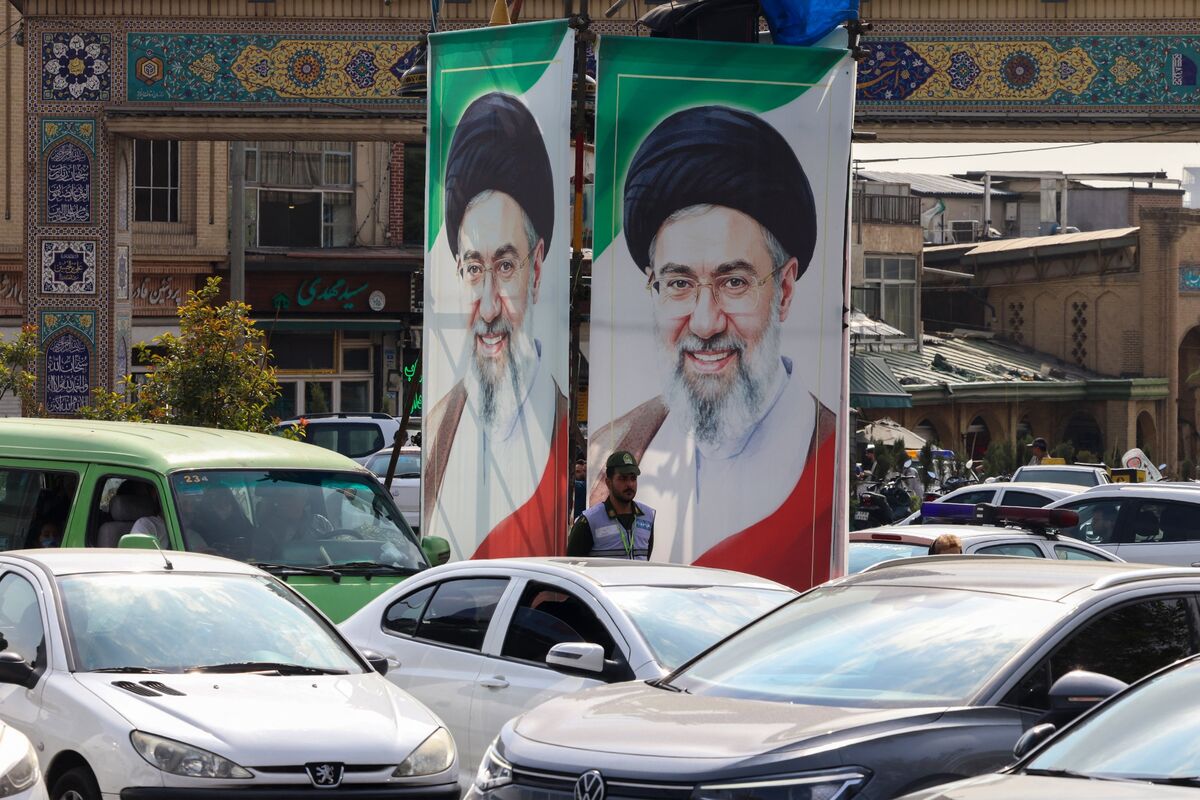
Iran’s Supreme Leader Mojtaba Khamenei reiterated Iran’s conditions for ending the war with the US during a meeting with Supreme National Security Council Secretary Mohsen Rezaee, according to a statement from Khamenei’s office. The meeting followed Rezaee’s talks in Iran with senior officials from Saudi Arabia, Turkey and Pakistan, who were seeking to defuse tensions and prevent another round of US-Israeli strikes; the article gives no details of the conditions or a diplomatic outcome.
Analysis
The market-relevant signal is not the diplomatic meeting itself but the gap between maintaining maximalist war-ending conditions and using regional intermediaries. That combination leaves room for de-escalation headlines without establishing that the core dispute has narrowed. Near term, this can sustain a geopolitical risk premium and options volatility even if physical flows remain intact; a durable premium requires evidence of disruption, not rhetoric alone. The key transmission channel is Hormuz: confirmed interference would raise crude and freight/insurance costs, with potential pressure on fuel-sensitive airlines and import-dependent refiners, while benefiting upstream producers. A prolonged premium could also feed inflation expectations and complicate rate-cut pricing, broadening the impact beyond energy. Over 1–3 months, monitor actual vessel movements, war-risk insurance costs, and whether Saudi, Turkish, or Pakistani mediation produces a verifiable change in terms. Over 6–18 months, repeated threats without disruption may instead accelerate customer diversification and strategic inventory, while reducing the market’s sensitivity to each new statement. The contrarian risk is paying for a sustained oil shock before physical indicators confirm one; the opposite risk is treating mediation as de-escalation while shipping conditions deteriorate. Falsify the disruption thesis if Hormuz transit and insurance conditions remain stable and crude gives back its event premium; upgrade it if transit disruptions or a sustained freight/insurance spike emerge.
AllMind Terminal
AI-powered research, real-time alerts, and portfolio analytics for institutional investors.
Request TrialMarket Sentiment
Overall Sentiment
neutral
Sentiment Score
0.00
Key Decisions for Investors
- Do not chase crude on this statement alone. Treat it as a volatility signal, not evidence of lost supply; verify Hormuz transit, war-risk premiums, and benchmark crude price action before adding directional exposure.
- If physical disruption is confirmed, consider a defined-risk crude call spread rather than an outright futures position; cap premium at a pre-set portfolio risk budget and exit if shipping and insurance indicators normalize.
- Keep airlines and fuel-sensitive transport names on a conditional underweight watchlist, not an immediate short: the catalyst is sustained fuel-cost pressure, and stable flows would invalidate the near-term earnings channel.
- Track mediation for a change in observable terms, not meeting cadence. A credible concession paired with normal shipping would favor fading the geopolitical premium; continued hard-line messaging plus worsening transit data would favor retaining convexity.
More News
- Iran’s calculations as US escalation looms: Trust, midterms, Hormuz
- Latest Oil Market News and Analysis for Oct. 28
- Oil prices rise after attack on Saudi Arabian refinery reignites supply concerns
- Oil rebounds as Houthi attacks on Saudi Arabia overshadow diplomatic efforts
- The Trump admin said energy costs were a small price to pay in Iran war, but U.S. consumers are paying nearly 8x more than anyone else in fuel costs
- Trump administration may let more Russian diesel onto market, energy secretary tells CNBC