
Lara Black Box Model Rules Generate $571 Million in Rate Hikes But Just Twelve Thousand New Home Insurance Policies. That's $47K Per Policy, Says Consumer Watchdog
Source: PR Newswire
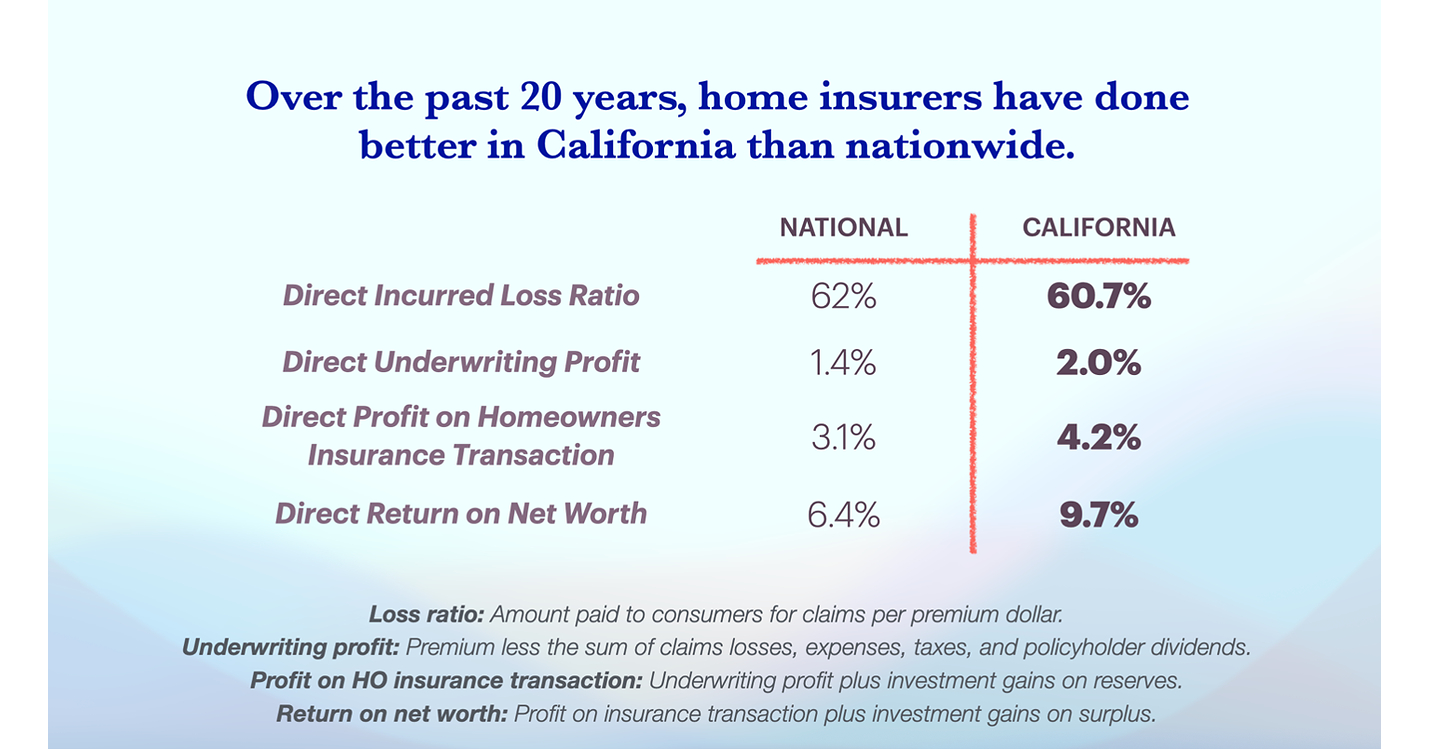
California home insurers have sought $571.6 million of rate increases under the state's climate-model rules while committing to add only 12,189 policies, or roughly $47,000 of cumulative rate hikes per promised new policy. Consumer Watchdog says the rules have not restored market access: FAIR Plan enrollment more than doubled to 675,229 by June 2026, while about 1 million homeowners are now in FAIR Plan or surplus-lines coverage. The group contrasts these access concerns with strong insurer profitability, including California homeowners insurers' 26.3% return on net worth in 2024 and Allstate's Q2 2026 net income of $3.2 billion, up 56% year over year.
Analysis
The investable issue is not the incremental California premium filings, which are immaterial to ALL's consolidated earnings, but the political durability of the state's risk-based pricing framework. A sharper access crisis raises the probability of post-election intervention: mandated writing ratios, tighter model-disclosure standards, mitigation-linked coverage requirements, or FAIR Plan assessments. Those measures would reduce insurers' ability to shrink high-severity exposure while retaining pricing flexibility, creating a disproportionate risk for carriers with California growth ambitions rather than a near-term earnings hit for ALL.
For ALL, elevated underwriting profitability gives regulators a more credible political case that current pricing latitude is not required for solvency. The principal 1-3 month catalyst is any Department of Insurance response to the advocacy campaign, legislative hearing, or FAIR Plan funding update; the 6-18 month risk is that residual-market growth converts from a consumer-access issue into an industry-funded capital call after a major wildfire season. This is a tail risk, not a base-case short: rate adequacy and reinsurance costs can still support sector margins absent adverse regulation or catastrophe losses.
VRSK faces a subtler asymmetry. Wider regulatory use of catastrophe models supports long-run demand for its analytics, but mandated transparency or approved-model standards could commoditize portions of model output, extend approval cycles, and favor internally developed insurer models. The consensus is likely to view restricted underwriting as simply bullish for pricing; it misses that a constrained admitted market shifts exposure into FAIR and surplus-lines structures, where policyholder affordability and state backstop solvency become the binding risks rather than nominal premium rates.
AllMind Terminal
AI-powered research, real-time alerts, and portfolio analytics for institutional investors.
Request TrialMarket Sentiment
Overall Sentiment
moderately negative
Sentiment Score
-0.45
Ticker Sentiment
Key Decisions for Investors
- Maintain ALL as a watch-list short rather than an outright position until a formal California rulemaking, hearing, or FAIR Plan assessment proposal emerges. On such a catalyst, consider a 3-6 month ALL put spread funded by selling a lower-strike put; thesis is regulatory multiple compression, with invalidation if ALL reiterates property-liability margin guidance without California reserve or assessment pressure.
- For existing ALL longs, trim into strength and monitor California homeowners policies-in-force, admitted-market growth commitments, and any disclosed FAIR Plan exposure at the next earnings release. A material increase in residual-market assessments or a reduction in planned California writings is the trigger to reduce further.
- Avoid treating VRSK as a direct beneficiary of insurer pricing deregulation. Keep exposure only if model-related revenue growth and retention remain intact; reassess on any California requirement for model auditability, public assumptions, or state-approved alternative models, which would weaken the premium valuation case over 6-18 months.
- No broad P&C-insurer short is warranted from this item alone. The more actionable sector hedge is to buy catastrophe-season protection through a diversified insurance basket only if California FAIR Plan capital needs or wildfire-loss estimates begin rising, since a loss event is required to turn the access problem into a near-term earnings event.
More News
- Trump faces Gulf pressure for diplomacy as world leaders gather in New York
- Meta’s Muse rekindles fears over winners and losers as personal AI agent emerges
- How brokerage Compass sold its 83,000 real estate agents to use more AI
- Never use ChatGPT for these five tasks
- FBI rushes to investigate if ShinyHunters hack of thousands of employees is real
- OpenAI’s agent hacked Australia’s Medicare website—the latest rogue AI incident that the company didn’t know about for months