
LIPSIA-STRATEGY trial demonstrates non-inferiority of CAAS vFFR guided revascularization against pressure wire-based FFR revascularization
Source: PR Newswire
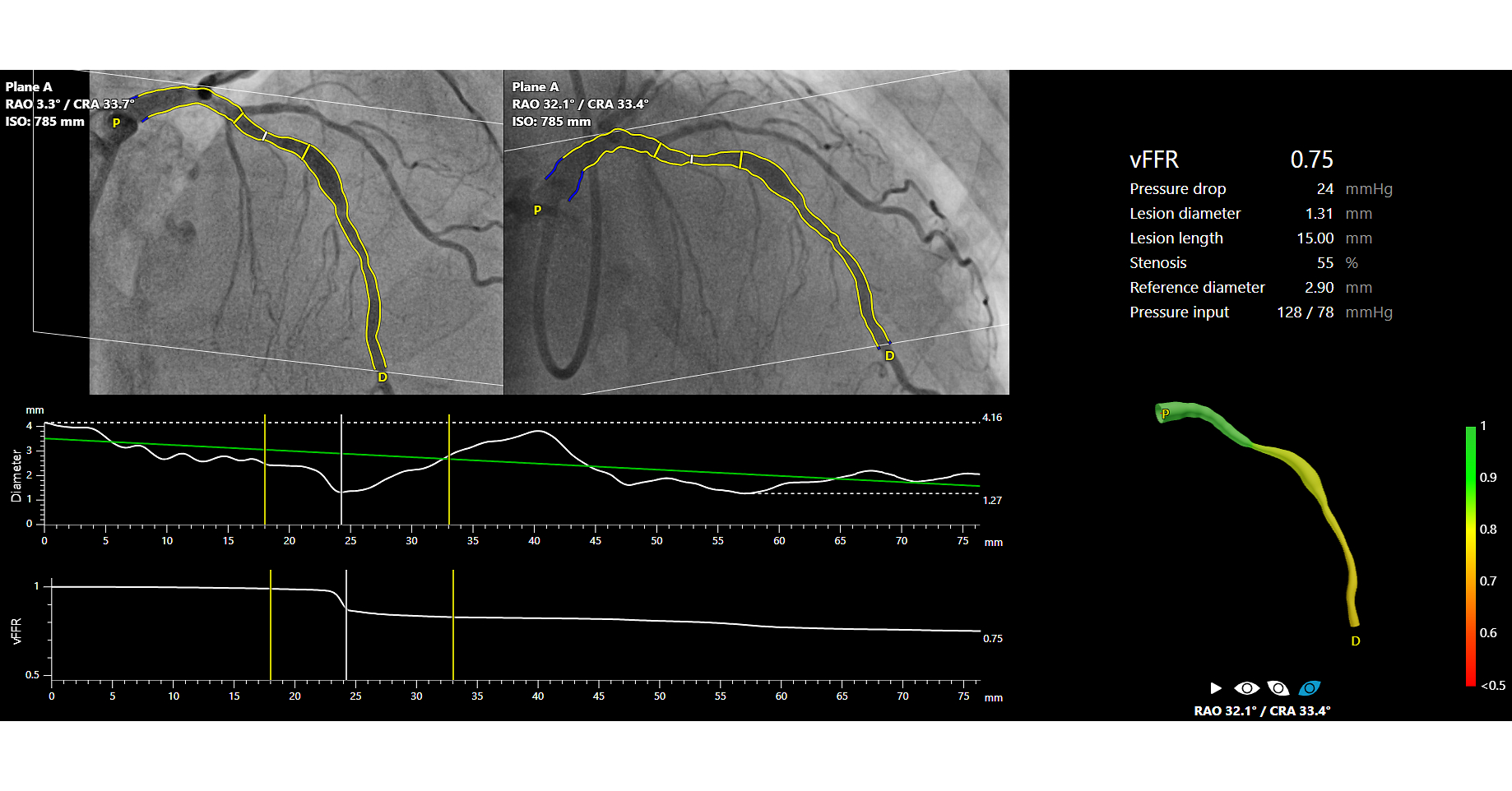
The randomized LIPSIA-STRATEGY trial met its primary endpoint, finding angiography-derived CAAS vFFR-guided revascularization non-inferior to pressure wire-based FFR for 1-year outcomes in 1,053 patients with intermediate coronary stenoses. The findings add randomized clinical evidence for CAAS vFFR and were presented at TCT 2026 and published in JACC; the company cited a less invasive workflow, shorter procedure and fluoroscopy times, and lower radiation exposure.
Analysis
The investable signal is category validation, not yet proof of material earnings growth for Pie Medical Imaging or its parent, Esaote. If angiography-derived physiology reduces pressure-wire use, value could shift from disposable wire economics toward software, image-processing capability and cath-lab workflow integration. That is a potential headwind for wire suppliers, but likely modest unless adoption changes procedure mix; no company-specific revenue exposure is established here. Imaging-system vendors such as Philips, GE HealthCare and Siemens Healthineers could benefit if validated software becomes a differentiating workflow feature, though the trial does not establish any partnership or commercial capture for them.
Near term, expect limited public-equity read-through: Pie Medical Imaging and Esaote are not identified as listed securities in the supplied data. Over 1–3 months, the relevant catalysts are guideline interpretation, reimbursement treatment, regulatory status by market, and hospital purchasing or utilization evidence. Over 6–18 months, adoption depends on reproducibility across operators and lesion types, integration with installed angiography systems, and whether lower procedural friction translates into sustained software sales rather than merely substitution within a fixed PCI budget.
The contrarian point: non-inferiority at one year supports clinical comparability in the studied setting; it does not establish superior outcomes, broad standard-of-care adoption, or commercial economics. The press release’s workflow and radiation claims should be checked against the full paper and implementation data. Thesis weakens if longer follow-up shows worse outcomes, guidelines remain cautious, or hospitals do not adopt despite the workflow advantage.
AllMind Terminal
AI-powered research, real-time alerts, and portfolio analytics for institutional investors.
Request TrialMarket Sentiment
Overall Sentiment
moderately positive
Sentiment Score
0.45
Key Decisions for Investors
- No direct trade on the announcement: the named businesses are not identified as listed securities in the supplied company mapping, and commercial impact is unquantified. Treat as a category-validation signal, not an earnings upgrade.
- Place angiography-derived physiology and pressure-wire exposure on watchlists across cardiovascular-device and imaging vendors. Before positioning, verify product ownership, regulatory clearance by geography, reimbursement, installed-base compatibility, and revenue or utilization exposure.
- For a 1–3 month catalyst check, review the full JACC publication and subsequent guideline or hospital-adoption evidence; distinguish the randomized clinical endpoint from company claims about procedure time and radiation.
- Falsifiers: unfavorable longer-term outcomes or subgroup findings, no guideline/reimbursement progress, or evidence that software uptake fails to displace wire use or generate incremental vendor revenue.
More News
- Binance co-CEO Richard Teng says hackers used fake job interviews, AI tool to steal $6.3 billion in crypto 108511116
- AMD stock jumps 7% on earnings as data center revenue nearly doubles
- Marvell-Lumentum Deal Puts Optical Networking at the Center of the AI Boom
- Marvell Technology could plunge on latest multibillion-dollar acquisition
- Disney Plans Thousands of Layoffs Companywide
- AI Inference Startup Fal Raises Capital at $16 Billion Valuation