
Beyond the Screen: INFiLED Expands LED Across Rail Transport
Source: PR Newswire
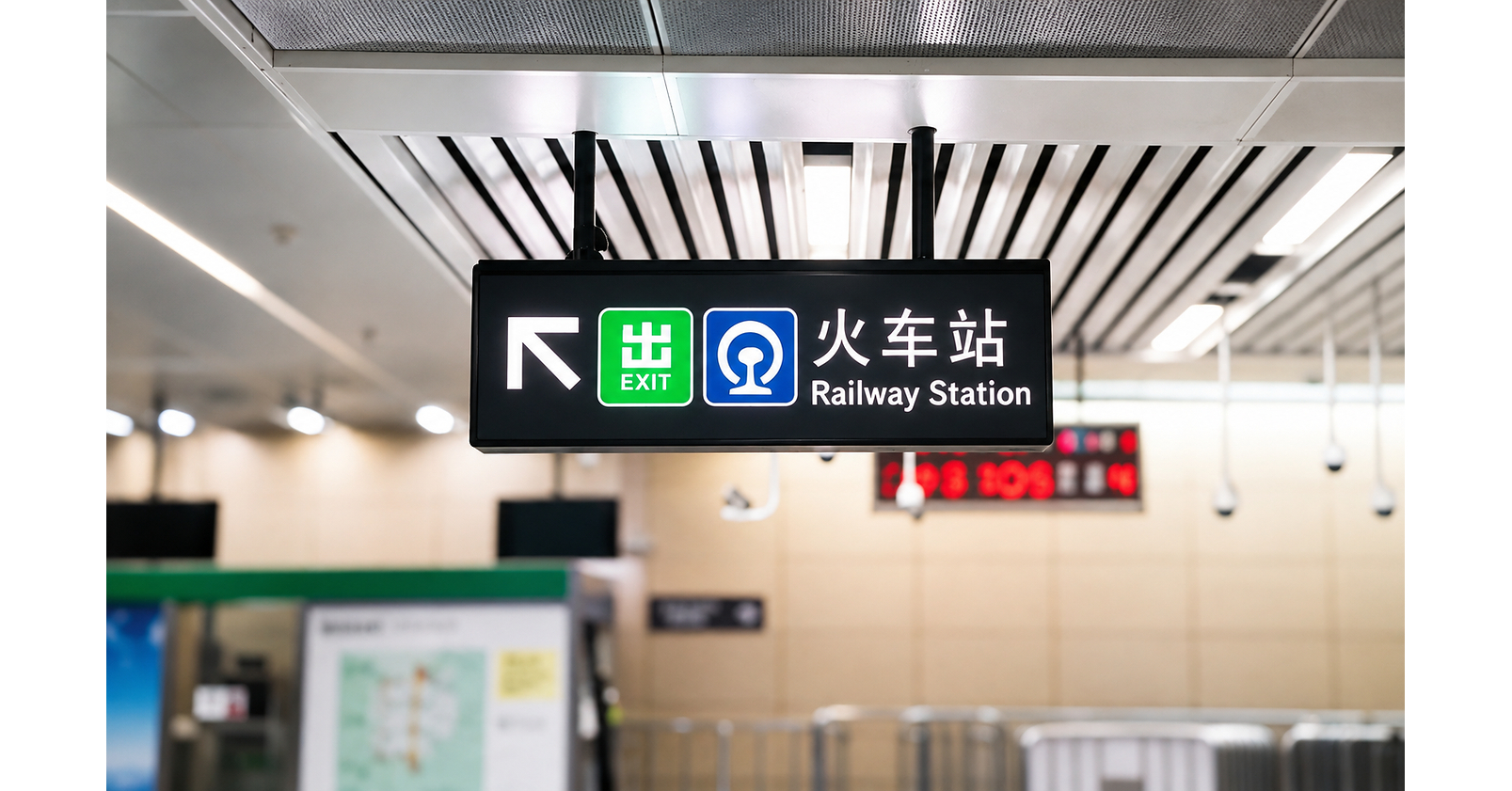
INFiLED completed a GeminiLED digital-wayfinding installation at Shenzhen North Railway Station in June 2026, deploying dual-sided, independently controlled displays for passenger guidance. The company also highlighted Hera LED deployments across seven Chinese railway stations and expanded its addressable rail-display applications into platforms, control rooms and meeting spaces. The announcement supports INFiLED's rail-sector positioning but provides no financial results, contract values, or outlook.
Analysis
This is low-information vendor marketing rather than evidence of a material revenue inflection. The relevant investable mechanism is not INFiLED itself, but whether Chinese rail-station digitization converts fragmented, project-based display purchases into standardized procurement frameworks. Standardization would favor scaled LED and systems vendors with certification, service networks, and working-capital capacity; it would pressure smaller display assemblers that compete primarily on hardware price.
Near term, there is no clear public-equity catalyst from the installation claims. For 1-3 months, monitor China Railway and municipal metro tender volumes, tender specifications for fine-pitch/direct-view LED, and digital-out-of-home monetization terms at stations. A sustained procurement shift toward integrated wayfinding and control-room systems would be more constructive for established Chinese LED-display suppliers such as Leyard (300296 CH) and Unilumin (300232 CH) than for panel makers, because integration, installation, and maintenance carry the defensible margin pool.
The non-obvious offset is that larger LED footprints can cannibalize conventional LCD signage and raise station power, maintenance, and content-management costs. If rail operators prioritize lifecycle cost rather than visual capability, procurement may migrate toward lower-power LCD, e-paper for static wayfinding, or fewer centralized screens—limiting the assumed LED volume upside. The thesis is falsified if public tender data shows only one-off refurbishment contracts, declining average project values, or payment terms extending further, which would signal revenue without attractive cash conversion.
AllMind Terminal
AI-powered research, real-time alerts, and portfolio analytics for institutional investors.
Request TrialMarket Sentiment
Overall Sentiment
mildly positive
Sentiment Score
0.30
Key Decisions for Investors
- No immediate directional trade: treat this as an alert, not a catalyst, given the absence of disclosed contract value, backlog conversion, customer procurement budget, or independently verified economics.
- Build a 1-3 month procurement monitor for Leyard (300296 CH) and Unilumin (300232 CH): act only if rail/metro tender awards show repeated standardized deployments and contract values sufficient to affect consensus revenue estimates; prefer the company demonstrating improving receivables days and gross margin.
- If Chinese urban-infrastructure spending accelerates, consider a small long basket of Leyard and Unilumin versus a short position in a broad China discretionary/advertising proxy, isolating public-digital-infrastructure demand from softer consumer ad spending. Exit if new rail-display tenders fail to improve over two consecutive monthly observations.
- Watch for evidence that station DOOH inventory is being commercially monetized rather than merely installed. Higher advertising yield would shift value toward media operators and transit advertisers; without it, display vendors remain exposed to low-margin, working-capital-intensive project revenue.
More News
- Are global oil reserves sufficient to withstand renewed US-Iran war?
- OpenAI Trims Target Value & Volvo Cars Cuts 2,500 Jobs
- U.S. oil holds above $100, Brent at five-month high as Iran says it’s prepared for warfare
- PG&E’s CEO says AI is ‘the best thing that could’ve ever happened to the grid’
- The mobile ambitions of SpaceX see telecom stocks get hit again. What the latest developments mean.
- Defense giant Saab sees orders triple after Gripen fighter jet deal with Ukraine
From AllMind Research
- Anthropic IPO Preview: Valuation, Timing, and What to Watch
- Shein After the IPO: Venue, Valuation, and What Must Be Proved
- What AI Research Tools Should a Small Hedge Fund Buy First?
- Capital IQ Alternatives for Research and Deal Work
- Research Workflows, Report Format Selection, and Interactive Synthesis