
BROKAW DECLARES NOVEMBER 4 "NO MORE POLITICAL ADS DAY"
Source: PR Newswire
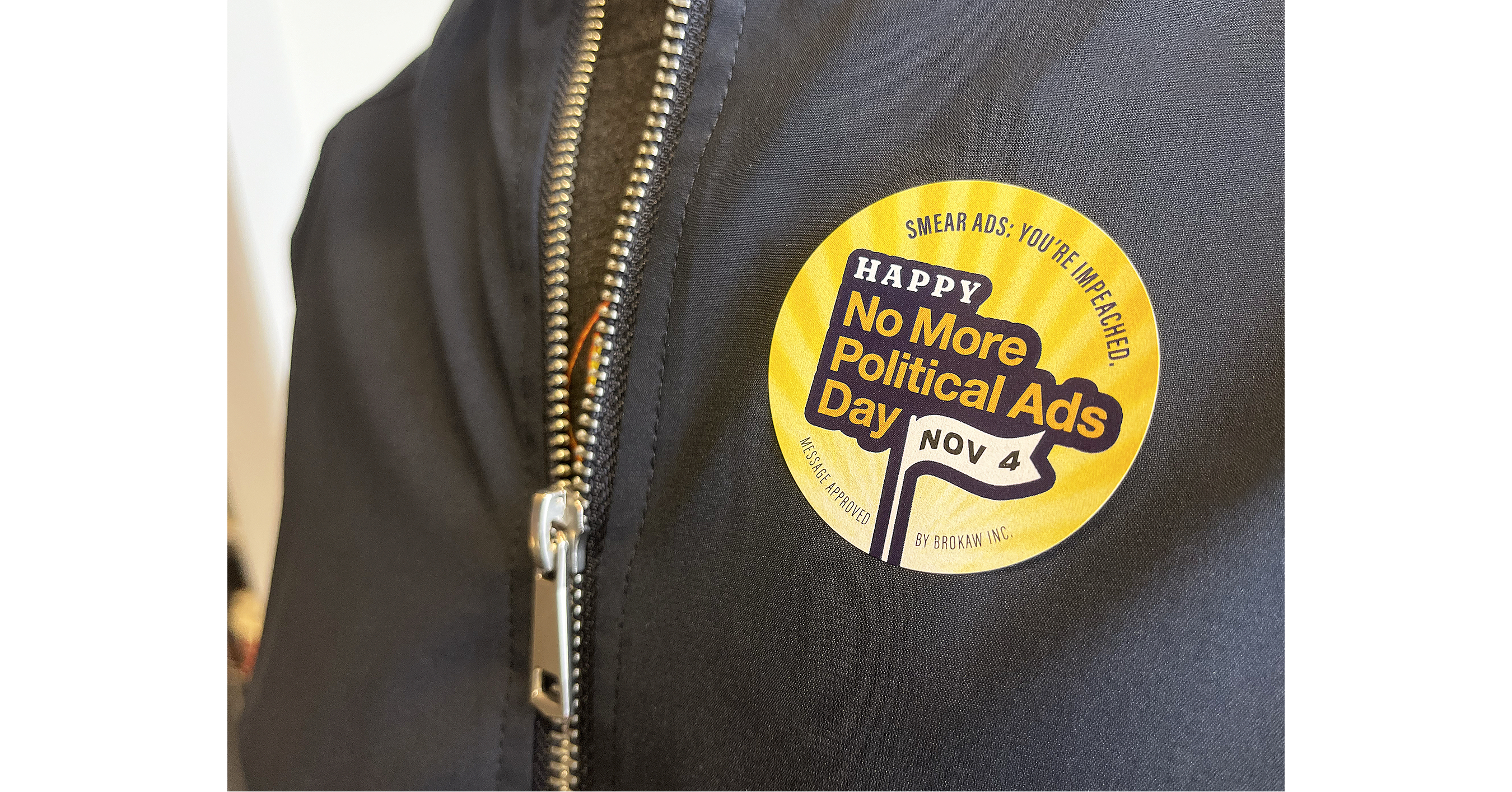
Brokaw declared November 4, 2026, “No More Political Ads Day” after Ohio’s U.S. Senate race drew more than $500 million in political advertising this cycle, according to AdImpact. The Cleveland agency is marking the occasion with a digital billboard and social media campaign.
Analysis
The investable signal is a local-advertising reset, not Brokaw’s campaign. Political demand can temporarily crowd out commercial inventory and support pricing; its disappearance may ease access and rates for Cleveland-area advertisers, but it also removes a revenue tailwind for local broadcasters and does not imply that consumer brands will immediately spend enough to replace it. The effect is likely concentrated in the Ohio markets that received the spending, not a read-through to national advertising demand.
Over the next days to weeks, watch local inventory pricing and broadcaster commentary: a post-election lull could expose underlying softness in commercial demand, while lower ad costs could benefit regional retailers and service businesses. Over 1–3 months, compare local-media guidance with national digital-ad trends; the distinction will show whether this was merely a political-ad air pocket or a broader demand issue. Over 6–18 months, the larger structural question is whether political budgets keep migrating among broadcast, streaming, and social platforms, changing which sellers capture the next cycle’s spend.
Contrarian angle: the celebratory framing assumes commercial ads are a welcome substitute. For media owners, political inventory can be valuable precisely because it is incremental; a return to ordinary ads may mean lower yield, not a durable rebound. No trade follows from this press release alone. Verify market-level political revenue contribution, post-election pricing, and broadcaster guidance before expressing a view. A rapid recovery in local ad pricing and unchanged or stronger broadcaster outlooks would weaken the air-pocket thesis.
AllMind Terminal
AI-powered research, real-time alerts, and portfolio analytics for institutional investors.
Request TrialMarket Sentiment
Overall Sentiment
neutral
Sentiment Score
0.10
Key Decisions for Investors
- No immediate position based on the agency announcement; treat it as a prompt to review local-media exposure, not as evidence of a broad advertising inflection.
- For the next 1–3 months, monitor Nexstar, Gray Media, and Sinclair commentary on political-ad contribution, local commercial demand, and pricing. Consider reducing exposure only if post-election guidance or local-market data show a sharper-than-expected revenue fade.
- Watch for beneficiaries among Cleveland-area advertisers if lower local inventory costs are confirmed, but do not assume savings translate into higher spending or margins without company-level evidence.
- Falsification checks: sustained recovery in local ad rates, broadcaster guidance that absorbs the post-election comparison, or evidence that non-political demand is replacing political inventory.
More News
- What Wall Street billionaires are saying about Democrats' midterm sweep
- NextDC shares surge 43% after Goodman, Digital Realty stake purchases
- Voters rebuff data centers in every ballot measure except one during the 2026 midterms
- Oil and data centre stocks sink after US midterms
- After the midterms, a bigger clash over data centers could be coming
- ‘Seismic’ blue wave triggers the sinking of oil prices, energy stocks, and the chances of power permitting reform