
Huawei Digital Power Showcases Multi-Scenario Solutions Featuring Grid Forming and AI at IDEE 2026
Source: PR Newswire
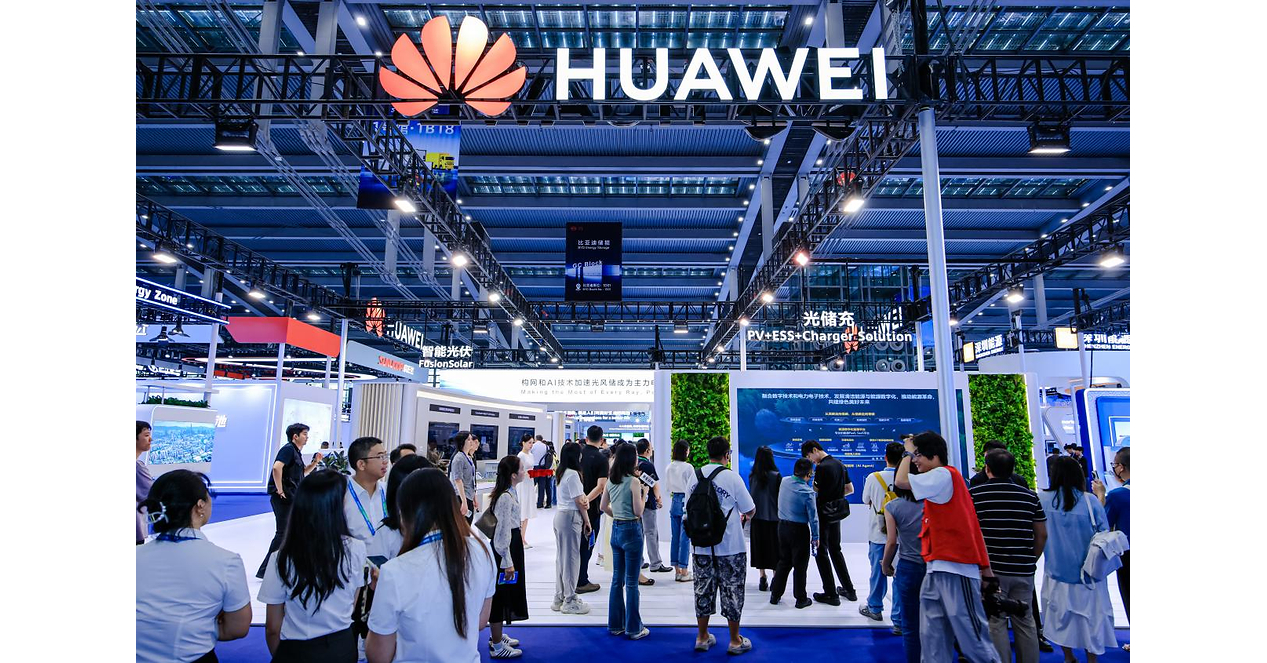
Huawei Digital Power unveiled grid-forming and AI-enabled renewable-energy solutions at IDEE 2026, including a 1000VAC utility PV platform, an ESS configuration rated at 12.5MW/50MWh, and grid-interactive AI data-center infrastructure. Its C&I hybrid-cooling ESS claims 91.8% round-trip efficiency and 100% depth of discharge, while its AI-scheduled FusionCharge system is claimed to increase charging-station revenue by more than 15%. The announcements highlight Huawei's expansion across utility solar, storage, microgrids, EV charging and data-center power, though the release provides no financial guidance, orders, or revenue contribution figures.
Analysis
This is principally a competitive signal rather than a near-term earnings catalyst: Huawei’s integration of inverter, storage, charging and data-center power controls raises the value of system-level software and grid-forming capability, where component vendors risk commoditization. The most exposed listed peers are Sungrow (300274.SZ), Sineng Electric (300827.SZ), SolarEdge (SEDG), Enphase (ENPH) and Fluence (FLNC), although direct revenue overlap is concentrated in China and emerging markets rather than the U.S. residential market. If Huawei’s claimed architecture improves project bankability or interconnection approval rates, EPCs and developers could increasingly favor integrated vendors despite less transparent lifecycle economics.
The second-order beneficiary is grid capex: higher renewable penetration requires inverter-based resource stability, creating demand for power-management equipment from Eaton (ETN), Schneider Electric (SU.PA), ABB (ABBN.SW), GE Vernova (GEV) and Hitachi Energy owner Hitachi (6501.JP). Grid-forming storage may also expand the addressable market for battery cells, but it is more likely to pressure system-level gross margins because Chinese suppliers can bundle hardware, controls and financing. AI-data-center power demand is supportive for electrical equipment pricing, yet Huawei’s positioning makes it harder to infer investable upside for Western data-center infrastructure vendors without evidence of actual order conversion.
Near term, no trade is warranted from a product-expo release alone. The key 1-3 month watch items are disclosed grid-forming ESS orders, project-level availability guarantees, and whether Huawei can translate technical claims into approvals outside China; over 6-18 months, sustained adoption would favor grid-equipment incumbents while compressing standalone inverter and storage-integrator multiples. The thesis is falsified if grid codes do not mandate grid-forming functionality, renewable curtailment remains manageable, or independently verified project returns fail to exceed conventional PV-plus-storage configurations.
AllMind Terminal
AI-powered research, real-time alerts, and portfolio analytics for institutional investors.
Request TrialMarket Sentiment
Overall Sentiment
mildly positive
Sentiment Score
0.32
Key Decisions for Investors
- Maintain a 6-12 month structural long bias toward ETN, GEV and ABBN.SW rather than pure-play inverter names: grid-stability requirements increase switchgear, protection and transmission content per MW. Reassess if renewable interconnection queues or grid-capex guidance weaken materially.
- Monitor a relative-value short basket of FLNC and SEDG versus long ETN only after evidence that Huawei/Sungrow are winning export ESS or C&I tenders; require tender data and gross-margin guidance before entry. The risk is Western procurement restrictions and domestic-policy protection preserving pricing.
- Set an alert for large, independently disclosed Huawei grid-forming ESS contracts in the Middle East, Latin America or Europe over the next quarter. Such wins would be a stronger signal to reduce exposure to storage integrators than the current technical announcement.
- For AI power-infrastructure exposure, prefer GEV or ETN over speculative charging-network operators during the next 6-18 months: grid-interactive data-center buildouts monetize through electrical distribution and service contracts, while charger utilization remains the more uncertain variable.
More News
- Iran vows 'painful' retaliation as Trump piles on pressure ahead of UN General Assembly meeting
- Oil falls as crude flows remain 'surprisingly strong'
- Trump & Xi to Meet Amidst Friction on Wars, Tech, Trade
- US Diesel Tops $6.50 a Gallon as Wars Worsen Global Fuels Crunch
- Here are the 3 big things we're watching in the stock market this week
- Tech leads shares higher in Asia, oil eases
From AllMind Research
- Anthropic IPO Preview: Valuation, Timing, and What to Watch
- Shein After the IPO: Venue, Valuation, and What Must Be Proved
- What AI Research Tools Should a Small Hedge Fund Buy First?
- Capital Intensity as Gravity: The AI Trade Enters Its Industrial Era (Looking at Q3 2025 Earnings in Tech)
- AI Portfolio Monitoring: Build an Alert Policy Analysts Can Audit